
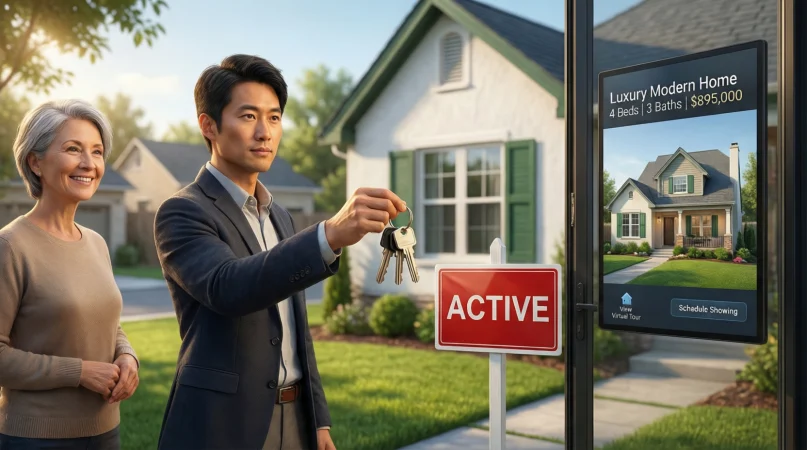
Ever searched for a home online and noticed a listing marked “Active” but wondered what that really means for you?
You’re not alone. The word active sounds simple, yet in real estate it carries specific implications that can directly affect buyers, sellers, and agents.
This in-depth guide explains what does active mean in real estate, how it’s used in real-world listings, how it compares to similar statuses, and what actions you should take when you see it. Whether you’re a first-time homebuyer, a seller, or just browsing property websites, this article will give you clarity and confidence.
What Does Active Mean in Real Estate?
In real estate, “active” means a property is currently listed for sale and available, with no accepted purchase contract in place. Buyers can view the property, submit offers, and negotiate terms while the listing remains active.
Why “Active” Status Matters in Real Estate
When browsing Zillow, Realtor.com, Redfin, or your local MLS, the listing status is more than just a label — it’s a signal of opportunity.
An active listing means:
- The seller is still open to offers
- No deal has been finalized yet
- Buyers can act immediately
Understanding this status helps you:
- Avoid wasting time on unavailable properties
- Act quickly in competitive markets
- Negotiate more effectively
What “Active” Means for Buyers
For buyers, an active status is generally good news.
When a Property Is Active, Buyers Can:
- Schedule showings or open house visits
- Submit offers (full price or negotiated)
- Request inspections or contingencies
- Compete with other buyers (if demand is high)
Important Buyer Insight ⚠️
An active listing does not guarantee availability for long. In hot markets, homes may receive multiple offers within days or even hours.
Tip for buyers:
If a home checks most of your boxes and is marked active, don’t wait too long — especially if it’s priced well.
What “Active” Means for Sellers
For sellers, “active” means the home is officially on the market and open to buyer interest.
For Sellers, Active Status Indicates:
- The listing is live and visible on platforms
- Marketing efforts are ongoing
- No offer has been formally accepted
Seller Strategy Tips 💡
- If your listing stays active for a long time, buyers may assume it’s overpriced
- Regular updates (price adjustments, new photos) can keep an active listing attractive
- Fast responses to showings and offers matter
Where the Term “Active” Comes From
The term “active” comes from Multiple Listing Services (MLS) centralized databases used by real estate professionals to share property listings.
Why MLS Uses “Active”
- It clearly indicates a property is currently available
- It differentiates from paused, pending, or sold listings
- It standardizes communication between agents and platforms
Over time, MLS terminology spread to consumer-facing platforms like:
- Zillow
- Realtor.com
- Redfin
- Trulia
Today, “active” is one of the most commonly searched real estate status terms online.
How “Active” Is Used in Real-World Listings
Here’s how you’ll commonly see it used:
- “Status: Active”
- “This home is actively listed”
- “Active single-family home for sale”
In agent conversations:
- “That property is still active — we can submit an offer.”
- “It just went active this morning.”
Examples of “Active” in Context
Friendly / Neutral Tone 😊
“This charming three-bedroom home is active and ready for showings.”
Professional / Informational Tone 🏡
“The property remains active on the MLS with no accepted offers to date.”
Competitive / Urgent Tone 🔥
“The listing is active but has already received multiple offers.”
Slightly Negative / Dismissive Tone ⚠️
“The home has been active for 120 days, which may indicate pricing issues.”
Active vs Other Real Estate Statuses
One of the biggest sources of confusion is how active compares to similar listing statuses.
🔍 Real Estate Status Comparison Table
| Status | What It Means | Can Buyers Make Offers? |
|---|---|---|
| Active | Listed and available | ✅ Yes |
| Active Under Contract | Offer accepted, contingencies pending | ❌ Usually no |
| Pending | Sale in progress, near closing | ❌ No |
| Contingent | Offer accepted with conditions | ❌ Sometimes |
| Coming Soon | Will be listed soon | ❌ No |
| Temporarily Off Market | Paused listing | ❌ No |
| Sold | Transaction completed | ❌ No |
Active vs Active Under Contract
Active
- No contract accepted
- Fully available
- Open to all offers
Under Contract
- Seller accepted an offer
- Buyer is completing inspections or financing
- Backup offers may or may not be allowed
Key difference:
👉 Active = open opportunity
👉 Active under contract = mostly closed opportunity
How Long Does a Property Stay Active?
There’s no fixed timeline.
An active listing can last:
- Days in a hot seller’s market
- Weeks or months in a slower market
Factors That Affect Active Duration:
- Pricing accuracy
- Location
- Market demand
- Property condition
- Seasonality
Does Active Mean No Offers Yet?
Not always.
A property can be:
- Active with no offers
- Active with multiple offers being reviewed
- Active with verbal interest but no signed contract
Only when an offer is formally accepted and recorded does the status usually change.
Alternate Meanings of “Active”
While this article focuses on real estate, the word active has other meanings:
- Active lifestyle: physically energetic
- Active account: currently in use
- Active voice (grammar): subject performs action
In real estate, however, active is strictly about listing availability.
Polite or Professional Alternatives to “Active”
In formal or marketing contexts, you might see:
- “Currently available for sale”
- “Open to offers”
- “On the market”
- “Available for immediate purchase”
Agents often use these alternatives in emails or presentations to sound more conversational.
Tips for Buyers When You See an Active Listing
✔ Schedule a showing quickly
✔ Ask your agent about market activity
✔ Check how long it’s been active
✔ Review price history
✔ Be prepared to act fast
Tips for Sellers With an Active Listing
✔ Monitor days on market
✔ Adjust pricing if needed
✔ Improve photos or staging
✔ Be flexible with showings
✔ Respond quickly to offers
Conclusion
In real estate, the word “active” may look simple, but it plays a powerful role in buying and selling decisions. An active listing means the property is currently for sale, available to buyers, and open to offers with no accepted contract in place. For buyers, it signals opportunity. For sellers, it represents visibility and market engagement.
Knowing how active compares to statuses like pending, contingent, or active under contract helps you avoid confusion, act faster, and negotiate smarter. An active home might be brand new to the market or sitting longer than expected and both situations can work in your favor if you understand the context.
FAQs
1. What does active mean in real estate listings?
It means the property is currently for sale and available, with no accepted purchase contract.
2. Can I make an offer on an active listing?
Yes. Active listings are open to offers.
3. Does active mean the house is not sold?
Correct. Active means it has not been sold or placed under contract.
4. Is active better than pending?
For buyers, yes. Pending listings are usually no longer available.
5. Can an active listing still have offers?
Yes. Offers may be submitted but not yet accepted.
6. Why do some homes stay active for a long time?
Common reasons include overpricing, location issues, or low demand.
7. What’s the difference between active and coming soon?
Active means available now; coming soon means not yet available for offers.
8. Should buyers avoid long-active listings?
Not always. They can offer negotiation opportunities if you understand why they haven’t sold.

Madison Lee is a skilled writer at ValneTix.com dedicated to making word meanings clear, relatable and actionable. She empowers readers to understand language deeply and use words with confidence in daily life.