API is one of those tech terms you hear everywhere in software development, mobile apps, websites, startups, and even everyday tools like weather apps or payment systems. But what does API actually mean in tech, and why is it so important?
If you’ve ever wondered how apps “talk” to each other, how websites pull live data, or how one platform connects seamlessly with another the answer is almost always APIs.
Let’s break it down clearly, simply, and completely.
📌What Does API Mean in Tech?
API stands for Application Programming Interface.
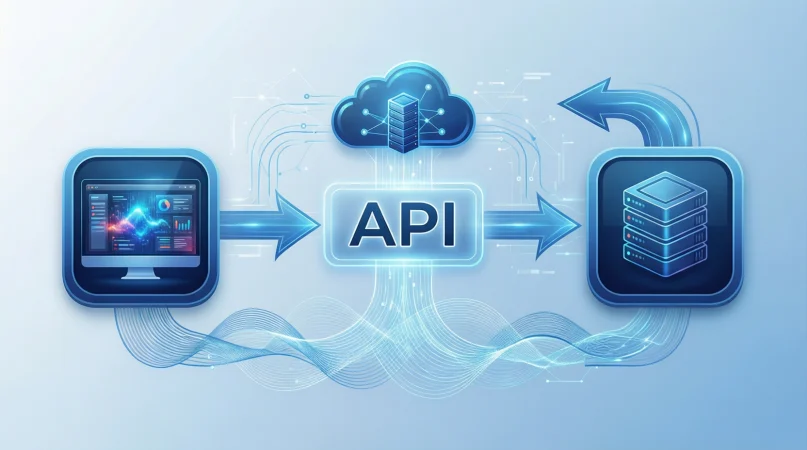
In tech, an API is a set of rules and tools that allows different software applications to communicate and share data with each other safely and efficiently.
In simpler terms:
👉 An API acts like a messenger that takes requests from one system and delivers responses from another.
Why APIs Matter in Modern Technology
APIs are the backbone of modern digital products. Without them:
- Apps wouldn’t sync data
- Websites couldn’t show live updates
- Payments wouldn’t process instantly
- Social media logins wouldn’t work
Almost every digital experience you use today relies on APIs working behind the scenes.
Understanding APIs with a Simple Real-Life Example
Imagine you’re at a restaurant 🍽️
- You (the customer) = The app or website
- The menu = The API
- The kitchen = The server or database
- The waiter = The API again
You don’t go into the kitchen yourself. You order from the menu, the waiter delivers your request, and brings back your food.
That’s exactly how an API works.
Origin of the Term “API”
The term API dates back to the 1960s and 1970s, long before modern web apps existed.
Early History:
- APIs originally referred to interfaces for hardware and operating systems
- Used by programmers to access system-level functions
- Became mainstream with:
- Web development
- Cloud computing
- Mobile apps
- SaaS platforms
Why APIs Became Popular
APIs exploded in popularity because they:
- Enable faster development
- Allow third-party integrations
- Support scalability and automation
- Reduce the need to rebuild systems from scratch
What Is an API Used For in Real Life?
APIs are everywhere — even if you never see them.
Common Real-World API Uses
- 📱 Mobile apps pulling user data
- 🌦️ Weather apps fetching forecasts
- 💳 Payment gateways processing transactions
- 🔐 Logging in with Google or Facebook
- 📦 Tracking shipments
- 📊 Displaying live analytics
Everyday Apps That Use APIs
- Google Maps
- Spotify
- Uber
- Netflix
- Amazon
How APIs Work
Here’s a simplified breakdown:
- Client sends a request
(Example: “Get today’s weather”) - API receives the request
It checks permissions and format - Server processes the request
Pulls data from database or system - API sends a response
Data is returned in a structured format (like JSON)
Types of APIs in Tech
Not all APIs are the same. Here are the most common types:
1. Web APIs
Used for web and mobile apps
Examples:
- REST APIs
- GraphQL APIs
2. Operating System APIs
Allow apps to interact with OS features
Examples:
- Windows API
- macOS API
3. Hardware APIs
Used to communicate with devices
Examples:
- Camera APIs
- Bluetooth APIs
4. Library or Framework APIs
Used by developers within code
Examples:
- Java API
- Python API
Popular API Styles Explained Simply
REST API (Most Common)
- Uses HTTP methods (GET, POST, PUT, DELETE)
- Lightweight and fast
- Easy to understand
SOAP API
- XML-based
- Highly structured
- More secure but complex
GraphQL API
- Flexible queries
- Efficient data fetching
- Popular in modern apps
API Example Table
| Example API | What It Does | Real-Life Use |
|---|---|---|
| Google Maps API | Provides maps and navigation | Ride-sharing apps |
| Payment API | Handles transactions | Online shopping |
| Weather API | Returns weather data | Forecast apps |
| Social Login API | Authenticates users | “Login with Google” |
| SMS API | Sends text messages | OTP verification |
API Examples with Tone Context
Although APIs are technical, how we talk about them can vary.
Friendly Tone 😊
“We use an API to connect our app with real-time data.”
Neutral/Professional Tone
“The platform integrates third-party services via secure APIs.”
Negative or Dismissive Tone 😒
“The API documentation is outdated and hard to use.”
Tone matters when discussing APIs in documentation, meetings, or support communication.
API vs Similar Tech Terms
API vs SDK
| Feature | API | SDK |
|---|---|---|
| Meaning | Interface for communication | Complete development kit |
| Includes Tools? | ❌ No | ✅ Yes |
| Used For | Data exchange | App development |
API vs Web Service
- All web services are APIs
- Not all APIs are web services
API vs Microservices
- APIs enable communication
- Microservices are system architecture
Alternate Meanings of API
While API almost always means Application Programming Interface in tech, it can also stand for:
- American Petroleum Institute (energy industry)
- Academic Performance Index (education)
- Active Pharmaceutical Ingredient (healthcare)
👉 Context usually makes the meaning clear.
Polite & Professional Alternatives to “API”
Depending on audience, you might say:
- “Integration interface”
- “System connection”
- “Data access layer”
- “Service endpoint”
These alternatives are useful in non-technical conversations or executive summaries.
Common API Terminology
- Endpoint – Specific API URL
- Request – Data sent to API
- Response – Data returned
- Authentication – Security verification
- JSON – Common data format
- Rate Limit – Usage restriction
Best Practices for Using APIs
If you’re working with APIs:
- 🔒 Always secure API keys
- 📄 Read documentation carefully
- ⚡ Handle errors gracefully
- 📉 Monitor performance
- 🔁 Avoid unnecessary requests
Conclusion
APIs are the invisible connectors that make modern technology work smoothly. When you understand what API means in tech, you’re essentially understanding how software systems communicate, share data, and deliver seamless digital experiences.
From mobile apps and websites to payment systems and cloud platforms, APIs act as secure messengers that save time, reduce complexity, and allow developers and businesses to innovate faster. You don’t need to be a programmer to benefit from APIs every time you log in with Google, check the weather, or stream a video, an API is working behind the scenes.
FAQs
What does API mean in tech?
API means Application Programming Interface a system that allows software applications to communicate with each other.
Is an API a software?
No. An API is not software itself; it’s an interface that allows software to interact.
Do only developers use APIs?
Mostly yes, but non-developers benefit from APIs through apps and services they use daily.
Are APIs free?
Some APIs are free, while others are paid or have usage limits.
Is API the same as backend?
No. APIs connect the frontend and backend but are not the backend itself.
Can APIs be hacked?
Yes, if poorly secured which is why authentication and encryption are important.
Why are APIs important for businesses?
They enable automation, integrations, scalability, and faster innovation.
What language are APIs written in?
APIs can be built using many languages like Python, Java, JavaScript, PHP, or C#.

Alex Ferguson is a word enthusiast at ValneTix.com who turns the meanings of everyday words into fascinating discoveries. His articles make learning language easy, enjoyable and practical for all readers.