
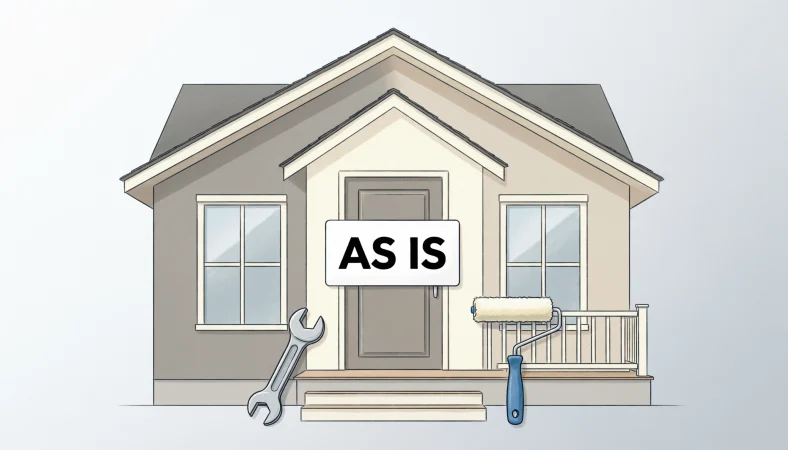
“As is” in real estate means a property is being sold in its current condition, with the seller making no repairs, upgrades, or improvements before closing.
The buyer agrees to purchase the home exactly as it stands visible issues, hidden defects, and all.
Why “As Is” Can Make Buyers Nervous and Sellers Relieved
You’re scrolling through property listings, excited about a great price… and then you see two words that stop you cold: “Sold As Is.”
For some buyers, that phrase signals risk.
For others especially investors it signals opportunity 💡.
But what does “as is” really mean in real estate, and how should you interpret it before making an offer?
This guide breaks it all down in plain English no legal jargon overload. Whether you’re a first-time homebuyer, seller, or curious investor, you’ll learn exactly how “as is” works, when it’s used, what it does and doesn’t mean, and how to protect yourself on either side of the deal.
What Does “As Is” Mean in Real Estate?
In real estate, “as is” means the seller is offering the property in its current condition and is not obligated to make repairs or concessions for defects discovered before closing.
Key points at a glance:
- The buyer accepts the property with all known and unknown issues
- The seller typically refuses repair requests
- Inspections are often still allowed (but results won’t trigger repairs)
- Price often reflects the property’s condition
Important note:
“As is” does NOT mean “no disclosures” or “no inspections.” Those are common misconceptions we’ll clear up later.
The Origin of “As Is” in Real Estate
Where Did the Term Come From?
The phrase “as is” comes from contract law and predates modern real estate. Historically, it was used in:
- Auctions
- Estate sales
- Commercial transactions
Its legal purpose was simple:
👉 Limit the seller’s liability after the sale.
As real estate markets expanded and properties aged, “as is” became a common way to sell homes that:
- Needed significant repairs
- Were inherited or foreclosed
- Belonged to sellers unwilling or unable to fix issues
Why “As Is” Listings Are Popular Today
“As is” listings are more common now than ever, especially in:
- Hot seller’s markets
- Investor-heavy areas
- Distressed property sales
- Estate or probate situations
Sellers Like “As Is” Because:
- It reduces repair costs
- It speeds up the sale
- It limits negotiation fatigue
Buyers Accept “As Is” Because:
- Prices may be lower
- Competition can be less intense
- Renovation potential exists
How “As Is” Works in Real-World Transactions
Let’s walk through how an “as is” sale typically unfolds.
Step-by-Step Overview
- Property is listed “as is”
- Buyer submits an offer acknowledging condition
- Inspection is conducted (usually)
- Buyer may:
- Proceed
- Walk away (if allowed by contract)
- Renegotiate price (sometimes)
- Proceed
- Seller declines repair requests
- Deal closes—or doesn’t
⚠️ The exact rules depend on the contract and local laws.
What “As Is” Does NOT Mean (Common Myths)
Myth 1: No Inspections Allowed ❌
Reality: Inspections are usually allowed unless explicitly waived.
Myth 2: Seller Can Hide Defects ❌
Reality: Sellers must still disclose known material defects.
Myth 3: Buyer Has No Rights ❌
Reality: Buyers retain rights outlined in the contract and local laws.
Myth 4: The Property Is Unlivable ❌
Reality: Many “as is” homes are perfectly livable—they just aren’t updated.
Example Table: “As Is” vs Standard Sale
| Feature | As Is Sale | Standard Sale |
| Seller repairs | ❌ No | ✅ Often yes |
| Buyer inspection | ✅ Usually | ✅ Yes |
| Disclosure required | ✅ Yes | ✅ Yes |
| Price flexibility | ⚠️ Limited | ✅ Higher |
| Ideal for investors | ✅ Yes | ❌ Less |
| Risk level for buyer | 🔴 Higher | 🟢 Lower |
Tone & Context: How “As Is” Is Communicated
Neutral / Professional Tone
“Property is being sold as is. Seller will make no repairs.”
This is the most common and professional usage.
Friendly / Transparent Tone
“Home is sold as is, priced accordingly. Inspections welcome!”
Feels open and buyer-friendly 😊
Dismissive / Defensive Tone
“As is. No repairs. No exceptions.”
This can discourage traditional buyers.
Common Scenarios Where Homes Are Sold “As Is”
1. Estate Sales
Heirs often lack knowledge or funds to repair the property.
2. Foreclosures
Banks sell properties without making improvements.
3. Distressed Properties
Homes with structural, electrical, or plumbing issues.
4. Investor Flips (Pre-Renovation)
Buyers plan to remodel anyway.
5. Competitive Markets
Sellers use “as is” to reduce post-offer negotiations.
Pros and Cons of Buying an “As Is” Property
Pros ✅
- Lower purchase price
- Less competition
- Renovation potential
- Faster closing
Cons ❌
- Unexpected repair costs
- Financing challenges
- Limited negotiation power
- Higher risk for first-time buyers
Financing Challenges with “As Is” Homes
Not all loans work well with “as is” properties.
Common Issues:
- FHA and VA loans may require repairs
- Appraisals can flag safety issues
- Lenders may withhold approval
Better Financing Options:
- Conventional loans
- Renovation loans (FHA 203(k))
- Cash purchases
Comparison: “As Is” vs Similar Real Estate Terms
“As Is” vs “Fixer-Upper”
- As Is: Seller won’t repair
- Fixer-Upper: Implies repairs needed, but seller may negotiate
“As Is” vs “Where Is”
- As Is: Condition-based
- Where Is: Location-based (more common in commercial real estate)
“As Is” vs “No Repairs”
- Often used interchangeably, but “as is” has stronger legal implications
Alternate Meanings of “As Is”
Outside real estate, “as is” can mean:
- Buying used goods without warranty
- Accepting something without modification
- Software or product disclaimers
Example:
“This item is sold as is, no returns.”
The core idea is the same: no guarantees beyond what you see.
Polite or Professional Alternatives to “As Is”
Some sellers prefer softer phrasing:
- “Priced to reflect condition”
- “Seller will not make repairs”
- “Property offered in current condition”
- “Repairs to be buyer’s responsibility”
These sound less harsh while conveying the same message.
Practical Tips for Buyers Considering an “As Is” Home
- Always get an inspection 🔍
- Budget for surprise repairs
- Bring contractors for walk-throughs
- Understand your financing limits
- Negotiate price not repairs
- Read disclosures carefully
Practical Tips for Sellers Listing “As Is”
- Price realistically
- Disclose everything known
- Expect fewer repair requests
- Be clear in listing language
- Consider pre-inspections
FAQs
1. Can I still get an inspection on an as-is home?
Yes, unless the contract specifically waives it.
2. Can a buyer back out after inspection?
Often yes, depending on contingencies.
3. Does as is mean no disclosures?
No. Sellers must disclose known defects.
4. Are as-is homes cheaper?
Usually, but not always market conditions matter.
5. Is buying as is risky?
It can be, especially without proper due diligence.
6. Can sellers still negotiate price?
Yes, especially if major issues are uncovered.
7. Do lenders approve as-is homes?
Sometimes. Condition and loan type matter.
8. Is as is bad for first-time buyers?
Not necessarily but it requires extra caution.
Conclusion
“As is” in real estate doesn’t mean “run away.” It means “proceed with eyes open.”
For sellers, it’s a practical way to reduce stress and cost.
For buyers, it can be a smart move or an expensive mistake depending on preparation.
- “As is” refers to condition, not legality
- Inspections and disclosures still matter
- Price should reflect risk
- Knowledge is your strongest protection
Handled wisely, an “as is” sale can be a win-win 🏡.

Tom Holland is a language enthusiast at ValneTix.com passionate about unraveling the meanings behind words and phrases. His clear, insightful and engaging explanations help readers expand their vocabulary and communicate with confidence.