
Last Updated on February 18, 2026
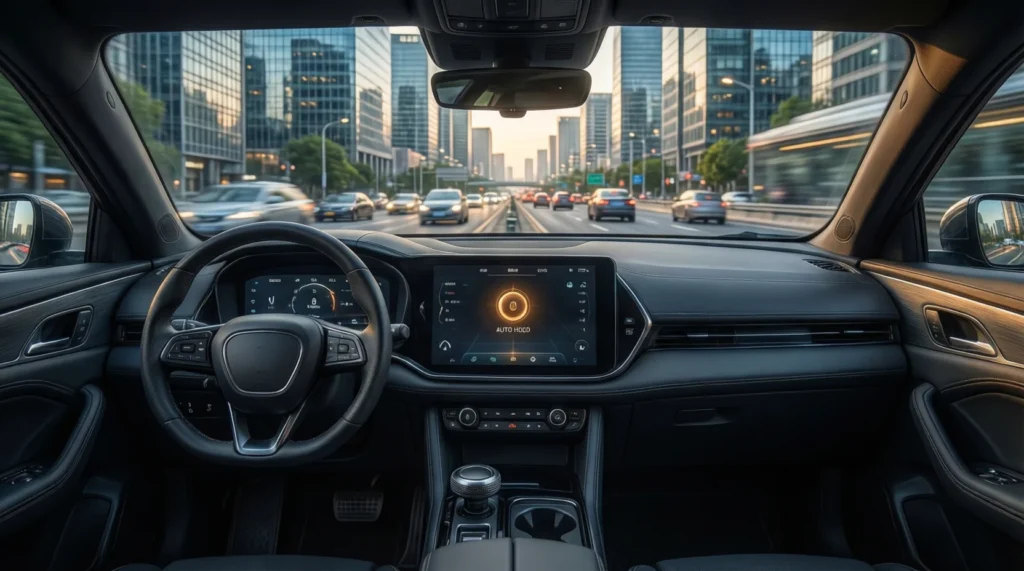
Auto Hold in a car is a safety and convenience feature that automatically keeps your vehicle stationary after you come to a complete stop, without needing to keep your foot on the brake pedal.
It works by maintaining brake pressure until you press the accelerator again, making stops more comfortable and stress free.
Imagine stopping at a traffic light on a steep hill. Your foot is tired, traffic is heavy, and you’re worried about rolling backward the moment you lift your foot off the brake. Now imagine the car holding itself in place no rolling, no panic, no pressure on your leg.
That’s exactly what Auto Hold does.
As modern cars become smarter and more driver-focused, features like Auto Hold are no longer luxuries reserved for high-end vehicles. They’re quickly becoming standard in everyday sedans, SUVs, and even compact cars.
But what does Auto Hold really mean in a car? How does it work? Is it safe? And when should you use it or avoid it?
Let’s break it all down in plain, friendly language.
What Does Auto Hold Mean in a Car?
Auto Hold is an advanced braking function that automatically holds your car in place once it has come to a complete stop, even after you remove your foot from the brake pedal.
In simple terms:
- You stop the car
- Auto Hold activates
- The brakes stay engaged automatically
- The car doesn’t move until you press the accelerator
No creeping forward. No rolling backward. No foot fatigue.
How Does Auto Hold Work?
Auto Hold works hand-in-hand with several modern vehicle systems, including:
- Electronic Stability Control (ESC)
- Anti-lock Braking System (ABS)
- Electronic Parking Brake (EPB)
Step-by-Step Process:
- You activate Auto Hold (usually via a button near the gear selector).
- You press the brake pedal to come to a full stop.
- The system detects zero movement and locks the brakes.
- A dashboard indicator confirms Auto Hold is active.
- When you press the accelerator, the brakes release automatically.
The entire process happens in milliseconds—smoothly and safely.
Why Was Auto Hold Created? (Origin & Popularity)
Auto Hold was developed to address driver fatigue, urban traffic stress, and hill-start anxiety.
Key Reasons for Its Popularity:
- Increased stop-and-go traffic in cities
- Growing focus on driver comfort
- Integration with electronic parking brakes
- Demand for safer hill starts
Luxury brands like Mercedes-Benz, BMW, and Audi were early adopters. Today, you’ll find Auto Hold in mainstream models from Toyota, Hyundai, Honda, Kia, and Volkswagen.
Real-World Usage: When Auto Hold Shines ✨
Auto Hold isn’t just a fancy button—it’s incredibly practical.
Common Scenarios:
- 🚦 Long traffic lights
- 🚘 Stop-and-go city driving
- ⛰️ Hills and slopes
- 🚗 Drive-through lines
- 🧍♂️ Heavy traffic jams
Drivers who commute daily or drive in congested areas often say Auto Hold becomes a “can’t-live-without” feature.
Example Scenarios With Tone Context
Friendly / Casual
“Auto Hold is amazing in traffic—I don’t even think about the brake anymore 😄”
Neutral / Informative
“The vehicle’s Auto Hold feature keeps the car stationary during stops.”
Negative / Dismissive
“I turned off Auto Hold because it feels weird when the car doesn’t move right away.”
Auto Hold vs Similar Features
Many drivers confuse Auto Hold with other braking features. Here’s a clear comparison:
Comparison Table: Auto Hold vs Related Features
| Feature | Purpose | Releases Automatically? | Used While Driving? |
| Auto Hold | Holds car at stops | Yes | Yes |
| Parking Brake | Secures parked car | No | No |
| Hill-Start Assist | Prevents rollback on slopes | Yes (briefly) | Yes |
| Brake Hold | Another name for Auto Hold | Yes | Yes |
Is Auto Hold the Same as Brake Hold?
Yes—Brake Hold is simply another term manufacturers use for Auto Hold. The function remains the same; only the name changes.
Does Auto Hold Work Automatically?
Auto Hold must be enabled manually in most cars. However:
- Once enabled, it stays active until turned off
- Some cars remember your last setting
- Others reset it after restarting the engine
Always check your dashboard indicator light to confirm activation.
Is Auto Hold Safe?
Absolutely—when used correctly.
Safety Benefits:
- Reduces driver fatigue
- Prevents unintended rolling
- Improves control on slopes
- Works with advanced safety systems
Things to Keep in Mind:
- Not ideal for quick maneuvering
- Can feel abrupt to new drivers
- Slight delay when accelerating (normal behavior)
When Should You Avoid Using Auto Hold?
Auto Hold isn’t perfect for every situation.
Avoid Auto Hold When:
- Parking or reversing slowly
- Driving in snow or ice
- Towing heavy loads
- Performing precise low-speed maneuvers
Common Dashboard Symbols for Auto Hold
Most vehicles show:
- A green or white “AUTO HOLD” icon when active
- A yellow or red warning if there’s a malfunction
Check your owner’s manual for exact symbols.
Alternate Meanings of “Auto Hold”
Outside automotive contexts, “Auto Hold” may refer to:
- Camera tripod locking features
- Industrial machine safety systems
However, in vehicles, Auto Hold almost always refers to braking.
Professional Alternatives (If You Prefer Manual Control)
If Auto Hold isn’t your style, consider:
- Hill-Start Assist only
- Manual parking brake usage
- Traditional brake pedal control
There’s no “right” choice just personal preference.
FAQs
1. What does Auto Hold mean in a car?
It’s a system that keeps your car stopped automatically without holding the brake pedal.
2. Is Auto Hold bad for brakes?
No. It uses electronic braking systems designed for repeated use.
3. Does Auto Hold work in traffic?
Yes this is one of its best use cases.
4. Can Auto Hold be turned off?
Yes, usually with a dedicated button.
5. Is Auto Hold the same as a parking brake?
No. Auto Hold is temporary and releases automatically.
6. Does Auto Hold drain battery?
No significant drain; it’s designed for efficiency.
7. Can Auto Hold be used on hills?
Yes—it’s especially helpful on slopes.
8. Why does my car jerk when Auto Hold releases?
This is normal and depends on throttle input.
Conclusion
- Auto Hold improves comfort and safety during stops
- Ideal for traffic, hills, and daily commuting
- Not a replacement for parking brakes
- Best used in urban and stop and go driving
- Takes a little time to get used to but worth it
Once you adapt, Auto Hold feels like a natural extension of modern driving.

James Colton is a language researcher and content writer who loves exploring the deeper meanings behind everyday words. With a background in linguistics, he breaks down complex terms into simple, clear explanations that anyone can understand.