
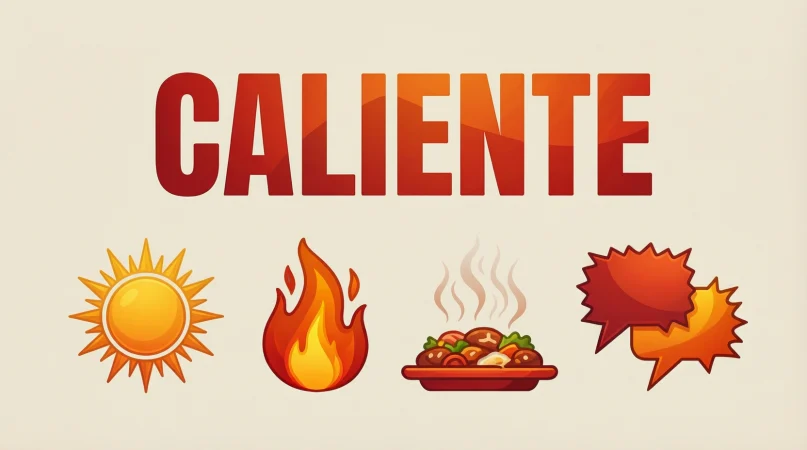
In Spanish, caliente primarily means “hot” in terms of temperature, but depending on context, it can also describe sexual attractiveness, passion, intensity, or even danger.
At first glance, it looks simple but this word carries more meaning, nuance, and cultural flavor than many learners expect. Whether you’ve heard it in a song, a movie, casual conversation, or even a meme, caliente can mean very different things depending on context.
Let’s break it all down clearly, naturally, and correctly so you never feel confused (or embarrassed 😅) when you hear or use it.
🧠 Quick Overview
- Literal meaning: Hot (temperature)
- Extended meanings: Spicy, heated, intense, passionate, sexually attractive
- Tone: Neutral, descriptive, playful, or suggestive—depending on context
- Common mistake: Using caliente instead of calor when saying “I’m hot”
We’ll cover all of these in detail below 👇
🌍 Origin and Linguistic Background of Caliente
The Spanish word caliente comes from the Latin word calēns, meaning warm or glowing. Over time, it evolved into calēre (“to be hot”), eventually becoming caliente in modern Spanish.
Key linguistic facts:
- It’s an adjective
- It agrees in gender and number
- caliente (singular)
- calientes (plural)
- Same form for masculine and feminine nouns
Examples:
- El café está caliente. (The coffee is hot.)
- Las sopas están calientes. (The soups are hot.)
🔥 Literal Meaning: Caliente as “Hot”
The most common and safest meaning of caliente refers to physical heat.
Common everyday uses:
- Food and drinks
- Weather
- Objects
- Surfaces
Examples:
- La comida está caliente.
→ The food is hot. - Hace un día muy caliente.
→ It’s a very hot day. - Ten cuidado, el plato está caliente.
→ Be careful, the plate is hot.
📝 Tone: Neutral and descriptive
🧭 Context: Daily conversation, restaurants, weather reports
🌶️ Does Caliente Mean “Spicy”?
Yes—sometimes.
In many Spanish-speaking regions, caliente can describe spicy food, especially informally. However, the more precise word for spicy-hot (chili heat) is picante.
Example:
- Esta salsa está muy caliente.
→ This sauce is very spicy.
💡 Tip:
If you want to be precise:
- Caliente = temperature
- Picante = spicy (chili heat)
❤️ Figurative Meaning: Passion, Intensity & Emotion
Spanish frequently uses caliente metaphorically to describe heated situations, strong emotions, or intensity.
Examples:
- La discusión se puso caliente.
→ The argument got heated. - El partido estuvo muy caliente.
→ The match was intense. - El ambiente político está caliente.
→ The political climate is tense.
📝 Tone: Serious, descriptive, sometimes dramatic
🎯 Usage: News, sports commentary, debates
😏 Slang Meaning: Caliente as “Sexy” or “Attractive”
Here’s where learners often get surprised.
In informal or slang contexts, caliente can mean:
- Sexy
- Hot-looking
- Sexually aroused or suggestive
Examples:
- Esa persona está muy caliente.
→ That person is very sexy. - La escena fue bastante caliente.
→ The scene was pretty steamy.
⚠️ Important Cultural Note:
This meaning is not always appropriate. Using caliente to describe a person can sound flirtatious, bold, or even inappropriate depending on tone, relationship, and setting.
❌ Common Mistake: “I Am Hot” ≠ Estoy Caliente
One of the most famous Spanish mistakes made by English speakers:
❌ Incorrect:
- Estoy caliente.
→ Sounds like: “I am sexually aroused.”
✅ Correct:
- Tengo calor.
→ I am hot (temperature).
Why?
- Caliente describes things
- Calor describes how you feel
This difference matters a lot 😬
🧾 Example Table: Meanings of Caliente by Context
| Context | Meaning | Example | Tone |
|---|---|---|---|
| Food | Hot (temperature) | El café está caliente. | Neutral |
| Weather | Hot | Hoy está muy caliente. | Neutral |
| Emotions | Heated/intense | La discusión fue caliente. | Serious |
| Slang | Sexy/steamy | Una escena caliente. | Informal |
| Mistake | Sexual meaning | Estoy caliente. | Unintended |
🔄 Comparison with Related Spanish Words
Caliente vs Calor
| Word | Usage | Example |
|---|---|---|
| Caliente | Describes objects | El agua está caliente. |
| Calor | Describes sensation | Tengo calor. |
Caliente vs Picante
| Word | Meaning | Example |
|---|---|---|
| Caliente | Hot (general) | La sopa está caliente. |
| Picante | Spicy (chili heat) | La salsa es picante. |
Caliente vs Sexy / Atractivo
| Word | Tone | When to Use |
|---|---|---|
| Caliente | Suggestive | Informal or slang |
| Sexy | Direct | Casual compliments |
| Atractivo | Polite | Professional or neutral |
🧑💼 Polite or Professional Alternatives
If you want to avoid awkwardness, here are safe alternatives:
- Atractivo / atractiva – attractive
- Guapo / guapa – handsome / beautiful
- Interesante – interesting
- Elegante – elegant
- Apasionado – passionate (non-sexual tone)
🌎 Popularity and Real-World Usage
Caliente is extremely common across:
- Spain
- Mexico
- Latin America
- U.S. Spanish-speaking communities
It appears frequently in:
- Music lyrics
- Movies and TV
- Social media captions
- Everyday conversation
Because of its multiple meanings, context is everything.
🔍 Alternate Meanings
In some regions, caliente can also imply:
- Dangerous (zona caliente)
- Active or intense (tema caliente)
These meanings are contextual and not slang-based.
Conclusion
So, what does caliente mean in Spanish? At its core, caliente means hot, but its true power lies in how flexibly it’s used across different contexts. From describing the temperature of food and weather to expressing intensity, passion, or even sexual attraction, the meaning of caliente depends entirely on tone, setting, and cultural awareness.
For Spanish learners, the most important takeaway is avoiding common mistakes especially confusing estoy caliente with tengo calor. A small wording error can completely change your message. Understanding when caliente is neutral, expressive, or suggestive helps you communicate naturally and confidently.
By mastering this word and its alternatives, you’ll sound more fluent, respectful, and culturally aware in real-life Spanish conversations. When in doubt, choose a safer synonym or let context guide your choice.
FAQs
What does caliente literally mean in Spanish?
It literally means hot, referring to temperature.
Can caliente mean sexy?
Yes, in informal or slang contexts, it can mean sexy or sexually suggestive.
Is caliente rude?
Not inherently—but it can be inappropriate if used carelessly to describe people.
How do you say “I’m hot” correctly in Spanish?
Say “Tengo calor”, not estoy caliente.
Is caliente used the same in all countries?
The core meaning is universal, but slang usage varies by region.
Does caliente mean spicy?
Sometimes, but picante is the more accurate word for spicy food.
Can caliente describe emotions?
Yes, it often describes heated or intense situations.
What’s the safest way to compliment someone?
Use atractivo, guapo, or guapa instead of caliente.
Discover More Related Articles:-
- What Does Worship Mean in the Bible? Biblical Definition & Meaning (2026)
- What Does Melody Mean in Music? Definition, Examples & Guide (2026)

Olivia Brooks is a skilled writer at ValneTix.com dedicated to making word meanings simple, practical and relatable. Her clear explanations empower readers to use language effectively and confidently.