

Code Gray in a hospital means there is a security-related situation involving a person who is aggressive, combative, or behaving in a threatening manner, but not necessarily with a weapon.
It alerts hospital staff and security to respond quickly to de-escalate the situation and keep patients, visitors, and employees safe.
Imagine you’re visiting a hospital and suddenly hear an announcement over the intercom: “Code Gray, Code Gray, third floor.”
Your heart skips a beat. Is it dangerous? Is someone hurt? Should you move or stay put?
Hospital “codes” can sound mysterious and alarming, especially if you’re not part of the medical staff. One of the most commonly misunderstood alerts is Code Gray.
In this in-depth guide, we’ll break it all down in plain, human language no medical jargon overload. By the end, you’ll clearly understand what Code Gray means in a hospital, why it’s used, how it compares to other hospital codes, and what (if anything) visitors or patients should do when they hear it.
Why Hospitals Use Color Codes at All
Before zooming in on Code Gray, it helps to understand the bigger picture.
Hospitals are busy, high-stress environments. Clear, calm communication during emergencies is essential but public panic must be avoided. That’s why many hospitals use color-coded alerts instead of explicit announcements like “violent person in the hallway.”
Benefits of Hospital Color Codes
- 🚨 Discreet communication without alarming patients
- ⏱️ Fast response from trained staff
- 🧠 Standardized language understood across departments
- 🏥 Safer environment for vulnerable patients
Code Gray is one of these standardized alerts focused specifically on behavioral and security threats.
What Does Code Gray Mean in a Hospital?
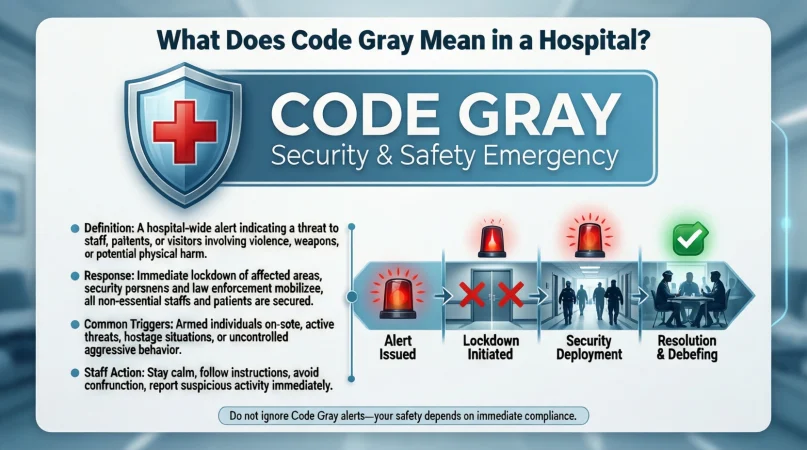
A Code Gray is typically called when:
- A person becomes verbally aggressive
- Someone is physically combative
- A patient or visitor is threatening staff or others
- There’s escalating behavior that could turn violent
Importantly:
Code Gray does NOT automatically mean there is a weapon involved.
If a weapon is confirmed, many hospitals escalate to Code Silver or Code Black (more on that later).
Common Situations That Trigger a Code Gray
Here are real-world examples where a hospital might announce Code Gray:
- A patient experiencing severe confusion or delirium starts attacking staff
- A visitor becomes angry over wait times and begins shouting or throwing objects
- A distressed family member refuses to leave a restricted area
- A person under the influence of drugs or alcohol becomes aggressive
- A mental health crisis escalates into unsafe behavior
These situations are more common than most people realize—and hospitals train extensively for them.
Origin and Popularity of “Code Gray”
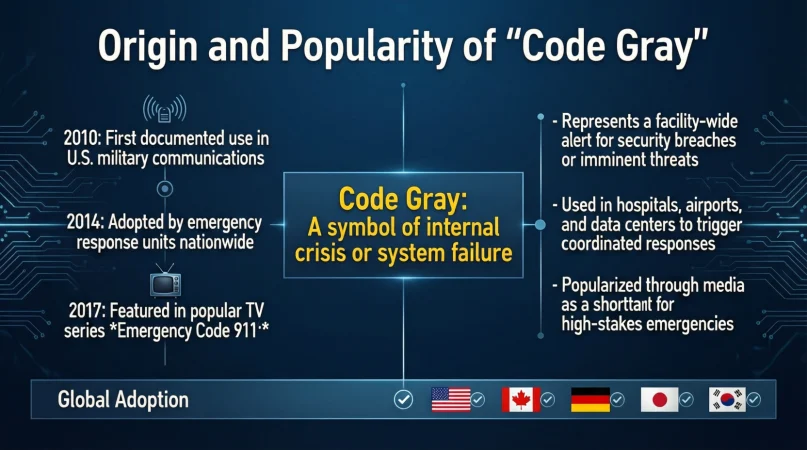
Where Did Code Gray Come From?
Hospital color codes developed in the mid-20th century as healthcare systems grew larger and more complex. Over time:
- Fire became Code Red
- Cardiac arrest became Code Blue
- Security threats became Code Gray
There is no single global standard, but Code Gray has become widely accepted in:
- The United States
- Canada
- Australia
- Parts of Europe and Asia
Why the Color “Gray”?
The color gray symbolically represents:
- ⚖️ Uncertainty
- ⚠️ Escalating risk
- 🧠 Behavioral instability
It’s a neutral color—not as extreme as black or red—matching the idea that the situation is serious but often manageable through de-escalation.
How a Code Gray Is Handled
When Code Gray is announced, a well-rehearsed process begins.
Typical Hospital Response
- Security is dispatched to the location
- Trained staff (often including nurses and administrators) assist
- De-escalation techniques are used first
- Physical intervention is a last resort
- Local law enforcement may be called if needed
Most Code Gray incidents are resolved quickly and calmly.
What Should Patients or Visitors Do During Code Gray?
If you’re not directly involved, here’s how to respond:
Do This ✅
- Stay calm
- Remain in your room or current area
- Follow staff instructions
- Keep hallways clear
Avoid This ❌
- Don’t approach the situation
- Don’t film or take photos
- Don’t spread rumors or panic
- Don’t interfere with staff or security
👉 In most cases, you are not in danger, and the situation will be handled professionally.
Example Scenarios with Tone & Context
Here’s how Code Gray may appear in different contexts:
Neutral / Professional Context
“Attention staff: Code Gray, Emergency Department, Room 12.”
Tone: Calm, controlled
Purpose: Alerts trained responders without alarming the public
Internal Staff Communication
“We had a Code Gray involving an aggressive visitor, now resolved.”
Tone: Informational
Purpose: Documentation and follow-up
Public Explanation (Patient-Friendly)
“A Code Gray means security is handling a behavioral situation. There is no immediate danger.”
Tone: Reassuring 😊
Purpose: Reduce anxiety
Labeled Example Table: Hospital Code Gray Scenarios
| Scenario | Is Code Gray Appropriate? | Reason |
|---|---|---|
| Angry visitor yelling | ✅ Yes | Verbal aggression |
| Patient punching staff | ✅ Yes | Physical threat |
| Person with a gun | ❌ No | Escalates to Code Silver |
| Fire in hallway | ❌ No | Code Red |
| Confused patient resisting care | ✅ Yes | Behavioral risk |
Code Gray vs Other Hospital Codes
Hospital codes can vary, but these comparisons are common:
| Code | Meaning | Key Difference |
|---|---|---|
| Code Gray | Aggressive or combative person | Behavioral threat, usually unarmed |
| Code Silver | Active shooter / weapon | Confirmed weapon |
| Code Black | Bomb threat | Explosive risk |
| Code Red | Fire or smoke | Environmental danger |
| Code Blue | Cardiac or respiratory arrest | Medical emergency |
👉 Code Gray is about behavior, not medical collapse or weapons.
Are There Alternate Meanings of Code Gray?
Yes this is important.
1. Hospital Policies Vary
Some hospitals may use:
- Code White
- Code Strong
- Code Yellow
…instead of Code Gray for aggressive behavior.
2. Outside Hospitals
Outside healthcare settings, “Code Gray” can mean:
- Severe weather (rare)
- Infrastructure failure
- Internal organizational alert
⚠️ Always interpret Code Gray in context.
In hospitals, it almost always relates to security and aggression.
Polite or Professional Alternatives to Saying “Code Gray”
When explaining the situation to patients or families, staff may use softer language:
- “A security situation is being handled”
- “We’re assisting a distressed individual”
- “There’s a behavioral emergency nearby”
These alternatives maintain professionalism and reduce fear.
FAQs
1. Is Code Gray dangerous for patients?
Usually no. Most Code Gray incidents are contained quickly and handled by trained staff.
2. Does Code Gray mean there’s a weapon?
No. Weapons typically trigger Code Silver, not Code Gray.
3. Should visitors leave the hospital during Code Gray?
Not unless instructed. Staying put is often the safest option.
4. Can a patient trigger a Code Gray?
Yes. Patients experiencing confusion, mental health crises, or pain may unintentionally trigger one.
5. How long does a Code Gray last?
Anywhere from a few minutes to longer, depending on the situation—but most resolve fast.
6. Is Code Gray the same in every hospital?
No. Meanings can vary slightly, but aggression or combative behavior is the most common definition.
7. Will police always be called during Code Gray?
Not always. Law enforcement is called only if hospital security needs support.
8. What should I do if I hear Code Gray announced?
Stay calm, follow staff instructions, and avoid the area involved.
Conclusion
- Code Gray means an aggressive or combative person is present
- It’s a security alert, not a medical emergency
- Weapons are not assumed
- Trained teams respond quickly to de-escalate
- Patients and visitors are rarely at risk
Knowing what Code Gray means helps you stay calm, informed, and confident during hospital visits whether you’re a patient, family member, or healthcare worker.

Alex Ferguson is a word enthusiast at ValneTix.com who turns the meanings of everyday words into fascinating discoveries. His articles make learning language easy, enjoyable and practical for all readers.