
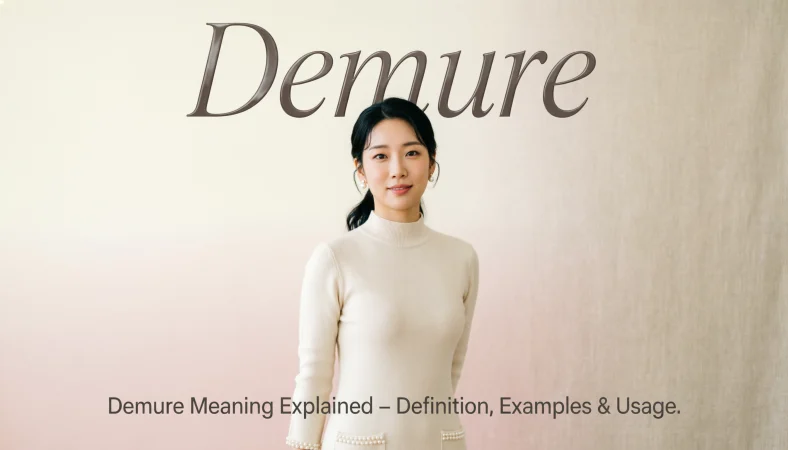
Demure means being reserved, modest, and shy in behavior, appearance, or manner often in a gentle, polite, and controlled way.
It usually describes someone who is quiet, graceful and not overly bold or attention seeking
If you’ve ever seen someone described as demure and wondered whether it’s a compliment, a criticism, or something in between you’re not alone.
The word demure has been trending again in fashion, social media, and personality discussions. But what does demure actually mean? Is it about being shy? Polite? Modest? Or something more layered?
Let’s break it down clearly, professionally, and in a way that actually makes sense.
What Does Demure Meaning in Simple Words?
In simple terms:
- A demure person doesn’t seek attention.
- They act politely and calmly.
- They may appear shy or reserved.
- Their style and behavior are modest rather than flashy.
Think of someone who speaks softly, dresses elegantly but not boldly, and carries themselves with quiet confidence.
But here’s the important part:
👉 Demure is not the same as weak or insecure.
It often suggests quiet strength and self-control.
Origin of the Word “Demure”
The word demure comes from the Old French word “demuré”, meaning “serious” or “sober.”
It entered the English language around the 14th century and originally described someone who was:
- Thoughtful
- Serious
- Calm
- Reserved
Over time, the meaning shifted slightly to focus more on modesty and shy behavior, especially when describing women.
Historical Context
In earlier centuries, especially during Victorian times, being demure was considered an ideal trait particularly for women. It symbolized:
- Proper upbringing
- Respectability
- Moral discipline
Today, the word is still used, but the tone can vary depending on context.
How Is “Demure” Used Today?
The modern usage of demure can appear in several areas:
- Personality descriptions
- Fashion discussions
- Social media trends
- Dating conversations
- Literature and storytelling
Let’s explore how it’s used in real life.
Real-World Usage of “Demure”
1️⃣ In Personality Descriptions
When describing a person:
“She gave a demure smile and quietly introduced herself.”
Tone: Neutral to positive
This suggests:
- Politeness
- Soft-spoken behavior
- Gentle confidence
2️⃣ In Fashion
In fashion, demure usually means:
- Modest clothing
- Minimal skin exposure
- Elegant, classic styles
- Soft colors
Example:
“Her demure dress had long sleeves and a high neckline.”
Tone: Positive (often elegant and classy)
3️⃣ In Social Media Trends
Recently, phrases like “very demure, very mindful” have become viral on platforms like TikTok.
Here, demure is often used playfully or ironically. Someone may act overly modest in a humorous way.
Tone: Can be sarcastic or playful 😌
4️⃣ In Literature
Classic novels frequently describe characters as demure, especially romantic interests.
For example, characters in works by authors like Jane Austen often display demure behavior—calm, polite, and socially proper.
Example Table: How “Demure” Changes by Context
| Context | Example Sentence | Tone | Meaning Implied |
|---|---|---|---|
| Friendly | “She looked so demure at the wedding.” | Positive | Elegant & modest |
| Neutral | “He admired her demure personality.” | Neutral | Quiet & reserved |
| Negative | “Stop acting so demure.” | Slightly dismissive | Pretending to be overly shy |
| Fashion | “A demure outfit for a formal dinner.” | Positive | Classy & modest |
| Sarcastic | “Oh yes, very demure of you!” | Playful | Teasing tone |
Is “Demure” Always a Compliment?
Not always.
The tone depends on context.
Positive Meaning:
- Graceful
- Well-mannered
- Modest
- Elegant
Neutral Meaning:
- Quiet
- Reserved
- Soft-spoken
Negative Meaning:
- Overly shy
- Pretending to be innocent
- Lacking confidence
So if someone calls you demure, pay attention to:
- Their tone
- The situation
- Body language
Demure vs Similar Words (Comparison)
Many people confuse demure with other personality traits. Let’s clarify the differences.
| Word | Meaning | Difference from Demure |
|---|---|---|
| Shy | Nervous around people | Shy may imply anxiety; demure doesn’t |
| Modest | Not bragging | Modest focuses on humility |
| Reserved | Emotionally controlled | Reserved can apply to both genders equally |
| Introverted | Gains energy alone | Introversion is personality type, not behavior style |
| Timid | Easily frightened | Timid suggests weakness, demure doesn’t |
Key Difference:
👉 Demure suggests controlled elegance.
👉 Timid suggests fear.
Very different meanings.
Alternate Meanings of Demure
Although rare, demure can sometimes imply:
- Pretending to be modest
- Being coy or flirtatiously shy
- Acting innocent strategically
Example:
“She gave him a demure look before laughing.”
Here, it may imply playful charm rather than genuine shyness.
Polite or Professional Alternatives to “Demure”
If you’re writing professionally and want alternatives, consider:
- Reserved
- Modest
- Soft-spoken
- Graceful
- Composed
- Poised
- Elegant
- Discreet
In formal writing, “composed” or “poised” often sound more modern.
When Should You Use “Demure”?
Use demure when:
✔ Describing gentle elegance
✔ Talking about modest fashion
✔ Writing fiction
✔ Discussing personality traits
✔ Referring to controlled behavior
Avoid using it when describing:
- Loud personalities
- Bold fashion
- Aggressive behavior
Is “Demure” Gender-Specific?
Historically, it was mostly used for women.
Today, it can describe anyone—regardless of gender.
However, in modern conversation, it’s still more commonly used to describe women, especially in fashion or personality contexts.
Cultural Impact & Popularity
The word has gained renewed popularity due to:
- Fashion trends emphasizing modest dressing
- Social media humor
- Conversations around femininity and elegance
In pop culture, the concept of demure behavior often contrasts with bold or outspoken personalities.
Tone Guide: Friendly, Neutral, or Negative?
Here’s a quick breakdown:
😊 Friendly Tone
“She gave a demure smile.”
= Warm, charming, elegant.
😐 Neutral Tone
“He prefers demure company.”
= Calm, quiet people.
🙄 Dismissive Tone
“Don’t be so demure.”
= Stop pretending to be shy.
Context matters.
FAQs
1. What does demure mean in simple words?
Demure means being quiet, modest, and reserved in behavior or appearance.
2. Is demure a compliment?
It can be a compliment if it implies elegance and grace. However, tone determines whether it’s positive or critical.
3. What does demure mean for a woman?
It usually describes a woman who behaves modestly, politely, and gracefully without seeking attention.
4. Is demure the same as shy?
No. Shy often implies nervousness. Demure suggests calm modesty and self-control.
5. What is a demure outfit?
A demure outfit is modest, elegant, and not revealing—often classic and understated.
6. Can a man be demure?
Yes. Although historically used more for women, the word can describe anyone who behaves modestly and reservedly.
7. What is the opposite of demure?
Opposites include:
- Bold
- Outspoken
- Flashy
- Assertive
- Dramatic
8. Is demure positive or negative?
It depends on context. It can be positive (graceful), neutral (quiet), or slightly negative (overly shy or pretending).
Conclusion
At its core, demure describes someone who carries themselves with quiet modesty, calm grace, and controlled elegance.
It’s not about weakness.
It’s not necessarily about shyness.
It’s about understated presence.
In today’s world where boldness often dominates being demure can feel refreshing, classy, and intentional.
So next time you hear someone described as demure, you’ll know exactly what it means and how to interpret the tone behind it.
Discover More Related Articles:-
- What Does Cariño Mean in English? Meaning Explained 2026
- What Does TC Mean in a Car? Traction Control Explained (2026)
- What Does Ex Parte Mean in Law? Complete Legal Guide 2026

Michael Jordan is a writer at ValneTix.com who explains word meanings in a clear and easy to understand style, helping readers expand their vocabulary and language skills.