
Last Updated on February 19, 2026
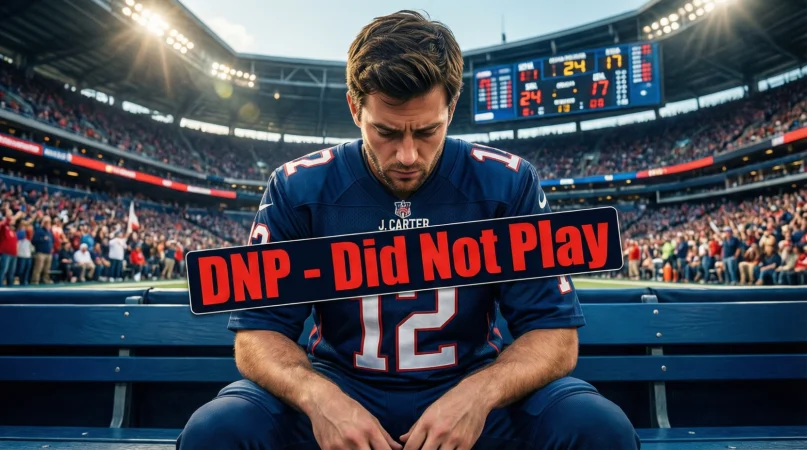
DNP in football stands for “Did Not Play.” It is used in player statistics, game reports, and fantasy football lineups to indicate that a player was on the team roster but did not participate in the game for any reason.
If you follow football whether the NFL, college football, or even fantasy leagues you’ve probably seen the abbreviation DNP pop up in box scores, team sheets, or injury reports. But what exactly does it mean, and why does it matter? Understanding DNP is not just about deciphering a stat; it gives fans, analysts, and fantasy managers a glimpse into team strategy, player health, and roster management. In this guide, we’ll break down everything you need to know about DNP in football, including its origins, usage, and real-world implications.
Origins of DNP
The term DNP originated as a concise way for statisticians and team officials to record player participation or lack thereof in games. Before the digital age, box scores were handwritten or printed in newspapers, so abbreviations like DNP helped streamline reporting. Over time, DNP became a standardized term used across professional, college, and even high school football.
Key points about its origin:
- Abbreviation: DNP = Did Not Play.
- Purpose: Efficiently indicates a player did not see game action.
- Standardization: Adopted widely across NFL, NCAA, and fantasy football platforms.
Why Players Receive a DNP
There are several reasons why a player may be listed as DNP. Understanding the context is essential:
1. Injury or Health Reasons 🏥
Players recovering from injuries may be active on the roster but not cleared to play. They are often listed as DNP to indicate they were available in theory but did not take the field.
2. Coaching Decisions 🏈
Sometimes, a player is healthy but not part of the game plan. Coaches may bench players for strategic reasons, particularly when preparing for high-stakes games or preserving starters for playoffs.
3. Resting Starters 😴
Late in the season, starters may be intentionally rested, especially if playoff qualification is already secured. DNP helps track who was inactive.
4. Suspension or Disciplinary Reasons 🚫
Players serving league-imposed suspensions or team disciplinary measures will also be marked as DNP, even if officially on the roster.
5. Travel or Roster Constraints ✈️
In rare cases, roster limitations or travel issues may result in a player being present but not playing.
DNP in Fantasy Football
For fantasy football managers, understanding DNP is crucial. A DNP directly impacts player points and lineup decisions.
Example:
| Player | Status | Fantasy Points |
| John Doe (QB) | DNP | 0 |
| Mike Smith (RB) | Active | 12 |
Neutral/Negative Tone: Seeing a DNP can be disappointing if the player was expected to score points.- Strategy Tip: Always check injury reports or official team announcements to anticipate DNP listings.
Real-World Usage
DNP is commonly seen in various contexts:
1. Box Scores
Traditional game statistics list DNP next to players who didn’t participate.
2. Injury Reports
Teams officially release weekly injury reports, often including a DNP notation for players limited by injuries.
3. News & Media Coverage
Sports journalists and analysts frequently use DNP to summarize player participation in game recaps.
4. Player Contracts and Negotiations
Some contracts include incentives based on game participation. DNP can affect bonuses tied to appearances.
Examples of DNP in Context
Here’s a table illustrating different DNP scenarios:
| Player Name | Reason for DNP | Context/Tone |
| Tom Brady | Resting Starters | Neutral |
| Christian McCaffrey | Injury | Concerned/Informative |
| Jalen Ramsey | Coach Decision | Neutral/Strategic |
| Saquon Barkley | Suspension | Negative/Dismissive |
Comparison with Related Terms
DNP is often confused with other football abbreviations. Let’s clarify:
| Abbreviation | Meaning | Difference from DNP |
| INJ | Injured | Indicates status due to injury; may still play in future games. DNP can result from injury but is game-specific. |
| O | Out | Officially unavailable to play, usually injury-related; similar to DNP but more formal in medical reports. |
| Q | Questionable | May play; DNP is confirmed non-participation. |
| IR | Injured Reserve | Long-term injury list; players cannot play. DNP is game-specific and can occur even if not on IR. |
Alternate Meanings of DNP
While this article focuses on football, DNP can have other meanings in different contexts:
- Do Not Publish (media/content creation)
- Doctor of Nursing Practice (medical degree)
- Do Not Pass (road signs/traffic)
In football, however, Did Not Play is universally recognized.
Professional Alternatives or Synonyms
If you want to be more formal in reporting:
- Inactive – commonly used on official rosters.
- Unavailable for Game Action – professional/neutral phrasing.
- Benched/Rested – when context is strategic rather than injury.
Tips for Fans and Fantasy Players
- Check Injury Reports Early: Teams release weekly injury updates; DNP listings often follow.
- Understand the Context: Not all DNPs are negative; some indicate strategic resting of starters.
- Track Consistency: Frequent DNPs for a player may signal long-term issues or coach preferences.
- Adjust Lineups Promptly: In fantasy leagues, swapping a DNP player can prevent zero-point weeks.
FAQs
1. What does DNP mean in football stats?
- DNP means “Did Not Play,” indicating a player was on the roster but did not participate in a specific game.
2. Does DNP mean the player is injured?
- Not necessarily. While injuries are a common reason, DNP can also occur due to coaching decisions, rest, or suspensions.
3. Is DNP different from Out or Injured?
- Yes. Out or Injured (O/INJ) often refer to longer-term unavailability, whereas DNP is specific to a single game.
4. How does DNP affect fantasy football?
- Players marked DNP score zero points for that game, directly impacting fantasy lineups.
5. Can a player have multiple DNPs in a season?
- Yes, multiple DNPs can occur due to injuries, rest, or strategic decisions.
6. Are DNPs officially recorded in the NFL?
- Yes, the NFL and NCAA officially record DNPs in box scores and player statistics.
7. Can a player return to play after a DNP?
- Absolutely. DNP is game-specific and does not prevent future participation.
8. Is DNP used in other sports?
- Yes, basketball, baseball, and other sports use DNP to indicate non-participation.
Conclusion
Understanding DNP in football helps fans, analysts, and fantasy managers interpret game statistics accurately. Whether due to injury, strategic rest, or coaching decisions, DNP is an important indicator of player availability. By monitoring DNPs alongside related abbreviations like INJ, O, and IR, you can make smarter predictions, optimize fantasy lineups, and gain deeper insights into team strategies.
- DNP = Did Not Play, game-specific non-participation.
- Reasons include injury, coaching decisions, rest, or suspension.
- Critical for fantasy football and sports analysis.
- Related terms (INJ, O, Q) provide additional context.
- Professional alternatives include Inactive or Unavailable.
Keep an eye on DNP listings they can tell you a lot more about the game than you might think! ⚡

Sophia Lane is a passionate wordsmith and lifestyle writer who covers everything from Spanish phrases to biblical terms. She believes that understanding language helps people connect better with the world around them