
Last Updated on February 19, 2026
DT in football stands for Defensive Tackle, a key defensive position whose primary role is to stop the opposing team’s running plays and pressure the quarterback during passing plays.
Football fans, casual viewers, and aspiring athletes often encounter abbreviations like QB, RB, CB, and DT. While some are easy to decode, others might leave you scratching your head. One of the most common yet sometimes misunderstood terms is DT. Whether you’ve seen it in game commentary, fantasy football stats, or team rosters, understanding what DT means in football can significantly enhance your appreciation of the game.
What Is a DT in Football?
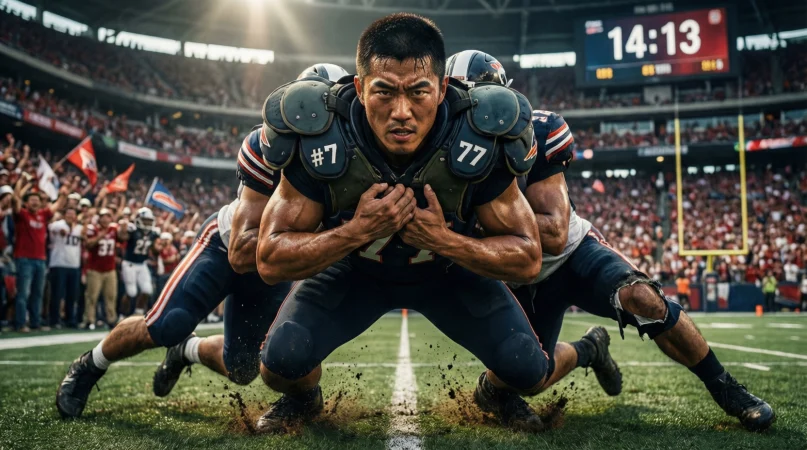
The Defensive Tackle (DT) is a cornerstone of the defensive line. Positioned in the middle of the line, a DT’s job is to control the line of scrimmage, clog running lanes, and disrupt the quarterback’s rhythm.
Here’s a quick breakdown of a DT’s responsibilities:
- Stopping the run: Plugging holes in the offensive line to prevent rushing yards.
- Pressuring the quarterback: Engaging offensive linemen to create opportunities for sacks or hurried throws.
- Occupying blockers: Taking on multiple offensive linemen to free up linebackers and other defenders.
In short, a DT is like the anchor of the defense—a player whose impact might not always make highlight reels but is crucial for a winning defense.
The Origin and Popularity of DT
The concept of the defensive tackle became prominent as football strategies evolved. Initially, defenses were simpler, but as offenses started developing more complex rushing and passing plays, teams recognized the need for a strong interior presence.
- Early days: In the 1940s and 1950s, defenses relied heavily on linemen to control the game.
- Modern era: Today, DTs are celebrated for their size, strength, and agility. Star players like Aaron Donald and Ndamukong Suh have made the position iconic.
Fans and fantasy football enthusiasts often track DTs not just for tackles, but for sacks and forced fumbles, reflecting the modern DT’s multifaceted role.
Types of Defensive Tackles
Not all DTs are the same. Their roles vary based on defensive schemes.
| Type of DT | Role | Typical Physical Traits |
| Nose Tackle (NT) | Lines up directly over the center, specializes in stopping the run | Massive, strong, typically 300+ lbs |
| Three-Technique DT | Lines up on the outside shoulder of the guard, focuses on penetrating the offensive line | Agile, quick, strong pass rusher |
Understanding these sub-roles helps fans appreciate why certain players shine in specific defensive schemes.
DT vs. Other Defensive Positions
It’s easy to confuse DTs with other defensive linemen. Here’s a comparison:
| Position | Role | Key Difference from DT |
| DE (Defensive End) | Lines up on the outside of the defensive line, focuses on sacks and containment | DEs are edge players, while DTs play inside |
| LB (Linebacker) | Plays behind the line, versatile in run, pass, and coverage | LBs are more mobile and cover more ground; DTs primarily battle the line |
| CB (Cornerback) | Covers wide receivers, defends against passes | CBs play in the secondary, DTs are at the line of scrimmage |
This table clarifies why each position is specialized and how DTs complement the defense.
Physical and Mental Traits of a Great DT
Being a DT requires more than sheer size. Teams look for a mix of physical and mental attributes:
Physical Traits
- Strength: To engage multiple blockers.
- Size: Usually 280–330 lbs in modern NFL.
- Agility: To penetrate gaps and react quickly.
- Endurance: To maintain performance throughout the game.
Mental Traits
- Football IQ: Reading offensive plays.
- Patience: Waiting for the right moment to engage blockers.
- Aggressiveness: Executing tackles and pressure.
- Team Awareness: Working with other linemen and linebackers.
A DT who combines these traits can dominate games without always being in the spotlight.
Famous Defensive Tackles
Over the years, several DTs have achieved legendary status:
- Aaron Donald (Los Angeles Rams): Renowned for speed, agility, and sack ability.
- Ndamukong Suh: Combines strength and technique to disrupt offenses.
- Warren Sapp: Hall of Fame DT known for pass-rushing excellence.
Highlighting these players shows how a strong DT can influence both the run and pass game.
DT in Fantasy Football
For fantasy football enthusiasts, DTs may seem less flashy, but they can provide value in leagues tracking defensive stats:
- Sacks: DTs like Aaron Donald rack up points for sacks.
- Tackles for loss (TFLs): Stops behind the line of scrimmage.
- Forced fumbles: Creating turnovers boosts defensive points.
Knowing the DT’s role can help you draft smarter in defensive-focused fantasy leagues.
Alternate Meanings of DT
While DT almost always refers to Defensive Tackle in football, it can occasionally mean:
- Double Team (DT): In basketball or hockey contexts.
- Downtown (DT): Slang in casual conversations.
However, within the football context, DT consistently stands for Defensive Tackle, so context is key.
Tips for Understanding DT in Game Commentary
If you’re new to football, here are some practical tips:
- Watch the line of scrimmage: DTs are usually in the middle.
- Track tackles and sacks: Their stats often reflect performance.
- Listen for key players: Announcers often highlight DTs on dominant defenses.
- Recognize formations: A nose tackle in a 3-4 defense plays differently than a three-technique in a 4-3 scheme.
These insights help you follow games more like a pro.
Common Misunderstandings
Some fans confuse DTs with DEs or defensive ends. Remember:
- DT = inside line of scrimmage
- DE = outside edge, pass rush focus
Also, some casual viewers assume DTs only stop the run. Modern DTs often disrupt passing plays too.
FAQs
1. What does DT stand for in football?
- DT stands for Defensive Tackle, a key interior defensive lineman.
2. Where does a DT line up on the field?
- Typically in the middle of the defensive line, between defensive ends.
3. What is the difference between a DT and a DE?
- DTs play inside, focusing on run-stopping and interior pressure. DEs play outside, focusing on pass rush and containment.
4. Can DTs score points in fantasy football?
- Yes, through sacks, tackles for loss, and forced fumbles.
5. Who are some famous DTs?
- Aaron Donald, Ndamukong Suh, Warren Sapp, and Geno Atkins.
6. What is the typical size of a DT?
- Usually between 280–330 lbs, combining strength and agility.
7. Can a DT play in multiple defensive schemes?
- Yes, but their specific role might change based on 3-4 or 4-3 formations.
8. Are DTs only important for professional football?
- No, they’re crucial at all levels, from high school to the NFL.
Conclusion
Understanding what DT means in football unlocks a deeper appreciation of the game. The Defensive Tackle may not always make flashy plays, but their impact is monumental. By recognizing their role, comparing positions, and learning the traits of great DTs, you can enjoy games more fully and even make smarter fantasy picks. Whether you’re a casual viewer or an aspiring player, knowing the importance of DT helps you see the game through a strategic lens.

Ryan Holloway is an experienced content strategist with a deep interest in etymology and word origins. He enjoys digging into the history behind words and presenting them in a straightforward, engaging way.