
Last Updated on February 6, 2026
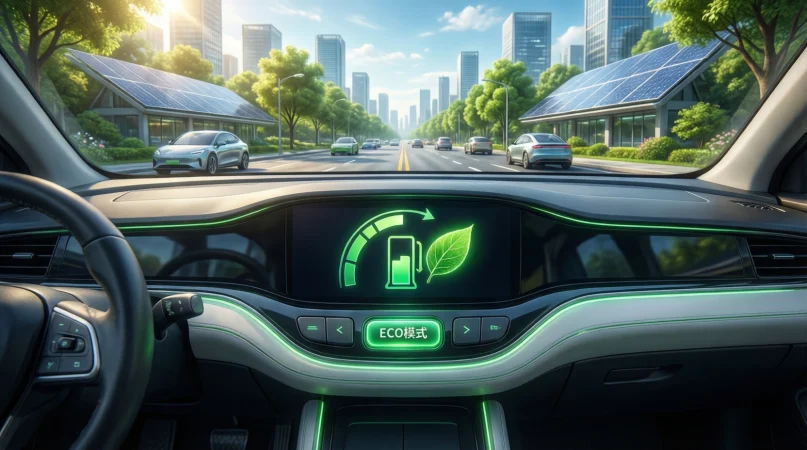
ECO in a car, often called “Eco mode,” is a setting or feature designed to optimize your vehicle’s fuel efficiency, reduce emissions, and promote environmentally friendly driving.
Whether you’re a car enthusiast or a casual driver, you’ve probably seen the “ECO” button on your dashboard and wondered what it actually does. In today’s automotive world, terms like ECO, hybrid, and EV are everywhere—but understanding ECO mode can make a tangible difference in your driving habits, fuel economy, and overall environmental impact. Let’s dive deep!
The Meaning of ECO in Cars
The term ECO is short for “Economy”. In automotive terms, it represents a driving mode that prioritizes fuel efficiency over performance. When you activate ECO mode, your car adjusts its engine, transmission, air conditioning, and other systems to consume less fuel.
Key Features of ECO Mode
- Throttle Control: Reduces engine power output for smoother acceleration.
- Transmission Adjustment: Changes gear shifts to lower RPMs, improving fuel economy.
- Climate Control Optimization: Limits air conditioning or heating usage to save energy.
- Fuel Injection Management: Fine-tunes fuel delivery for efficiency.
By balancing these factors, ECO mode helps drivers get the most mileage out of each gallon or liter of fuel.
The Origin and Popularity of ECO Mode
ECO mode became popular in the early 2000s with the rise of hybrid and fuel-efficient vehicles. Toyota’s Prius, one of the first mainstream hybrid cars, played a major role in popularizing the concept. Over time, other car manufacturers like Honda, Ford, Hyundai, and Nissan integrated ECO features into their vehicles.
The trend grew as environmental awareness increased and fuel prices fluctuated. ECO mode appeals to drivers who want to reduce carbon emissions, save on fuel costs, and adopt a greener lifestyle without switching entirely to electric vehicles.
How ECO Mode Works
Activating ECO mode triggers several system-wide adjustments. Here’s a breakdown:
| System | Adjustment in ECO Mode | Purpose |
| Engine | Reduces throttle response | Saves fuel during acceleration |
| Transmission | Earlier upshifts, lower RPMs | Lower engine strain, improved mileage |
| Air Conditioning | Limits compressor use | Reduces fuel consumed by HVAC |
| Fuel Injection | Optimizes fuel-air mixture | Minimizes wastage and emissions |
Example: Imagine driving a sedan in city traffic. With ECO mode on, your car may accelerate more slowly, shift gears earlier, and slightly reduce air conditioning intensity—all of which combine to save fuel.
ECO Mode in Real-World Usage
ECO mode is especially useful in urban commuting, stop-and-go traffic, and long highway drives. Here’s a closer look:
Friendly Context
- Example: Anna drives a Hyundai Elantra. By using ECO mode on her 15-mile daily commute, she saves roughly $100 per year in fuel while reducing emissions.
Neutral Context
- Example: John uses ECO mode occasionally. While it slightly reduces acceleration, he finds it acceptable for city driving and moderate highway speeds.
Negative/Dismissive Context
- Example: Mark dislikes ECO mode because he enjoys sporty driving. The reduced throttle response and delayed acceleration make him feel his car is sluggish.
Tip:
Use ECO mode selectively depending on traffic, weather, and driving style. It is ideal for fuel saving but may not suit performance-oriented situations.
ECO vs Other Driving Modes
Many modern cars offer multiple driving modes. Understanding how ECO compares helps make informed choices.
| Mode | Focus | Fuel Efficiency | Performance | Comfort |
| ECO | Economy and fuel savings | High | Low | Moderate |
| Normal/Standard | Balanced everyday driving | Moderate | Moderate | High |
| Sport/Sport+ | Performance and responsiveness | Low | High | Low |
| EV/Hybrid (if applicable) | Electric driving | Very High | Moderate | Moderate |
As you can see, ECO prioritizes efficiency over acceleration and sporty performance. Drivers who value environmental impact and lower fuel bills will likely keep ECO mode on during daily commutes.
Alternate Meanings of ECO in Cars
While ECO usually refers to fuel economy, some drivers may encounter ECO indicators in hybrid or electric vehicles showing:
- Energy-efficient driving tips: For example, maintaining steady acceleration.
- Battery-saving alerts: In EVs, ECO mode can extend range.
Professional or polite alternatives for discussing ECO mode include:
- Economy mode
- Fuel-saving mode
- Eco-driving feature
Practical Tips for Using ECO Mode Effectively
- Combine with smooth driving: Avoid rapid acceleration and hard braking.
- Use in city traffic: ECO mode shines in stop-and-go conditions.
- Adjust climate settings: Slightly lower AC usage enhances savings.
- Pair with regular maintenance: Proper tire pressure, clean filters, and timely servicing maximize ECO benefits.
- Monitor fuel consumption: Some cars show MPG or kWh improvements in real-time.
💡 Fun Fact: Some cars also have an ECO Score feature that rates your driving efficiency, encouraging greener habits.
Examples of ECO Mode Usage Across Brands
| Brand | Model | ECO Feature Description |
| Toyota | Prius | Reduces throttle, optimizes hybrid battery usage |
| Honda | Civic | Adjusts engine and transmission for smoother driving |
| Ford | Escape | Modulates engine, transmission, and climate control |
| Hyundai | Elantra | Limits power and HVAC, displays ECO score |
| Nissan | Altima | Promotes fuel-efficient gear shifts and acceleration |
This table helps illustrate how ECO mode is adapted across different manufacturers while serving the same primary goal: efficiency.
FAQs
1. Does ECO mode reduce car performance?
Yes, it moderates acceleration and power output to prioritize fuel efficiency, so sporty performance may feel subdued.
2. Can ECO mode save significant fuel?
Typically, ECO mode can improve fuel efficiency by 5–15%, depending on driving conditions and vehicle type.
3. Should I use ECO mode on highways?
It works well on highways if maintaining moderate speeds. For aggressive overtaking, switch to normal or sport mode.
4. Does ECO mode affect air conditioning?
Yes, it may reduce AC intensity to save fuel, but passenger comfort is still maintained.
5. Is ECO mode available on all cars?
Most modern cars, including hybrids and EVs, have ECO or economy modes, but some older or budget models may not.
6. Can using ECO mode harm my car?
No, ECO mode is designed by manufacturers and is completely safe for the engine and transmission.
7. How do I know if ECO mode is active?
Usually, a dashboard light or indicator labeled “ECO” will illuminate when the mode is on.
8. Does ECO mode help the environment?
Yes, it reduces fuel consumption and emissions, contributing to a lower carbon footprint.
Conclusion
ECO mode is more than just a button it’s a tool for smarter, greener, and more cost-effective driving. By moderating acceleration, optimizing fuel usage, and subtly adjusting climate controls, ECO mode helps reduce fuel consumption and environmental impact. While it may slightly reduce sporty performance, the benefits in fuel savings and eco-friendliness are clear.
- Use ECO mode for city commutes, moderate highways, and smooth driving.
- Combine with good driving habits and regular car maintenance.
- Don’t hesitate to switch modes for performance-oriented situations.
In short, ECO mode is your friendly dashboard companion for smarter driving. 🌱

Ethan Ware is a digital writer and internet culture enthusiast who stays on top of the latest slang, trends and viral phrases. He specializes in making modern language easy to understand for readers of all ages.