
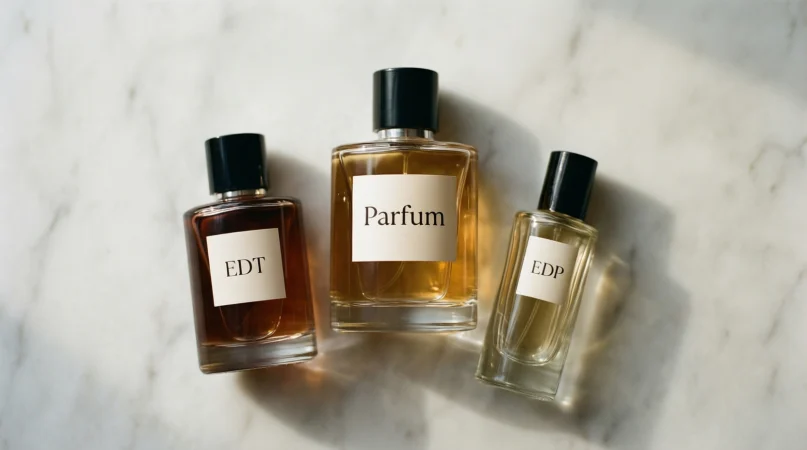
EDP in perfume stands for Eau de Parfum, a fragrance concentration that typically contains 15%–20% perfume oils, making it longer-lasting and richer than Eau de Toilette (EDT) but lighter than pure Parfum.
If you’ve ever shopped for perfume online or in store you’ve probably noticed labels like EDT, EDP, or Parfum printed on the bottle. They look simple, but they make a huge difference in how a fragrance smells, how long it lasts, and how strong it feels on your skin.
One of the most searched and misunderstood terms is EDP. What does it really mean? Is it better than EDT? Is it too strong for daily wear? And most importantly, is it worth your money?
Let’s break it all down in a clear, friendly, and practical way.
What Does EDP Mean in Perfume?
EDP (Eau de Parfum) is a type of perfume concentration that refers to how much aromatic oil is mixed with alcohol and water.
In simple terms:
- More oil = stronger scent
- Less oil = lighter scent
EDP sits in the sweet spot strong enough to last all day, but not overpowering when applied correctly.
Why Perfume Concentration Matters
Many people think perfume strength is about brand or price. In reality, concentration plays a bigger role.
Perfume concentration affects:
- ⏳ Longevity (how long it lasts)
- 📏 Projection (how far it radiates)
- 🌸 Depth of scent
- 💰 Value for money
That’s why understanding EDP can help you choose a fragrance that fits your lifestyle.
Origin of the Term “Eau de Parfum”
The term Eau de Parfum comes from French:
- Eau = water
- Parfum = perfume or fragrance
France has been the global center of perfumery for centuries, and most modern fragrance terminology still uses French naming conventions.
EDP became especially popular in the late 20th century, as consumers wanted fragrances that:
- Lasted longer than colognes
- Felt luxurious but wearable
- Offered better performance without being overwhelming
EDP Concentration Explained
Here’s where things get practical.
Typical EDP Composition
- 15%–20% fragrance oils
- Alcohol + water base
This balance allows:
- Slower evaporation
- Stronger mid and base notes
- Better all-day performance
How Long Does EDP Last?
On average, EDP lasts 6–8 hours, sometimes longer depending on:
- Skin type (oily skin holds scent better)
- Climate (heat amplifies fragrance)
- Notes used (woods, amber, musk last longer)
Some high-quality EDPs can last 10–12 hours on skin and even longer on clothing.
How Strong Is EDP Compared to Other Perfume Types?
Here’s a clear comparison table 👇
Perfume Concentration Comparison Table
| Type | Meaning | Oil Concentration | Longevity | Best For |
|---|---|---|---|---|
| Eau Fraîche | Very light scent | 1–3% | 1–2 hours | Hot weather, quick refresh |
| Eau de Cologne (EDC) | Light and fresh | 2–5% | 2–3 hours | Casual, summer wear |
| Eau de Toilette (EDT) | Moderate strength | 5–15% | 4–6 hours | Daily office use |
| Eau de Parfum (EDP) | Rich and long-lasting | 15–20% | 6–8+ hours | Day-to-night wear |
| Parfum / Extrait | Most concentrated | 20–30% | 10–24 hours | Special occasions |
Key takeaway:
EDP offers the best balance of strength, longevity, and value for most people.
Why EDP Is So Popular
EDP has become the go-to choice for many fragrance lovers—and for good reason.
Top Reasons People Choose EDP
- ✔ Long-lasting without constant reapplication
- ✔ More noticeable scent trail (sillage)
- ✔ Better performance in cool and warm weather
- ✔ Ideal for work and evening
- ✔ Often more complex and layered
For many, EDP feels like a “complete” perfume experience.
How EDP Smells Throughout the Day
One of the biggest advantages of EDP is how it evolves.
Fragrance Stages in EDP
- Top Notes – First 15–30 minutes (fresh, citrusy, spicy)
- Heart Notes – 2–4 hours (floral, fruity, aromatic)
- Base Notes – 6+ hours (wood, amber, vanilla, musk)
Because of the higher oil concentration, base notes shine longer in EDP.
Real-World Usage: When to Wear EDP
EDP is incredibly versatile.
Best Occasions for EDP
- 💼 Office (2–3 sprays only)
- 🌆 Evening outings
- 💑 Date nights
- 🎉 Events and gatherings
- ❄️ Cooler seasons (fall & winter)
Usage Tip
Apply 2–4 sprays max:
- Neck
- Behind ears
- Wrists
- Chest (optional)
More sprays ≠ better fragrance.
Examples of EDP in Context
Here’s how EDP is commonly used and discussed:
Friendly / Positive Tone
“I switched to the EDP version—it lasts all day and smells richer.”
Neutral / Informative Tone
“This perfume is an EDP, so it’s more concentrated than the EDT.”
Negative / Dismissive Tone
“The EDP is too strong for summer; I prefer the EDT.”
💡 Note: Strength depends on application, not just concentration.
EDP vs EDT: Which One Should You Choose?
This is one of the most searched questions online.
Quick Comparison
- EDP: Longer-lasting, deeper, stronger
- EDT: Lighter, fresher, more casual
Choose EDP if you:
- Want all-day performance
- Prefer richer scents
- Don’t want frequent reapplication
Choose EDT if you:
- Live in a hot climate
- Prefer subtle scents
- Want something light and airy
Many people own both versions of the same fragrance.
Does EDP Mean Better Quality?
Not necessarily.
EDP means higher concentration, not automatically higher quality.
Quality depends on:
- Ingredients used
- Brand formulation
- Balance of notes
A well-made EDT can smell better than a poorly blended EDP.
Alternate Meanings of “EDP”
Outside perfumery, EDP can mean:
- Electronic Data Processing
- Enhanced Due Process
- Enterprise Data Platform
⚠️ But in fragrance, EDP almost always means Eau de Parfum.
Polite or Professional Alternatives to Saying “EDP”
In professional writing or retail descriptions, you may see:
- “Eau de Parfum concentration”
- “Parfum-strength fragrance”
- “High-concentration perfume”
These terms sound more formal and informative.
Common Myths About EDP
Let’s clear up a few misconceptions:
❌ EDP is always too strong
✔ Not if applied properly
❌ EDP is only for women
✔ Many men’s fragrances are EDP
❌ EDP smells the same as EDT
✔ Same DNA, different intensity and depth
Conclusion
Understanding what EDP means in perfume can completely change how you shop, wear, and enjoy fragrances. It’s not just a label it’s a guide to strength, longevity and experience.
Whether you’re buying your first perfume or expanding your collection, knowing the difference between EDP and other concentrations helps you make confident, informed decisions and smell amazing while doing it.
FAQs
What does EDP stand for in perfume?
EDP stands for Eau de Parfum, a fragrance concentration with 15%–20% perfume oils.
Is EDP stronger than EDT?
Yes. EDP is generally stronger, richer, and longer-lasting than EDT.
How long does EDP perfume last?
Typically 6–8 hours, sometimes longer depending on skin type and ingredients.
Is EDP good for daily use?
Yes, when applied lightly. 2–3 sprays are ideal for everyday wear.
Is EDP better than Parfum?
Not better just different. Parfum is stronger but more expensive and intense.
Can EDP be worn in summer?
Yes, but choose lighter notes and apply sparingly.
Why is EDP more expensive than EDT?
Because it contains a higher concentration of fragrance oils.
Does EDP last longer on clothes or skin?
Usually longer on clothes, but always test to avoid staining.

Alex Ferguson is a word enthusiast at ValneTix.com who turns the meanings of everyday words into fascinating discoveries. His articles make learning language easy, enjoyable and practical for all readers.