
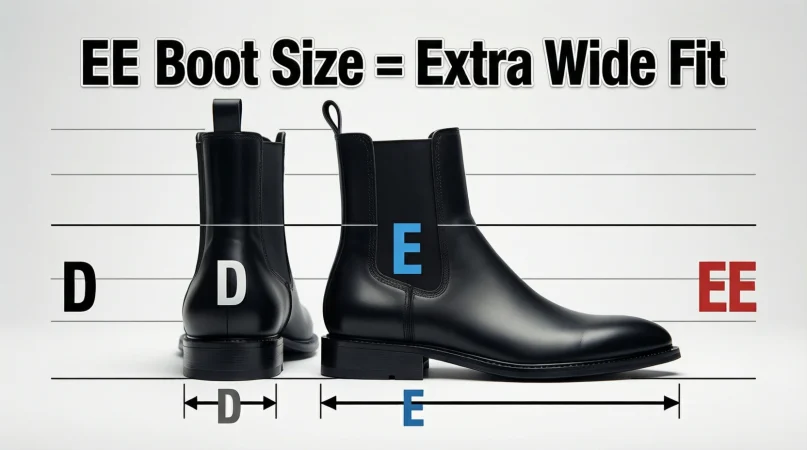
EE in boot size refers to an extra-wide shoe width, offering more space than standard (D) or wide (E) boots. It is commonly used in men’s footwear to accommodate wider feet and improve comfort, stability, and circulation.
EE in boot size means extra-wide width, designed for people whose feet are wider than average. If standard boots feel tight, pinch your toes, or cause discomfort, an EE width boot provides more room across the forefoot and instep for a comfortable, supportive fit.
Buying boots isn’t just about length width is equally important, yet often overlooked. Many people struggle with foot pain, numbness, or blisters simply because they’re wearing boots that are too narrow. That’s where EE boot size comes in.
If you’ve ever tried on boots that felt fine at first but became uncomfortable after a few hours, chances are the width wasn’t right, not the length. Understanding what EE means in boot size can completely change how your footwear feels especially if you work long hours, hike, ride, or stand all day.
This guide explains EE width boots in simple terms, with examples, comparisons, FAQs and practical tips to help you choose the right fit confidently.
What Does EE Mean in Boot Size?
In footwear sizing, EE indicates an extra-wide width. It means the boot is made wider than standard sizes to fit feet that need more room across:
- The ball of the foot
- The toe box
- The instep
In Simple Words:
- D = Standard width (most common for men)
- E = Wide
- EE = Extra Wide
If D feels tight and E still feels snug, EE is usually the correct upgrade.
Boot Width System Explained Men vs Women
Boot width sizing varies slightly between men’s and women’s footwear.
Men’s Boot Widths
- B – Narrow
- D – Standard
- E – Wide
- EE / 2E – Extra Wide
- EEE / 3E – Ultra Wide
Women’s Boot Widths
- B – Standard
- D – Wide
- EE – Extra Wide (less common)
👉 Important: EE is far more common in men’s boots, especially work boots, hiking boots, and western boots.
Origin of EE Boot Sizing
The letter-based width system originated in European and American shoemaking to standardize footwear fit as mass production grew.
- Early boots were handcrafted and custom-fitted
- Industrial manufacturing required consistent width categories
- Letters like D, E, and EE became industry standards
Over time, EE gained popularity as manufacturers recognized that foot width varies just as much as foot length.
Why EE Boots Became Popular
EE boots are especially popular in industries and lifestyles where comfort is critical.
Common Reasons for EE Boot Demand
- Long working hours on feet
- Safety and work boots requiring thick socks
- Weight distribution for heavy-duty use
- Aging feet becoming wider over time
- Medical needs (bunions, swelling, flat feet)
Industries Where EE Boots Are Common
- Construction & labor work
- Hiking & outdoor activities
- Motorcycle riding
- Farming & ranching
- Warehouse and factory jobs
Real-World Usage of EE Boot Size
You’ll often see EE mentioned like this:
- “Size 10 EE”
- “10.5 2E”
- “Wide EE Fit”
All mean the same thing: extra-wide width.
Example Scenarios
- A construction worker wearing steel-toe boots
- A hiker using thick wool socks
- Someone with naturally wide feet
How EE Boots Feel Compared to Regular Boots
If You Wear EE Boots, You’ll Notice:
- Less pressure on toes
- No side squeezing
- Better blood circulation
- Reduced foot fatigue
- More stability while walking
If You Need EE but Wear D Width:
- Toe numbness 😖
- Hot spots and blisters
- Pain after long wear
- Boots feeling “tight” but length is correct
EE vs Other Boot Widths
Boot Width Comparison Table
| Width Label | Meaning | Best For |
|---|---|---|
| B | Narrow | Slim feet |
| D | Standard | Average-width feet |
| E | Wide | Slightly wide feet |
| EE / 2E | Extra Wide | Wide feet, comfort-focused |
| EEE / 3E | Ultra Wide | Very wide feet or medical needs |
EE vs E vs D: What’s the Difference?
D Width (Standard)
- Most common
- Fits average feet
- Often too tight for wide-footed people
E Width (Wide)
- Slightly more room
- Good middle ground
EE Width (Extra Wide)
- Maximum everyday comfort
- Ideal for work, hiking, or long wear
👉 Tip: If you’re between E and EE, choose EE for boots — especially if you wear thick socks.
Does EE Mean Bigger Length?
No. EE affects width only, not length.
Example:
- Size 10 D = Same length as 10 EE
- Difference is only side-to-side space
Who Should Choose EE Boots?
You should consider EE boot size if:
- Your boots feel tight on the sides
- You have wide or flat feet
- You experience foot pain after long wear
- Your toes feel cramped
- You wear orthotics or thick socks
EE Boot Size Examples With Tone
Neutral Example
“I wear a size 11 EE because standard boots feel too tight.”
Friendly Example
“EE boots are a lifesaver — finally no squeezing on my toes 😄”
Slightly Frustrated Example
“D width never works for me. EE is the only comfortable option.”
Common Myths About EE Boot Size
❌ Myth 1: EE Means Bigger Boot
False — only width increases.
❌ Myth 2: EE Is Only for Overweight People
False — foot width has nothing to do with weight.
❌ Myth 3: EE Boots Look Bulky
Modern designs are sleek and stylish.
Alternate Meanings of “EE”
Outside footwear, EE can mean:
- Electrical Engineering
- Emote expression in chat (rare)
- Energy Efficiency
⚠️ But in boot sizing, EE always refers to width.
Polite & Professional Alternatives to Saying “EE”
Instead of just “EE,” brands may say:
- Extra-wide fit
- Wide comfort fit
- Roomy toe box
- 2E width
All indicate similar sizing benefits.
How to Measure if You Need EE Width
Quick Home Test
- Stand on paper
- Trace your foot
- Measure widest part
- Compare with brand size charts
👉 Measure both feet use the wider one.
Tips for Buying EE Boots Online
- Always check brand-specific width charts
- Read customer reviews mentioning “wide fit”
- Order from brands known for wide boots
- Try boots indoors before committing
Brands Known for EE Boot Sizes
- Red Wing
- Timberland Pro
- Wolverine
- Caterpillar
- Ariat
- Thorogood
FAQs
1. What does EE mean in men’s boot sizes?
EE means extra-wide width, providing more room than standard or wide boots.
2. Is EE wider than E?
Yes. EE is wider than E.
3. Is EE the same as 2E?
Yes, EE and 2E are identical.
4. Does EE affect boot length?
No, only the width changes.
5. Are EE boots comfortable for long hours?
Yes, they’re ideal for long wear and work environments.
6. Can I wear EE boots if my feet aren’t wide?
You can, but they may feel loose.
7. Are EE boots available for women?
Some brands offer them, but they’re less common.
8. Should I size up or choose EE?
Choose EE, not a longer size.
Conclusion
Understanding what EE means in boot size can dramatically improve comfort and foot health. EE boots are designed for extra-wide feet, offering better support, reduced pressure and all-day comfort.
- Don’t size up in length to fix width issues
- Choose EE if D or E feels tight
- Always prioritize comfort over style
When your boots fit right, everything feels better from posture to productivity.

Tom Holland is a language enthusiast at ValneTix.com passionate about unraveling the meanings behind words and phrases. His clear, insightful and engaging explanations help readers expand their vocabulary and communicate with confidence.