
Last Updated on February 19, 2026
EXW (Ex Works) is an Incoterm in shipping that means the seller fulfills their obligation by making the goods available at their premises, and the buyer takes responsibility for all transportation, customs clearance, and costs from that point onward.
When it comes to international shipping, understanding Incoterms is essential. One of the most common yet sometimes misunderstood terms is EXW, which stands for Ex Works. Whether you’re an importer, exporter, or logistics professional, knowing the ins and outs of EXW can save you time, money, and headaches. 🚢
In this guide, we’ll break down what EXW really means, how it works in practice, and how it compares to other shipping terms. By the end, you’ll be confidently navigating EXW shipments with clarity and ease.
What Does EXW Mean in Shipping?
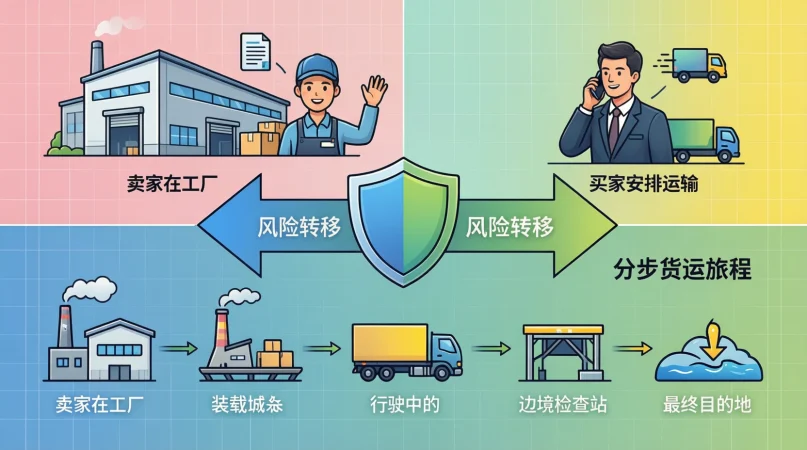
EXW (Ex Works) is an international trade term indicating that the seller’s responsibility is limited to making the goods available at their premises or another named location (factory, warehouse, etc.). From that point onward, the buyer assumes all risks, transportation costs, and obligations, including loading the goods onto a vehicle, shipping, insurance, and customs clearance.
Key Points of EXW
- Seller’s responsibility: Provide goods at their premises.
- Buyer’s responsibility: Arrange pickup, transport, customs, and insurance.
- Risk transfer: Occurs when the goods are made available at the seller’s location.
- Flexibility: Commonly used for domestic and international trade.
Example:
If a buyer in Germany purchases machinery from a manufacturer in China under EXW terms, the Chinese seller only needs to make the machinery available at their factory. The German buyer is responsible for shipping, customs, and delivery to their location.
Origin and Popularity of EXW
EXW is part of Incoterms, which are international commercial terms published by the International Chamber of Commerce (ICC). First introduced in 1936 and regularly updated, Incoterms define the responsibilities of buyers and sellers in global trade.
EXW gained popularity because of its simplicity: it places minimal obligations on the seller. It’s particularly favored by manufacturers who prefer not to handle shipping logistics. However, this simplicity can sometimes lead to buyer confusion, especially for those new to international trade.
Why EXW Is Popular
- Minimal seller responsibility ✅
- Clear cost allocation – buyer handles most expenses
- Common in B2B transactions
- Useful for domestic deliveries
Caution
While EXW seems straightforward, it can create challenges for buyers, particularly those unfamiliar with exporting, importing regulations, or international logistics.
How EXW Works in Real Life
Here’s a step-by-step breakdown of an EXW shipment:
- Seller prepares goods: The seller makes products available at their warehouse, factory, or another agreed-upon location.
- Buyer arranges pickup: The buyer hires a freight forwarder or transport company.
- Loading and transport: Buyer takes care of loading the goods onto a truck or container.
- Customs clearance: Buyer handles export documentation and customs procedures.
- Shipping to destination: Buyer arranges international shipping and insurance.
- Delivery to final destination: Buyer manages unloading and delivery.
Note: If the seller agrees to assist with loading or customs, this is outside standard EXW terms and should be clearly documented in the contract.
Example Table: EXW Responsibilities
| Responsibility | Seller | Buyer |
| Goods ready at premises | ✅ | |
| Loading onto transport | ✅ | |
| Export customs clearance | ✅ | |
| Freight & shipping | ✅ | |
| Insurance | ✅ | |
| Import customs & duties | ✅ | |
| Delivery to final destination | ✅ |
Common Scenarios for Using EXW
- Domestic transactions: Easy when the buyer can arrange transport locally.
- Experienced buyers: Ideal when buyers are familiar with logistics and shipping regulations.
- Minimal seller involvement: Useful for small manufacturers who don’t want to manage shipping.
Friendly Tone Example
A small boutique in Spain buys handcrafted furniture from a factory in Italy under EXW. The factory just needs to have the furniture ready for pickup. The boutique arranges the rest—transport, customs, and delivery.
Neutral Tone Example
A company in Canada purchases machinery from a U.S. manufacturer under EXW terms. The manufacturer is not involved in shipping; the Canadian company coordinates logistics.
Negative/Dismissive Tone Example
Some buyers find EXW frustrating when the seller refuses to handle anything beyond their warehouse. This can be tricky if the buyer is new to international shipping or lacks logistics experience.
EXW vs Other Incoterms
It’s important to understand how EXW compares to other common shipping terms:
| Incoterm | Seller Responsibility | Buyer Responsibility | Notes |
| EXW (Ex Works) | Minimal – goods ready at premises | Everything else | Best for experienced buyers or domestic transactions |
| FOB (Free on Board) | Delivery onto vessel at port | Shipping, insurance | Common for ocean freight, seller handles export loading |
| CIF (Cost, Insurance, Freight) | Shipping, insurance, delivery to port | Import customs | Seller covers more costs and risk than EXW |
| DAP (Delivered at Place) | Delivery to named destination | Import duties | Seller manages transport to destination, EXW does not |
Key takeaway: EXW places the maximum responsibility on the buyer, while terms like FOB, CIF, or DAP shift more responsibility to the seller.
Alternate Meanings of EXW
While Ex Works in shipping is the most common meaning, EXW can occasionally refer to:
- Exercise Weight (fitness contexts)
- Extreme Weather (meteorology)
In business and shipping discussions, Ex Works is always assumed unless specified otherwise.
Tips for Buyers Using EXW
- Hire an experienced freight forwarder – they can handle transport, customs, and documentation.
- Clarify loading responsibilities – standard EXW does not require the seller to load goods.
- Check insurance coverage – EXW transfers risk to the buyer immediately.
- Understand import/export regulations – crucial for international shipments.
Tips for Sellers Offering EXW
- Clearly define the pickup location – avoid confusion.
- Provide accurate documentation – invoices, packing lists, and product details.
- Communicate limitations – make it clear you will not handle shipping, customs, or insurance.
FAQs
1. Is EXW good for international shipping?
Yes, but only if the buyer is experienced with export regulations and international logistics.
2. Who pays for shipping under EXW?
The buyer pays for all shipping costs, including transport, customs, and insurance.
3. When does the risk transfer in EXW?
Risk transfers to the buyer as soon as the goods are made available at the seller’s premises.
4. Can the seller help with loading under EXW?
Yes, but this is optional and should be specified in the contract.
5. How does EXW differ from FOB?
EXW has minimal seller responsibility, while FOB requires the seller to deliver goods onto the shipping vessel.
6. Is insurance included in EXW?
No, the buyer is responsible for insurance under EXW terms.
7. Can EXW be used for domestic shipments?
Absolutely, it’s often simpler for domestic transactions where buyers can arrange pickup and transport.
8. What documentation is needed for EXW?
Invoices, packing lists, and any certificates of origin; the buyer manages export and import documentation.
Conclusion
EXW (Ex Works) is a straightforward yet powerful Incoterm that gives sellers minimal responsibility while shifting nearly all obligations and costs to the buyer. It’s ideal for experienced buyers or domestic transactions, but can be tricky for those new to international shipping. 🚀
- Seller responsibility is minimal; buyer handles everything after goods are available.
- Risk transfers at the seller’s premises.
- Useful for domestic shipments or experienced international buyers.
- Always clarify loading responsibilities and hire a reliable freight forwarder.
By understanding EXW fully, both buyers and sellers can navigate international trade smoothly and avoid costly mistakes.

James Colton is a language researcher and content writer who loves exploring the deeper meanings behind everyday words. With a background in linguistics, he breaks down complex terms into simple, clear explanations that anyone can understand.