
Last Updated on February 19, 2026
In English, gringogenerally means a foreigner especially an English speaking person, often from the United States when used in Spanish speaking countries.
Its tone can range from neutral or playful to dismissive or offensive, depending on context and intent.
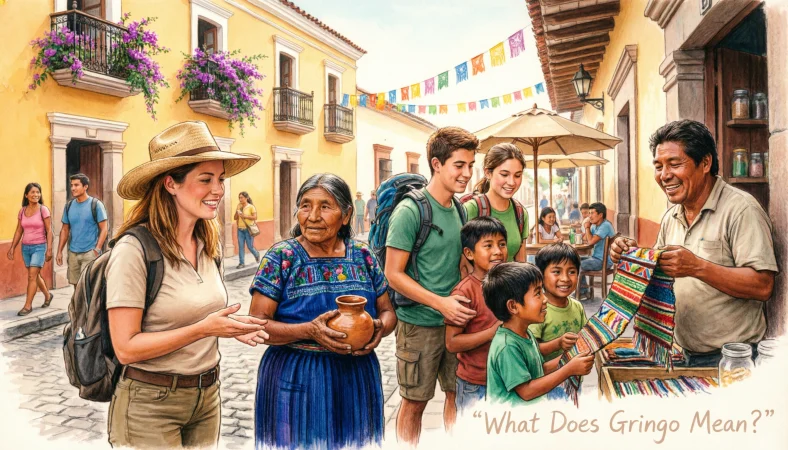
If you’ve watched a movie set in Latin America, traveled through Mexico, or heard Spanish spoken casually, you’ve probably come across the word “gringo.” Sometimes it’s said with a smile, sometimes with sarcasm, and occasionally with clear irritation. That leaves many people wondering: what does gringo mean in English, and is it offensive?
The answer isn’t as simple as a single translation. Gringo is one of those words whose meaning depends heavily on context, tone, region, and relationship. In this guide, we’ll unpack the word clearly and responsibly covering its definition, origin, popularity, real-world usage, examples, comparisons, alternatives, and common questions so you understand exactly how it’s used and how to respond when you hear it.
Why People Are Curious About the Word Gringo
Unlike many slang words, gringo:
- Is widely used across many countries
- Has no perfect one-word English equivalent
- Can be friendly in one moment and insulting in another
Understanding gringo isn’t just about translation it’s about cultural awareness. Knowing how the word works helps avoid misunderstandings and awkward (or hurtful) situations.
What Does Gringo Mean in English?
The Basic Meaning
At its most neutral, gringo means “foreigner”, particularly:
- Someone who is not from the local culture
- Often (but not always) an English speaker
- Frequently associated with Americans
In English, the closest meanings might be:
- “Foreigner”
- “Outsider”
- “Non-local”
But none of those fully capture the emotional and cultural nuance.
Who Is Typically Called a Gringo?
This depends on region and context, but commonly:
- In Mexico and Central America:
Gringo usually refers to Americans or English-speaking foreigners. - In South America (Argentina, Brazil, Chile):
It may refer to any foreigner, especially someone from Europe or North America. - In Spain:
The word is far less common and may sound outdated or humorous.
The Origin of the Word Gringo
The Most Accepted Etymology
The word gringo likely comes from the Spanish word “griego”, meaning Greek.
In older Spanish expressions:
- “Hablar en griego” (to speak Greek) meant to speak unintelligibly
- Over time, griego morphed into gringo, referring to people whose language was hard to understand
In other words:
“They talk funny → they must be a gringo.”
Popular Myths (That Aren’t True)
You may have heard that gringo comes from:
- “Green go home!” (said to U.S. soldiers)
- The color of military uniforms
There is no reliable historical evidence for these explanations. Linguists overwhelmingly support the griego → gringo origin.
Popularity and Global Usage of Gringo
The word gringo is popular because:
- It’s short and expressive
- It captures “outsider” status quickly
- It’s understood across many Spanish-speaking regions
It appears frequently in:
- Movies and TV shows
- Music lyrics
- Travel stories
- Casual conversation
However, its emotional weight varies widely.
How Gringo Is Used in Real Life
Neutral Usage
In many everyday situations, gringo is simply descriptive.
“Hay muchos gringos en esta ciudad.”
(“There are many foreigners in this city.”)
No insult intended—just observation.
Labeled Example Table: Common Gringo Contexts
| Context | Tone | Meaning |
| Travel conversation | Neutral | Foreigner |
| Friendly teasing | Playful 😊 | Outsider, joking |
| Political discussion | Critical | Symbol of power |
| Argument or insult | Negative 😠 | Dismissive or hostile |
Examples of Gringo in Context
Friendly / Playful Tone 😊
“¡Ven acá, gringo! Vamos a enseñarte a bailar.”
(“Come here, gringo! We’re going to teach you how to dance.”)
This can feel warm and inclusive.
Neutral Tone
“El restaurante es popular entre gringos.”
(“The restaurant is popular with foreigners.”)
Purely descriptive.
Negative or Dismissive Tone 😬
“Ese gringo no entiende nada.”
(“That gringo doesn’t understand anything.”)
Here, the word clearly carries frustration or contempt.
Is Gringo Offensive?
The Honest Answer: It Depends
Gringo is not automatically a slur, but it can be offensive when:
- Said with anger or contempt
- Used to stereotype or belittle
- Used in a political or hostile context
Many people reclaim or shrug off the word, while others find it uncomfortable. Intent and relationship matter.
Gringo vs Similar Terms
Gringo vs Extranjero
| Term | Meaning | Tone |
| Gringo | Foreigner (informal) | Context-dependent |
| Extranjero | Foreigner | Neutral, formal |
Gringo vs Guiri
- Guiri (Spain): Casual term for tourists
- Gringo: Broader, more international
Alternate Meanings of Gringo (Briefly)
Depending on region:
- Can mean any non-local
- May imply American culture rather than nationality
- Sometimes used humorously among friends
It does not refer to a specific race—though it’s often misunderstood that way.
Polite or Professional Alternatives to Gringo
If you want to avoid potential offense, use:
- Extranjero (foreigner)
- Turista (tourist)
- Visitante (visitor)
- “American” / “estadounidense” (more precise)
These are better choices in:
- Professional settings
- Academic writing
- Formal conversations
Cultural Tips for Handling the Word Gringo
If You Hear It
- Pay attention to tone
- Observe body language
- Don’t assume insult immediately
If You Use It
- Avoid using it about strangers
- Never use it angrily
- When in doubt—don’t use it at all
Why Gringo Still Matters Today
The word reflects:
- Cultural boundaries
- Power dynamics
- Humor and identity
- History between regions
That’s why it continues to spark curiosity and debate.
FAQs
1. What does gringo mean in English?
It generally means foreigner, especially an English-speaking one.
2. Is gringo a slur?
Not inherently, but it can be offensive depending on tone and intent.
3. Who is usually called a gringo?
Often Americans or English speakers, but it varies by region.
4. Is gringo used in Spain?
Rarely, and often humorously or outdated.
5. Can gringo be friendly?
Yes, among friends or in playful contexts.
6. What’s the safest alternative to gringo?
Extranjero is the most neutral option.
7. Does gringo refer to race?
No. It refers to cultural or national outsider status.
8. Should English speakers use the word gringo?
Generally no—unless clearly joking with people who are comfortable with it.
Conclusion
So, what does gringo mean in English? At its core, it means foreigner but its emotional meaning shifts with context. It can be friendly, neutral, ironic, or insulting, depending on who says it and how.
- Gringo usually means a foreigner, often American
- Tone and context determine whether it’s offensive
- It comes from linguistic, not military, origins
- Neutral alternatives are often safer
- Cultural awareness matters more than translation
Practical Tip:
If you hear gringo, listen first. If you’re unsure about using it, choose a neutral word instead. Respect goes further than slang.

James Colton is a language researcher and content writer who loves exploring the deeper meanings behind everyday words. With a background in linguistics, he breaks down complex terms into simple, clear explanations that anyone can understand.