
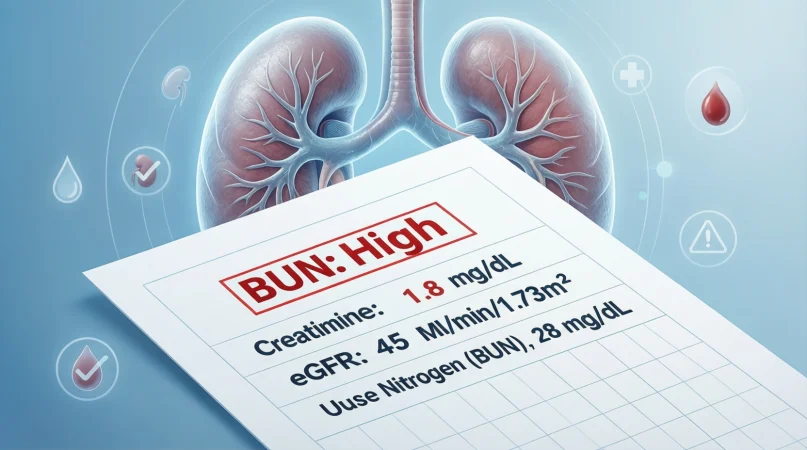
High BUN in a blood test means that the level of blood urea nitrogen (BUN) in your bloodstream is higher than normal, often indicating reduced kidney function, dehydration, or increased protein breakdown in the body.
If you’ve ever opened your blood test report and paused at the words “BUN: High”, you’re not alone. 😟 It’s one of those lab results that can look scary at first especially if you don’t know what it means or why it matters.
The good news?
A high BUN level doesn’t always mean something serious. In many cases, it’s temporary and treatable once the underlying cause is identified.
we’ll break everything down in plain, human language no confusing medical jargon so you can understand what’s happening in your body and what to do next.
What Is BUN in a Blood Test?
BUN stands for Blood Urea Nitrogen.
🔬 What is urea?
Urea is a waste product formed when your body breaks down protein from food. This process happens in the liver, and the urea then travels through your bloodstream to your kidneys, where it’s filtered out and excreted in urine.
🧠 Why BUN matters
BUN helps doctors evaluate:
- Kidney function
- Hydration status
- Protein metabolism
- Overall metabolic health
If BUN builds up in the blood, it usually means your kidneys aren’t removing waste efficiently or something else is affecting the balance.
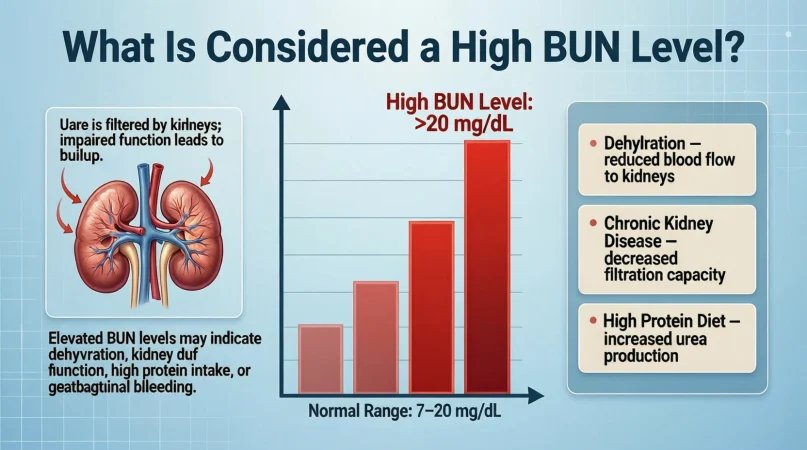
What Is Considered a High BUN Level?
Normal BUN Range
Most labs consider a normal BUN level to be:
| Age Group | Normal BUN Range |
|---|---|
| Adults | 7–20 mg/dL |
| Older adults | May be slightly higher |
| Children | 5–18 mg/dL |
⚠️ High BUN is generally anything above 20 mg/dL, but “high” can vary slightly depending on the lab and your overall health.
What Does High BUN Mean Exactly?
A high BUN level means there is too much urea nitrogen in your blood. This can happen for several reasons not all of them related to kidney disease.
Common interpretations:
- Your kidneys are under stress
- Your body is dehydrated
- You’re breaking down more protein than usual
- Blood flow to the kidneys is reduced
👉 Important: BUN alone does not diagnose kidney disease. Doctors almost always interpret it alongside other tests, especially creatinine.
Causes of High BUN in a Blood Test
1. Dehydration (Most Common Cause) 💧
When you’re dehydrated:
- Blood becomes more concentrated
- Kidneys conserve water
- BUN rises
✔️ Even mild dehydration can elevate BUN levels.
2. Kidney Problems
High BUN may indicate:
- Chronic kidney disease (CKD)
- Acute kidney injury
- Reduced kidney blood flow
The kidneys can’t filter urea efficiently, so it builds up.
3. High Protein Diet 🍗
Eating large amounts of protein increases urea production.
Examples:
- Keto or carnivore diets
- Heavy protein supplements
- Bodybuilding diets
4. Heart Failure or Poor Circulation
Reduced blood flow to the kidneys leads to inefficient waste removal.
5. Medications
Certain drugs can raise BUN levels, including:
- Diuretics (water pills)
- NSAIDs (ibuprofen, naproxen)
- Steroids
- Some antibiotics
6. Gastrointestinal Bleeding
Blood in the digestive tract increases protein breakdown, raising BUN.
7. Stress, Infection, or Trauma
Severe illness or injury increases protein metabolism, which raises urea levels.
High BUN Symptoms: What Might You Feel?
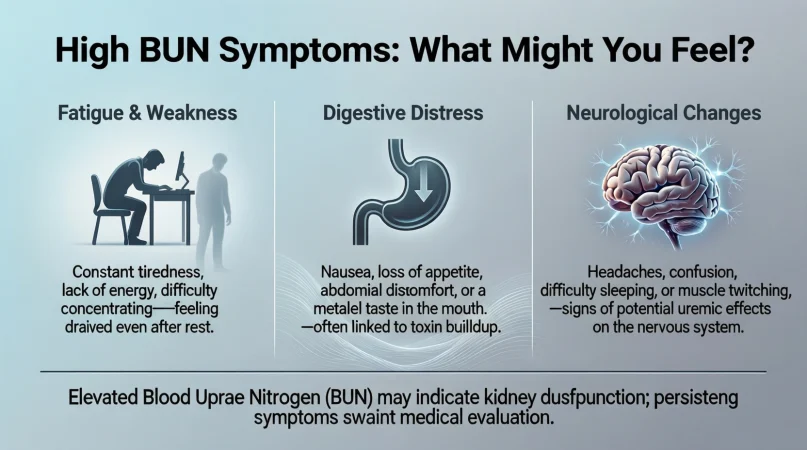
High BUN itself doesn’t usually cause symptoms. Symptoms typically come from the underlying cause.
Possible symptoms include:
- Fatigue 😴
- Confusion or brain fog
- Dry mouth
- Decreased urine output
- Swelling in feet or ankles
- Nausea
⚠️ If symptoms are severe or sudden, medical attention is essential.
High BUN vs Creatinine: What’s the Difference?
Doctors rarely look at BUN alone. They compare it with creatinine.
Comparison Table
| Feature | BUN | Creatinine |
|---|---|---|
| Source | Protein metabolism | Muscle metabolism |
| Affected by diet | Yes | Minimal |
| Affected by hydration | Yes | Less |
| Kidney indicator | Indirect | More specific |
BUN-to-Creatinine Ratio
- Normal: 10:1 to 20:1
- High ratio may indicate dehydration
- Both high may suggest kidney disease
Is High BUN Always Serious?
Short answer: No ❌
Temporary high BUN can be caused by:
- Not drinking enough water
- Recent illness
- High-protein meals
- Intense exercise
More concerning when:
- Creatinine is also high
- Symptoms are present
- Levels remain elevated over time
Examples of High BUN in Context
🟢 Friendly/Neutral Example
“Your BUN is slightly elevated, likely due to mild dehydration. Increasing fluid intake should help.”
⚠️ Clinical/Concerned Example
“Your BUN and creatinine levels are both elevated, suggesting impaired kidney function.”
❌ Dismissive (Not Recommended)
“It’s probably nothing—ignore it.”
✔️ Always follow up properly, even if levels are only mildly high.
Alternate Meanings of BUN
Outside medicine, BUN can mean:
- A hairstyle (hair bun) 💁♀️
- Slang in some languages
But in blood tests, BUN always refers to Blood Urea Nitrogen.
Polite or Professional Alternatives
Instead of saying:
- “High BUN means kidney failure”
Use:
- “Elevated BUN levels may suggest reduced kidney efficiency”
This avoids panic and stays medically accurate.
How to Lower High BUN Naturally
⚠️ Always consult a healthcare provider before making changes.
General tips:
- Drink adequate water 💧
- Reduce excessive protein intake
- Manage blood pressure
- Control blood sugar (if diabetic)
- Avoid unnecessary NSAIDs
- Follow kidney-friendly diets if advised
FAQs
1. What does high BUN mean in simple terms?
It means there’s too much waste (urea) in your blood, often due to dehydration or kidney stress.
2. Can dehydration cause high BUN?
Yes. It’s one of the most common and reversible causes.
3. Is high BUN dangerous?
Not always. Mild elevations are often harmless, but persistent or severe elevations need evaluation.
4. What level of BUN is concerning?
Generally, levels above 20 mg/dL are high, but concern depends on symptoms and other lab results.
5. Does high BUN always mean kidney disease?
No. Diet, hydration, medications, and illness can also raise BUN.
6. How is high BUN treated?
Treatment focuses on the underlying cause—hydration, medication changes, or managing kidney conditions.
7. What foods increase BUN levels?
High-protein foods like red meat, protein shakes, and processed meats.
8. Should I worry if only BUN is high and creatinine is normal?
Often no but follow-up testing may be recommended.
Conclusion
✔️ High BUN means elevated blood urea nitrogen levels
✔️ It often reflects dehydration, diet, or kidney stress
✔️ It’s not a diagnosis by itself
✔️ Always interpret BUN alongside creatinine and symptoms
✔️ Many causes are temporary and treatable
If your lab report shows high BUN, don’t panic but don’t ignore it either. A simple follow up with your healthcare provider can give you clarity and peace of mind. 💙

Tom Holland is a language enthusiast at ValneTix.com passionate about unraveling the meanings behind words and phrases. His clear, insightful and engaging explanations help readers expand their vocabulary and communicate with confidence.