
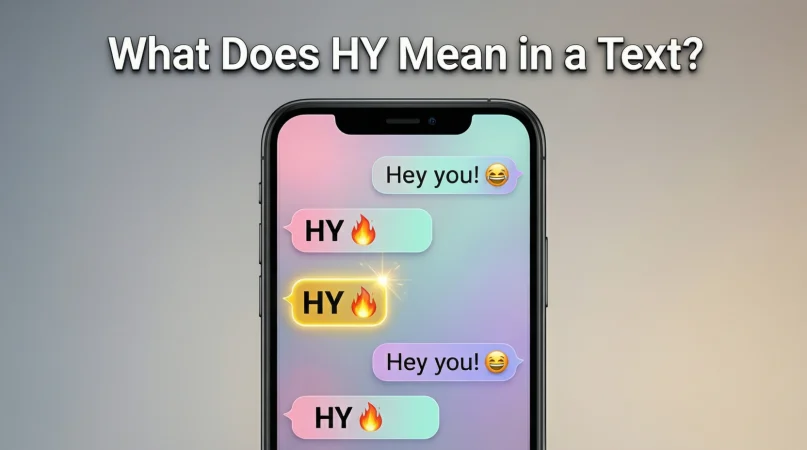
HY in texting usually means “Hell Yes” or “Hell Yeah,” expressing strong enthusiasm, excitement, or agreement in informal digital conversations.
HY is a short, informal text abbreviation most commonly used to mean “Hell Yes” or “Hell Yeah.” It’s a quick, enthusiastic way to show strong agreement, excitement, or approval in casual conversations, especially in texting, chat apps, and social media.
Depending on context, HY can also occasionally mean “Hi You” or act as a very casual greeting but its dominant and most widely understood meaning is an energetic yes.
Why You’re Seeing “HY” Everywhere 📱
You’re scrolling through your messages or social media, someone asks a question, and the reply is just two letters:
“HY.”
No emojis. No punctuation. Just HY.
At first glance, it can feel confusing Is it a typo? A greeting? A new slang term?
But in today’s fast paced texting culture, HY has become a popular shortcut for expressing big excitement in very little space.
As people move toward faster, punchier digital communication, abbreviations like HY help convey emotion without typing full sentences. This article breaks down exactly what HY means, where it comes from, how it’s used, when it’s appropriate (and when it’s not), and how it compares to similar slang.
By the end, you’ll know how to read it, use it, and avoid misusing it like a pro.
What Does HY Mean in Texting?
Primary Meaning: Hell Yes / Hell Yeah
In most modern text conversations, HY is shorthand for:
- Hell Yes
- Hell Yeah
It expresses:
- Strong agreement
- Excitement
- Eagerness
- Enthusiastic approval
Example:
Friend: Want to grab pizza tonight?
You: HY 🍕🔥
The message is clear: Absolutely yes and you’re excited about it.
The Origin of “HY” in Text Messages
Where Did HY Come From?
HY emerged from:
- Internet slang culture
- SMS character limits
- Chat apps like WhatsApp, Snapchat, Instagram, and Discord
People already used “Hell yes” and “Hell yeah” verbally. As texting evolved, shortening these phrases into initials became natural especially among younger users.
Why Not Just “Yes”?
Because HY adds emotion.
Compare:
- Yes → Neutral agreement
- HY → Excited, pumped, enthusiastic agreement
It’s not just agreement it’s energy.
How Popular Is HY Today?
HY is most commonly used:
- In casual texting
- Among Gen Z and Millennials
- On social platforms and gaming chats
It’s less common in:
- Emails
- Professional communication
- Formal writing
While not as universal as “LOL” or “OMG,” HY is widely understood in informal digital spaces.
How HY Is Used in Real Conversations
Common Situations Where HY Appears
- Making plans
- Reacting to good news
- Showing excitement
- Encouraging someone
- Celebrating wins
Tone Matters
HY almost always carries a positive or energetic tone, but the context shapes how it’s perceived.
Examples of HY in Context With Tone Explanation
Friendly / Excited Tone 😄
Friend: Movie night tomorrow?
You: HY! I’ll bring snacks.
✔ Feels warm, enthusiastic, and friendly.
Neutral Casual Tone 🙂
Friend: You joining the call later?
You: HY
✔ Straightforward but still positive.
Playful / Emphatic Tone 🔥
Friend: Did you get the tickets??
You: HY!!!
✔ Extra punctuation adds excitement and urgency.
Slightly Aggressive or Over-the-Top (Rare) 😬
Friend: Chill, it’s not that serious.
You: HY it is.
⚠ Can feel sarcastic or overly intense depending on context.
Example Table: HY Usage in Texting
| Situation | Message Using HY | Intended Meaning | Tone |
|---|---|---|---|
| Making plans | “HY, let’s go!” | Strong agreement | Excited |
| Celebrating news | “HY congrats!” | Enthusiastic support | Positive |
| Casual reply | “HY” | Simple approval | Neutral |
| Playful chat | “HY 😎” | Fun agreement | Playful |
Does HY Ever Mean Anything Else?
Yes though less commonly.
Alternate Meanings of HY
- Hi You
- Used as a casual greeting
- Example: HY 👋 long time no see
- Hey / Hi (Typo or Style Choice)
- Sometimes used accidentally or stylistically
⚠ Important:
In most contexts, especially replies to questions, HY = Hell Yes, not “Hi You.”
How to Tell Which Meaning Is Intended
Ask yourself:
- Was a question asked? → Likely “Hell Yes”
- Is it the first message? → Possibly “Hi You”
- Are emojis or excitement present? → “Hell Yes”
Context almost always makes the meaning obvious.
Comparison: HY vs Similar Text Abbreviations
HY vs Y
| Term | Meaning | Tone |
|---|---|---|
| Y | Yes | Neutral |
| HY | Hell Yes | Excited |
HY vs YH
| Term | Meaning | Tone |
|---|---|---|
| YH | Yeah / Yes | Casual |
| HY | Hell Yeah | Energetic |
HY vs AF (As F***)
| Term | Usage | Example |
|---|---|---|
| HY | Agreement | “HY I’m in.” |
| AF | Emphasis | “I’m tired AF.” |
HY vs LFG
| Term | Meaning | Context |
|---|---|---|
| HY | Yes | General |
| LFG | Let’s F***ing Go | High hype, gaming/events |
When Should You Use HY?
Good Times to Use HY ✔
- Texting friends
- Group chats
- Social media comments
- Informal online conversations
Times to Avoid HY ❌
- Professional emails
- Work chats with clients
- Academic or formal writing
- Talking to people who dislike slang
Polite or Professional Alternatives to HY
If HY feels too casual, try these instead:
Casual but Polite
- “Yes, definitely!”
- “Absolutely!”
- “Sounds great!”
Professional
- “Yes, I agree.”
- “That works for me.”
- “I’m happy to proceed.”
How Emojis Change the Meaning of HY
Emojis amplify tone:
- HY 😄 → Friendly excitement
- HY 🔥 → High energy / hype
- HY 🙌 → Celebration
- HY 😏 → Playful confidence
Without emojis, HY still works but emojis add personality.
Is HY Rude or Offensive?
Not inherently.
However:
- The word “hell” may feel inappropriate to some audiences
- In conservative or professional settings, it can seem informal or disrespectful
Always consider:
- Who you’re talking to
- The platform
- The situation
HY in Social Media & Online Culture
You’ll often see HY in:
- Instagram comments
- TikTok replies
- Twitter/X reactions
- Discord and gaming chats
Example:
“This update looks amazing.”
Reply: “HY 🔥🔥”
Short, punchy, and emotionally clear.
FAQs
1. What does HY mean in a text message?
HY usually means “Hell Yes” or “Hell Yeah,” expressing excitement or strong agreement.
2. Is HY the same as yes?
Not exactly. Yes is neutral, while HY shows enthusiasm and excitement.
3. Can HY mean hello?
Sometimes, HY can mean “Hi You,” but this is much less common and depends on context.
4. Is HY slang?
Yes. HY is informal internet and texting slang.
5. Is HY appropriate for work messages?
Generally no. It’s better to use professional alternatives like “Yes, absolutely.”
6. Do people still use HY?
Yes especially in casual texting, social media, and group chats.
7. Is HY rude?
No, but it can feel too casual or intense in formal situations.
8. What’s the difference between HY and YH?
YH means “yeah,” while HY means “hell yeah,” which is more energetic.
Conclusion
HY is a perfect example of how modern texting compresses emotion into efficiency. Two letters can communicate excitement, approval, and hype faster than a full sentence ever could.
When used in the right context casual chats, friendly conversations, and social media HY feels natural, expressive, and fun. Just remember to read the room, know your audience and switch to more professional alternatives when needed.
Now when you see HY pop up in a message, you won’t hesitate you’ll know exactly what it means and how to respond. 😉

Tom Holland is a language enthusiast at ValneTix.com passionate about unraveling the meanings behind words and phrases. His clear, insightful and engaging explanations help readers expand their vocabulary and communicate with confidence.