
Last Updated on February 19, 2026
Implied consent in driving means that by choosing to drive on public roads, a driver automatically agrees in advance to submit to chemical testing (such as a breath, blood, or urine test) if law enforcement lawfully suspects them of driving under the influence (DUI or DWI).
In plain English: when you drive, you’ve already said “yes” to DUI testing if the situation legally requires it.
Most drivers don’t remember signing a contract before turning the ignition key but legally, something very similar happens every time you drive. The concept of implied consent quietly sits behind traffic laws in many countries and U.S. states, shaping what happens if you’re stopped for suspected drunk or drug impaired driving.
Understanding what implied consent means in driving can help you:
- Avoid unexpected penalties
- Know your rights during a traffic stop
- Make smarter, calmer decisions under pressure
Whether you’re a new driver, brushing up on traffic laws, or just curious after hearing the term on the news, this guide breaks it all down clearly without legal jargon overload.
What Is Implied Consent in Driving?
Implied consent is a legal doctrine stating that drivers implicitly agree to comply with certain laws and procedures as a condition of using public roadways.
In driving law, it usually applies to:
- Breath tests (breathalyzers)
- Blood tests
- Urine tests
These tests are used to determine whether a driver is impaired by:
- Alcohol
- Prescription medications
- Illegal drugs
If an officer has reasonable grounds or probable cause to believe you’re impaired, implied consent laws allow them to request testing.
Why Is It Called “Implied” Consent?
Because the consent isn’t spoken or signed—it’s assumed.
By:
- Applying for a driver’s license
- Accepting the privilege to drive
- Operating a vehicle on public roads
…you are legally understood to have accepted these conditions.
💡 Key idea: Driving is considered a privilege, not an absolute right.
The Origin of Implied Consent Laws
Implied consent laws emerged in the mid-20th century, particularly in response to rising road fatalities caused by drunk driving.
Timeline Snapshot
- 1950s–1960s: Drunk driving becomes a major public safety concern
- 1962: The first implied consent law appears in the U.S.
- 1980s–1990s: Laws expand with stricter penalties for refusal
- Today: Nearly all U.S. states and many other countries enforce implied consent rules
Organizations like MADD (Mothers Against Drunk Driving) played a major role in pushing for stronger enforcement.
How Implied Consent Works in Real Life
Let’s walk through a typical scenario.
Example Situation
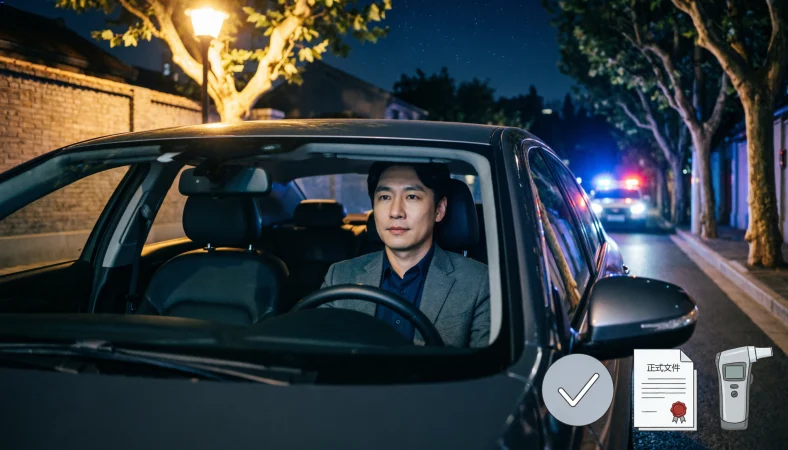
You’re stopped at a sobriety checkpoint late at night. The officer notices:
- Slurred speech
- Alcohol odor
- Bloodshot eyes
The officer asks you to take a breathalyzer test.
Under implied consent laws:
- You are legally expected to comply
- Refusing may trigger automatic penalties—even if you’re sober
What Happens If You Refuse a Test?
Refusing doesn’t mean you “beat” the system. In fact, refusal often leads to immediate consequences.
Common Penalties for Refusal
- Automatic license suspension (often 6–12 months or more)
- Fines or administrative fees
- Mandatory DUI education programs
- Use of refusal as evidence in court
- Possible ignition interlock requirement
⚠️ In some jurisdictions, refusal itself is a separate offense.
Is Refusing Ever Legal?
This depends heavily on local laws.
- In many places, you can refuse—but penalties apply
- Some regions require a warrant for blood tests
- Breath tests are often treated differently than blood draws
Important: Refusal rights do not mean refusal is consequence-free.
Implied Consent vs. Actual Consent
These two ideas are often confused but legally distinct.
Key Differences
| Feature | Implied Consent | Actual Consent |
| How it’s given | Automatically by driving | Verbally or in writing |
| Can you withdraw it? | Technically yes | Yes |
| Consequences for refusal | Administrative penalties | Usually none |
| Common in DUI cases | Yes | Rare |
Examples of Implied Consent in Context
Friendly Tone
“Just a reminder by driving, we all agree to testing under implied consent laws.”
Neutral / Informational
“The driver was informed of implied consent requirements before the chemical test was administered.”
Negative or Dismissive
“He refused the test, triggering implied consent penalties under state law.”
Implied Consent and Driver’s Licenses
When you apply for a driver’s license, implied consent is usually explicitly stated in:
- Driver handbooks
- License application forms
- DMV educational materials
Many drivers simply skim past this section but it carries serious weight.
Implied Consent in Different Regions
Although the principle is similar, enforcement varies.
United States
- All states have implied consent laws
- Penalties vary by state
- Some states allow harsher punishment for refusal than for failing a test
Other Countries
- Canada: Similar framework with strict penalties
- UK: Refusal can lead to criminal charges
- Australia: Strong roadside testing enforcement
Always check local laws if driving abroad.
Related Terms and Comparisons
- Implied: Assumed through behavior
- Express: Clearly stated or signed
- Implied consent allows testing after suspicion
- Probable cause is what justifies the stop or request
- Field sobriety tests may be optional
- Chemical tests usually fall under implied consent laws
Are There Alternate Meanings of Implied Consent?
Yes—but outside driving, the term appears in:
- Medical law: Patients consenting through actions
- Contract law: Agreement inferred from behavior
- Sports or events: Participation implying acceptance of risks
However, in driving, the meaning is specific and legally enforced.
Polite or Professional Alternatives to the Term
In legal or educational writing, you may see:
- “Statutory consent requirement”
- “Chemical testing compliance law”
- “Administrative license consent provision”
These sound formal but refer to the same concept.
Common Myths About Implied Consent ❌
Let’s clear up a few misunderstandings.
- ❌ “I didn’t sign anything, so it doesn’t apply.”
- ❌ “Refusing guarantees no DUI charge.”
- ❌ “Implied consent violates constitutional rights.”
✅ Courts have consistently upheld implied consent laws as lawful.
FAQs
1. What does implied consent mean for drivers?
It means drivers automatically agree to chemical testing for impairment when legally requested.
2. Can I refuse a breathalyzer under implied consent?
You may refuse, but refusal usually results in license suspension and other penalties.
3. Does implied consent apply to blood tests?
Often yes, though blood tests may require additional legal steps depending on location.
4. Is implied consent the same in every state?
No. While all states have implied consent laws, penalties and procedures vary.
5. Does refusing help my DUI case?
Usually not. Refusal can be used against you in court and triggers automatic penalties.
6. Does implied consent apply to drug testing?
Yes. Many laws cover alcohol and drugs, including prescription medications.
7. Can tourists or out-of-state drivers be subject to implied consent?
Yes. Driving in a jurisdiction subjects you to its traffic laws.
8. Where can I find my state’s implied consent law?
Check your state DMV website or driver handbook for official details.
Conclusion
Implied consent isn’t a trap it’s a condition of driving designed to keep roads safer for everyone.
- Driving = automatic agreement to DUI testing
- Refusal carries serious, often immediate penalties
- Laws vary by location, but the principle is universal
- Knowledge helps you make better decisions under pressure
Understanding what implied consent means in driving puts you in control not caught off guard.

Ethan Ware is a digital writer and internet culture enthusiast who stays on top of the latest slang, trends and viral phrases. He specializes in making modern language easy to understand for readers of all ages.