Last Updated on February 19, 2026
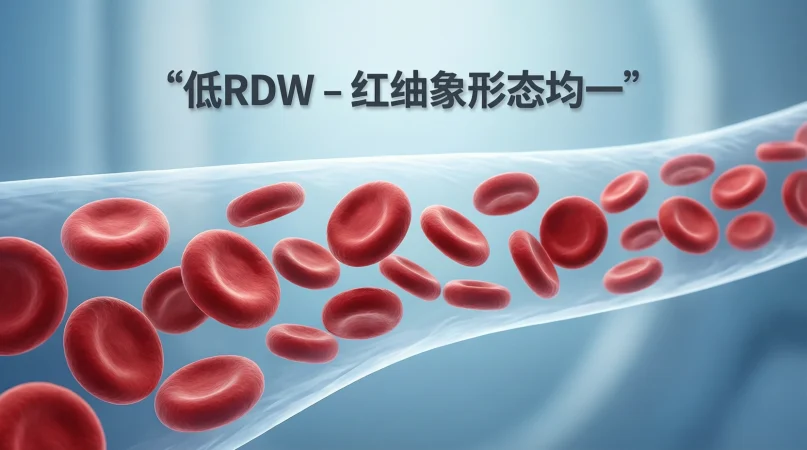
Low RDW (Red Cell Distribution Width) in a blood test means that your red blood cells are very uniform in size. In most cases, a low RDW is not a cause for concern and is considered a normal or clinically insignificant finding when other blood values are normal.
You finally open your blood test results and there it is: RDW.
Maybe it’s marked low, and suddenly you’re wondering if something’s wrong.
Good news first: low RDW is usually harmless.
RDW is one of those lab values that sounds intimidating but is often misunderstood. Unlike high RDW which can signal anemia or nutritional deficiencies low RDW rarely indicates disease on its own.
In this guide, we’ll break down exactly what low RDW means, why it happens, when (if ever) to worry, and how it compares to other red blood cell markers. We’ll keep it clear, friendly, and medically accurate no confusing jargon, no unnecessary panic.
What Is RDW in a Blood Test?
RDW (Red Cell Distribution Width) measures how much variation exists in the size of your red blood cells (RBCs).
- Red blood cells are supposed to be fairly uniform
- RDW tells doctors how consistent their sizes are
- It’s part of a Complete Blood Count (CBC)
RDW Is Reported As:
- RDW-CV (%) – most common
- RDW-SD (fL) – sometimes used instead
What Is Considered a Low RDW?
Most labs define normal RDW as:
| RDW Type | Typical Reference Range |
| RDW-CV | 11.5% – 14.5% |
| RDW-SD | 39 – 46 fL |
➡️ Low RDW means your value is below the lab’s lower reference range.
What That Actually Means
Your red blood cells are:
- Very similar in size
- Evenly produced
- Structurally consistent
This is usually a good thing.
What Does Low RDW Mean Clinically?
Short Answer
Low RDW usually means nothing is wrong.
Longer, More Helpful Answer
A low RDW indicates that:
- Your bone marrow is producing red blood cells evenly
- There’s no major disruption in RBC formation
- There’s no wide variation caused by nutrient deficiency or disease
Doctors typically do not diagnose conditions based on low RDW alone.
Is Low RDW Dangerous?
In almost all cases: no.
Low RDW is:
- Not associated with anemia
- Not linked to cancer
- Not a marker of infection
- Rarely investigated further
Many physicians consider low RDW clinically insignificant unless other blood values are abnormal.
Common Causes of Low RDW
Unlike high RDW, low RDW has few direct causes.
Most Common Reasons
- Naturally uniform red blood cell production
- Stable bone marrow function
- Good overall hematologic health
Occasionally Seen With:
- Certain inherited blood traits (rare)
- Long-standing stable chronic conditions (not harmful)
Importantly, low RDW is not caused by iron deficiency, vitamin B12 deficiency, or folate deficiency—those raise RDW, not lower it.
Low RDW vs High RDW: What’s the Difference?
| Feature | Low RDW | High RDW |
| RBC size variation | Very uniform | Highly varied |
| Clinical concern | Usually none | Often investigated |
| Linked to anemia | Rarely | Commonly |
| Nutrient deficiencies | No | Yes |
| Follow-up needed | Usually no | Often yes |
How Doctors Interpret Low RDW With Other Values
RDW is never interpreted alone. It’s evaluated alongside:
- Hemoglobin (Hb)
- MCV (Mean Corpuscular Volume)
- RBC count
- Hematocrit
Example Interpretations Table
| RDW | MCV | Possible Meaning |
| Low | Normal | Healthy blood profile |
| Low | Low | Uniform microcytosis (usually benign) |
| Low | High | Uniform macrocytosis (rare, stable condition) |
| Low | Normal Hb | No anemia present |
Can Low RDW Indicate Anemia?
Almost never.
Anemia typically causes:
- High RDW
- Low hemoglobin
- Abnormal MCV
If RDW is low and hemoglobin is normal, anemia is unlikely.
Low RDW and Specific Conditions
Iron Deficiency Anemia
❌ No — causes high RDW
Vitamin B12 or Folate Deficiency
❌ No — causes high RDW
Chronic Disease
⚠️ Rarely relevant unless other markers are abnormal
Genetic Blood Disorders
⚠️ Rare and usually diagnosed through other tests
Real-World Usage: How RDW Is Used in Practice
RDW is widely used to:
- Differentiate types of anemia
- Monitor treatment response
- Assess bone marrow function
However:
Low RDW is rarely the focus of diagnosis or treatment.
Doctors usually move on unless something else stands out.
Tone Examples: How Low RDW Might Be Communicated
Friendly
“Your RDW is slightly low, which is generally not concerning. Everything else looks good.”
Neutral
“RDW is below reference range. No clinical significance noted.”
Dismissive (Common in Practice)
“Low RDW—ignore.”
😄 Yes, really.
Alternate Meanings of RDW
RDW only has medical meaning in blood tests.
It does not stand for:
- A disease
- A genetic disorder
- A medical diagnosis
Outside medicine, RDW has no common alternate meanings.
Professional Alternatives to Saying “Low RDW”
In medical writing or reports, you may see:
- “Uniform red cell size”
- “Minimal red cell size variability”
- “Narrow erythrocyte distribution”
These all describe the same concept.
Should You Try to Increase Low RDW?
No.
There is:
- No treatment for low RDW
- No diet to “fix” it
- No supplements recommended
If your RDW is low and everything else is normal, leave it alone.
FAQs
1. Is low RDW bad?
No. Low RDW is usually harmless and often considered normal.
2. What causes low RDW in a blood test?
Uniform red blood cell production, which is typically healthy.
3. Can low RDW indicate cancer?
No. RDW is not a cancer marker.
4. Should I worry if my RDW is low?
Not unless other blood values are abnormal.
5. Does low RDW mean iron deficiency?
No. Iron deficiency usually increases RDW.
6. Can stress cause low RDW?
No evidence suggests stress lowers RDW.
7. Is low RDW common?
Yes, and it’s often ignored by clinicians.
8. Do I need further testing for low RDW?
Usually no unless other CBC values are abnormal.
Conclusion
- Low RDW means your red blood cells are uniform in size
- It is rarely a sign of illness
- Doctors usually focus on high RDW, not low
- RDW must be interpreted with MCV and hemoglobin
- No treatment or lifestyle change is needed
If your report shows low RDW and everything else looks fine, take a deep breath you’re probably doing just fine.

Ryan Holloway is an experienced content strategist with a deep interest in etymology and word origins. He enjoys digging into the history behind words and presenting them in a straightforward, engaging way.