
Last Updated on February 19, 2026
Mardi Gras, translated from French, literally means “Fat Tuesday” in English. It refers to the festive day before Ash Wednesday, marking the final day of indulgence before the Lenten season of fasting and reflection begins.
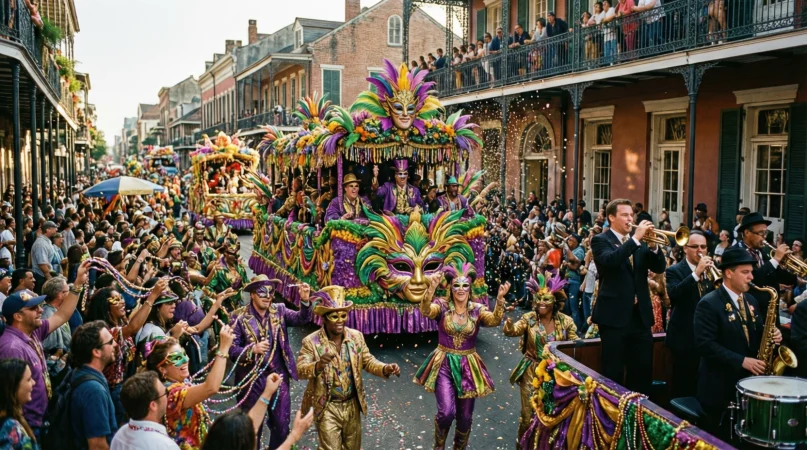
Every year, as winter wanes and the excitement of spring stirs, countless cities worldwide burst into color, music, and merriment in celebration of Mardi Gras. While many associate it with the lively parades of New Orleans, Mardi Gras is more than beads, masks, and jazz it carries centuries of history, cultural traditions, and symbolic meaning. But have you ever paused to ask, “What does Mardi Gras mean in English?” Let’s dive in!
Origins of Mardi Gras
The term Mardi Gras originates from the French language, literally translating to “Fat Tuesday.”
Historical Background
- France, 17th Century: Mardi Gras began as a Catholic tradition in France, celebrating the last day of feasting before the Lenten season, which is a period of fasting and penance.
- Colonial Influence in America: French settlers brought the tradition to Louisiana in the early 18th century, where it merged with local customs and grew into the unique celebration known today.
Religious Significance
Mardi Gras is intrinsically linked to Christian traditions:
- It precedes Ash Wednesday, which marks the start of Lent.
- The indulgence in rich foods—like pastries, meats, and sweets—symbolizes preparing for the 40-day Lenten period of abstinence.
Cultural Significance
Beyond its religious roots, Mardi Gras became a social celebration:
- Carnival Parades: Elaborate floats, marching bands, and masked balls.
- Community Celebration: Shared meals, music, and dancing.
- Symbolism: Colors (purple for justice, green for faith, gold for power) and traditions like throwing beads from floats.
What Does Mardi Gras Mean in English?
To put it simply:
| Term | Translation | Context/Usage |
| Mardi Gras | Fat Tuesday | Last day of indulgence before Lent, celebrated with feasting and festivities. |
The phrase “Fat Tuesday” reflects the concept of enjoying rich, fatty foods before the ritual fasting period begins. In English-speaking countries, people may refer to Mardi Gras as “Fat Tuesday” or simply “Carnival Day,” depending on cultural context.
Everyday Usage Examples
- Friendly/Neutral: “We’re heading to New Orleans for Mardi Gras this year—it’s going to be amazing! 🎭🎉”
- Educational: “Mardi Gras literally means ‘Fat Tuesday’ and is celebrated the day before Ash Wednesday.”
- Dismissive: “Mardi Gras is just an excuse for people to party and throw beads.”
Popularity and Modern Celebrations
New Orleans: The Heart of Mardi Gras
- Parades & Floats: Colorful, themed floats with throws (beads, coins, toys).
- Krewe Organizations: Social clubs responsible for organizing parades.
- Food & Drink: King cake, jambalaya, and cocktails like hurricanes.
Global Celebrations
| Country | Mardi Gras Celebration Style |
| Brazil | Carnival with samba parades and elaborate costumes |
| Italy (Venice) | Masked balls and elegant street celebrations |
| Germany | Rosenmontag parades with floats and satire |
| Canada | Quebec City Carnival with winter sports and festivities |
Cultural Adoption
Over time, Mardi Gras has evolved from strictly religious origins into a cultural festival, celebrated by people of all faiths, often emphasizing music, food, and community spirit.
Key Traditions and Symbols
- King Cake: A sweet pastry with a hidden figurine; the finder hosts the next party.
- Beads and Throws: Colorful necklaces and trinkets thrown from floats.
- Masks & Costumes: Traditionally used to allow wearers to escape societal constraints.
- Music & Dance: Jazz, zydeco, and brass band performances.
Colors and Their Meanings
- Purple: Justice
- Green: Faith
- Gold: Power
These symbols enhance the experience and reinforce the cultural heritage of Mardi Gras.
Comparison with Related Terms
| Term | Meaning/Usage | Difference from Mardi Gras |
| Fat Tuesday | Literal English translation of Mardi Gras | Used mainly in English-speaking contexts |
| Carnival | Pre-Lenten festival in many countries | Broader term encompassing various pre-Lenten celebrations |
| Ash Wednesday | Start of Lent | Marks the end of Mardi Gras festivities |
| Shrove Tuesday | UK term for the day before Lent | Similar traditions, often includes pancake eating |
Tip: While Mardi Gras is most closely tied to Louisiana and French culture, Carnival is more universal and used in Brazil, Italy, and other regions.
Alternate Meanings
Although primarily a cultural and religious festival, Mardi Gras can occasionally refer to:
- Events or parties named after Mardi Gras (e.g., Mardi Gras-themed nights at clubs or schools).
- Metaphorical use: Describing indulgence or celebration in daily language.
Polite or Professional Alternatives
- When discussing the celebration formally, you can use:
- “Fat Tuesday Festival”
- “Pre-Lenten Celebration”
- “Mardi Gras Festival”
This maintains clarity without assuming the reader is familiar with cultural nuances.
Example Table of Mardi Gras Traditions
| Tradition | Description | Symbolism or Purpose |
| King Cake | Sweet pastry with hidden figurine | Celebration & community participation |
| Beads/Throws | Necklaces, coins, small toys thrown from floats | Fun, festivity, and interaction |
| Masks & Costumes | Colorful attire and masks | Escape social norms & enjoy freedom of expression |
| Parades | Organized floats and performers | Community display, celebration, and entertainment |
| Music | Jazz, brass bands, zydeco | Cultural identity, joy, and rhythm |
FAQs
1. When is Mardi Gras celebrated?
Mardi Gras is celebrated the day before Ash Wednesday, usually in February or March, depending on the date of Easter.
2. Why is it called Fat Tuesday?
It’s called “Fat Tuesday” because people traditionally indulged in rich foods before the Lenten fasting period.
3. Is Mardi Gras a religious holiday?
Yes, it originated as a Christian festival but has evolved into a cultural celebration as well.
4. How is Mardi Gras celebrated in New Orleans?
Through parades, floats, masked balls, music, and traditional foods like King Cake.
5. Are Mardi Gras and Carnival the same thing?
Mardi Gras is a type of Carnival, specifically celebrated in French-influenced regions; Carnival is a broader pre-Lenten festival.
6. What are the colors of Mardi Gras and their meanings?
Purple (justice), Green (faith), and Gold (power).
7. Can anyone participate in Mardi Gras?
Yes! It is open to the public, though some private balls require invitations.
8. What foods are typically eaten on Mardi Gras?
King Cake, jambalaya, gumbo, and other indulgent treats.
Conclusion
Mardi Gras, or Fat Tuesday, is a vibrant blend of religion, culture, and celebration. Originating in France, it traveled to Louisiana and evolved into a globally recognized festival filled with parades, music, and indulgence. Knowing what Mardi Gras means in English helps appreciate the historical and cultural depth beyond the beads and festivities. Whether you’re attending a parade, enjoying traditional foods, or learning about its origins, understanding the term enriches the experience.
- Mardi Gras literally means “Fat Tuesday”.
- It marks the day before Lent begins.
- It is celebrated with parades, music, masks, and feasting.
- Variations exist worldwide, often under the term Carnival.
- Respecting traditions enhances the enjoyment of this cultural festival.
Embrace the celebration, savor the traditions, and remember the essence of Mardi Gras lies in joyful indulgence before reflection! 🎉

Ethan Ware is a digital writer and internet culture enthusiast who stays on top of the latest slang, trends and viral phrases. He specializes in making modern language easy to understand for readers of all ages.