
Last Updated on February 19, 2026
In Spanish, “olay” (more commonly spelled “olé”) is an exclamation used to express enthusiasm, approval, admiration, or encouragement similar to saying “bravo,” “wow,” or “well done” in English.
It does not have a direct literal translation but conveys strong positive emotion in the moment.
If you’ve ever heard someone shout “¡Olay!” at a celebration, in a song, or during a lively moment and wondered what it actually means in Spanish, you’re not alone. It’s a short word, but it carries big energy. Sometimes it sounds joyful, sometimes dramatic, and sometimes… a little confusing if you’re trying to translate it literally.
So what does olay mean in Spanish, really? Where does it come from, how is it used, and is it even a “real” Spanish word?
Let’s break it all down in a clear, friendly, and culturally accurate way.
🎉 Why “Olay” Catches People’s Attention
“Olay” stands out because:
- It’s emotional, not literal
- It’s often shouted, not calmly spoken
- It appears in music, sports, dance, and celebrations
Many English speakers encounter it first in:
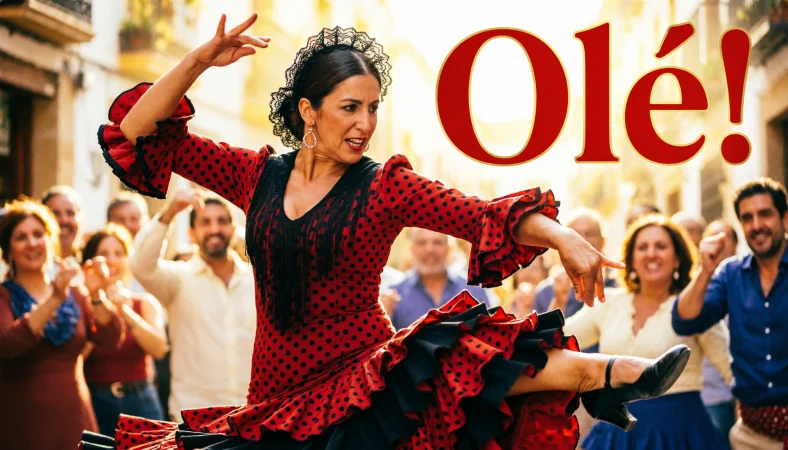
- Flamenco performances
- Soccer matches
- Spanish songs
- Pop culture references
And naturally, the next question is: Is “olay” even a real Spanish word?
Short answer: Yes—but with a catch.
🧠 “Olay” vs. “Olé”: Important Spelling Note
Before we go further, let’s clear up a key detail.
- Correct Spanish spelling: olé
- Common phonetic spelling: olay
In English contexts, people often write “olay” to reflect how olé sounds when spoken. However, in proper Spanish writing, olé (with an accent) is the standard form.
👉 This article focuses on meaning and usage, not just spelling—so you’ll see both referenced where appropriate.
🗣️ What Does “Olay” (Olé) Mean in Spanish?
“Olay” / “Olé” is an exclamation used to express:
- Excitement
- Admiration
- Encouragement
- Approval
- Emotional emphasis
It’s similar to saying:
- “Bravo!”
- “Wow!”
- “Nice!”
- “Well done!”
But unlike those English words, olé doesn’t describe an action—it reacts to one.
🕰️ Origin of “Olay” (Olé)
Historical Roots
The exact origin of olé is debated, but most linguists trace it to:
- Andalusian Spanish
- Possible influence from Arabic expressions during medieval Spain
One popular theory links it to the Arabic phrase:
“Wa-llāh” (meaning “by God”)
Over time, this evolved phonetically into olé, becoming a celebratory exclamation in Spanish culture.
Cultural Development
“Olé” became deeply embedded in:
- Flamenco music and dance
- Bullfighting traditions
- Festivals and performances
From there, it spread internationally.
🌍 Popularity and Global Recognition
Today, “olé” (often spelled “olay” by non-Spanish speakers) is recognized worldwide.
Where You’ll Hear It Most
- Spain 🇪🇸
- Latin America
- Flamenco shows
- Soccer stadiums ⚽
- Concerts and live performances
It’s one of those rare words that cross language barriers without translation.
🎭 Real-World Usage of “Olay” in Spanish
“Olay” is almost always used emotionally, not informationally.
Common Situations
- Applauding a performance
- Cheering someone on
- Reacting to a bold or impressive move
- Adding flair to music or speech
It’s spontaneous and expressive.
💬 Examples of “Olay” in Context
Friendly / Celebratory Tone 🎉
“¡Olay! ¡Eso fue increíble!”
(Wow! That was amazing!)
Neutral / Observational Tone
“El público gritó ‘olé’ después del baile.”
(The audience shouted ‘olé’ after the dance.)
Dramatic / Emphatic Tone 🔥
“¡Olay! Así se hace.”
(That’s how it’s done!)
⚠️ Note: It’s not typically used in negative or dismissive contexts.
📊 Example Table: How “Olay” Is Used
| Situation | Meaning | English Equivalent |
| Flamenco dance | Admiration | Bravo! |
| Soccer goal | Excitement | Yes! |
| Music performance | Approval | Amazing! |
| Cultural celebration | Joy | Wow! |
🔄 Comparison With Similar Spanish Expressions
“Olay” (Olé) vs. “Bravo”
| Term | Usage |
| Olé | Emotional, cultural, spontaneous |
| Bravo | Formal praise, often repeated |
“Olay” vs. “Vamos”
| Term | Meaning |
| Olé | Reaction to something impressive |
| Vamos | Encouragement to act |
“Olay” vs. “Bien”
| Term | Tone |
| Olé | Expressive, energetic |
| Bien | Calm, descriptive |
🔁 Alternate Meanings of “Olay”
1. Phonetic Spelling (Non-Spanish)
In English writing, “olay” is often used informally to represent the sound of olé.
2. Brand Confusion
Some people confuse “olay” with the skincare brand Olay, which is not Spanish and has no linguistic connection.
🧑💼 Polite or Professional Alternatives
In formal Spanish writing or professional settings, instead of using “olé,” you might choose:
- Excelente
- Muy bien
- Magnífico
- Impresionante
These convey praise without sounding casual or theatrical.
💡 Usage Tips: How to Use “Olay” Correctly
Do:
- Use it in celebrations or performances
- Match the emotional energy of the moment
- Use “olé” in proper Spanish writing
Don’t:
- Use it in formal emails
- Overuse it in normal conversation
- Treat it as a literal word with a definition
FAQs
1. What does olay mean in Spanish?
It’s an exclamation of excitement or approval, usually spelled olé.
2. Is “olay” a real Spanish word?
The correct spelling is olé; “olay” is a phonetic version.
3. Does “olay” have a literal meaning?
No. It expresses emotion, not a dictionary definition.
4. When do Spanish speakers say “olé”?
During performances, celebrations, or impressive moments.
5. Is “olé” used in Latin America?
Yes, though more commonly associated with Spain.
6. Can “olé” be used sarcastically?
Rarely. It’s almost always positive.
7. Is “olé” formal or informal?
Informal and expressive.
8. Is “olé” related to the Olay skincare brand?
No connection at all.
Conclusion
It’s an expressive exclamation more feeling than word used to celebrate, admire, and energize a moment. While the correct spelling is olé, the meaning stays the same whether written as “olay” in English contexts or spoken aloud.
- “Olay” = Olé in Spanish
- Used to express excitement or approval
- Deep cultural roots in Spain
- Not literal, always emotional
- Best used in celebratory moments
Understanding words like this helps you grasp how Spanish communicates emotion, not just information.

Ethan Ware is a digital writer and internet culture enthusiast who stays on top of the latest slang, trends and viral phrases. He specializes in making modern language easy to understand for readers of all ages.