
Last Updated on February 19, 2026
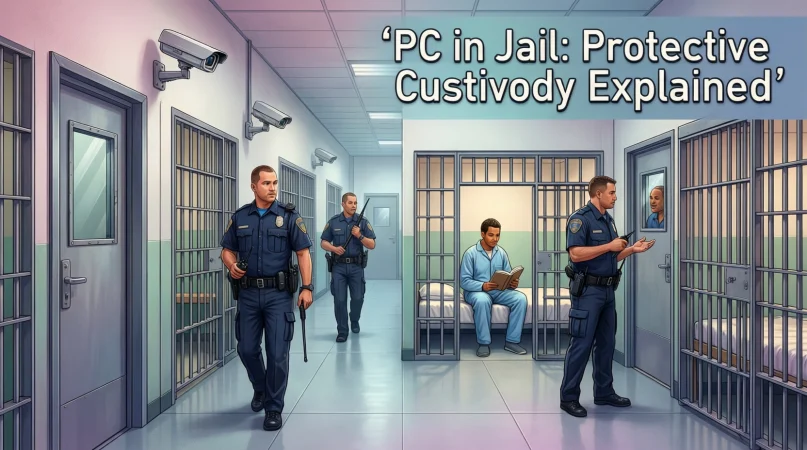
PC in jail stands for “Protective Custody,” a status given to inmates who are at risk of harm from other prisoners, ensuring their safety through separate housing or special supervision.
If you’ve ever watched prison documentaries or read about the criminal justice system, you may have stumbled upon the term “PC”. It often appears in conversations about inmates, jail procedures, or prison safety protocols. But what does PC mean in jail? Beyond just an abbreviation, it reflects a critical aspect of inmate safety and prison management.
Whether you’re a student, a concerned family member, or simply curious about correctional terminology, this article breaks down PC in jail in a clear, friendly, and professional way.
What PC Means in Jail: Protective Custody
In the context of prisons or jails, PC stands for Protective Custody. This designation is given to inmates who face a heightened risk of harm from other prisoners due to factors such as:
- Nature of their crime (e.g., sex offenders, former law enforcement, or informants)
- Personal vulnerabilities (e.g., elderly or physically weak inmates)
- Threats from gangs or other inmates
Key Features of Protective Custody:
| Feature | Description |
| Separate Housing | Inmates are housed separately from the general population for safety. |
| Increased Supervision | Guards may monitor these inmates more closely. |
| Restricted Movement | Limited interaction with other prisoners to reduce risk. |
| Special Programs | Access to programs may be modified due to isolation needs. |
Protective Custody is not a punishment but a safety measure designed to prevent violence, harassment, or even death within correctional facilities.
The Origin of PC in Prisons
The concept of Protective Custody dates back to the early 20th century when prison populations began to diversify, and the risks of inmate-on-inmate violence became apparent. Over time, correctional institutions formalized policies to segregate vulnerable inmates and provide enhanced protection.
The abbreviation PC became shorthand among prison staff and inmates alike, streamlining communication about inmate status. Today, it’s widely used across the United States and many other countries’ prison systems.
Why PC Is Important 🛡️
Safety First:
PC prevents vulnerable inmates from being targeted, bullied, or attacked. It also reduces the liability risk for correctional facilities.
Behavioral Management:
Inmates in protective custody often have access to counseling or rehabilitation programs designed to help them adjust to prison life while being safe.
Peace of Mind:
For family members, knowing a loved one is in PC can provide reassurance that their safety is being actively monitored.
Examples of PC in Use
Here’s how the term appears in real-world contexts:
- Friendly/Neutral Tone:
“He’s in PC for now. The prison staff wants to keep him safe until his court date.”
- Professional/Administrative Use:
“The inmate has been placed in PC due to credible threats from gang affiliates.”
- Negative/Dismissive Tone (from other inmates):
“Oh, he’s in PC? Must be scared of a real fight!”
Note: While PC is protective, it can carry stigma among certain inmate populations, as some may view it as a sign of weakness.
Comparison With Related Terms 🔄
| Term | Meaning | Key Difference from PC |
| Segregation | Inmates separated for disciplinary reasons | PC is about protection, not punishment |
| Solitary Confinement | Isolated for behavioral or safety reasons | PC focuses on protection; solitary can be punitive |
| Administrative Segregation (AdSeg) | Isolation for security management | AdSeg may involve PC, but not all AdSeg is protective |
Understanding these distinctions helps clarify that PC is a safety tool, not a disciplinary measure.
Alternate Meanings of PC in Other Contexts 🖥️
While PC in jail specifically means Protective Custody, it’s worth noting that in everyday life, PC can mean:
- Personal Computer – the most common civilian usage
- Probable Cause – a legal term used in law enforcement
- Political Correctness – in social and cultural discussions
In jail discussions, context is key. When you hear PC from guards or inmates, it almost always refers to Protective Custody.
How Inmates Get Placed in PC
Placement in Protective Custody isn’t arbitrary. It follows protocols designed to assess risk:
- Threat Assessment:
- Staff evaluates if an inmate faces credible danger from others.
- Medical or Psychological Input:
- Mental health professionals may recommend PC if safety or wellbeing is at risk.
- Administrative Approval:
- The warden or supervising officer signs off on the decision.
- Duration:
- PC can be temporary (e.g., until a specific threat is removed) or long-term.
Tip: PC doesn’t automatically mean isolation for months. Some inmates are rotated back into general population after risks subside.
Life in Protective Custody: What to Expect 🏠
Living Conditions:
- Separate cells or wings
- Limited interaction with other inmates
- Regular safety checks by guards
Daily Routine:
- Meals may be eaten in isolation or with a small group
- Recreation time may be scheduled in safer areas
- Access to educational or therapeutic programs may be adjusted
Emotional Impact:
Being in PC can be stressful, as it may feel isolating. However, it’s important to remember that the primary goal is protection.
Polite Alternatives to the Term PC
If discussing an inmate in PC with sensitivity, you can use:
- Protective Housing
- Safety Custody
- Secured Placement
These terms communicate safety without carrying the negative connotations sometimes associated with “PC.”
Example Table: PC vs Other Jail Statuses
| Status | Meaning | Common Misconception |
| PC | Protective Custody | That it’s punishment |
| AdSeg | Administrative Segregation | That all AdSeg is for protection |
| Solitary | Isolation for behavioral reasons | That all solitary is protective |
| General Population | Standard inmate housing | That it’s always safe |
FAQs
1. Is PC the same as solitary confinement?
- Not exactly. Solitary is often punitive, while PC is protective.
2. Can anyone request PC?
- Yes, an inmate can request PC, but placement is based on credible threat assessments.
3. How long can an inmate stay in PC?
- Duration varies from days to months, depending on risk factors.
4. Does PC affect parole or release?
- Generally, PC does not impact parole eligibility, but it may be noted in behavior records.
5. Are there programs for PC inmates?
- Yes, many facilities offer educational, therapeutic, and recreational programs adapted for PC.
6. Is PC considered a punishment?
- No, it’s designed purely for safety.
7. Can inmates refuse PC?
- In some cases, yes, but staff may insist for safety reasons.
8. Does PC placement carry stigma among inmates?
- Sometimes, yes. Other inmates may perceive it as a sign of weakness, even though it’s a protective measure.
Conclusion
- PC in jail = Protective Custody, ensuring inmate safety.
- It’s not a punishment, but a protective measure.
- PC has specific housing, supervision, and program adjustments.
- Awareness of PC helps families, legal professionals, and the public understand prison safety practices.
- Alternate terms and careful communication can reduce stigma.
Understanding PC is essential for anyone navigating the correctional system, whether as a professional, family member, or curious observer.

James Colton is a language researcher and content writer who loves exploring the deeper meanings behind everyday words. With a background in linguistics, he breaks down complex terms into simple, clear explanations that anyone can understand.