
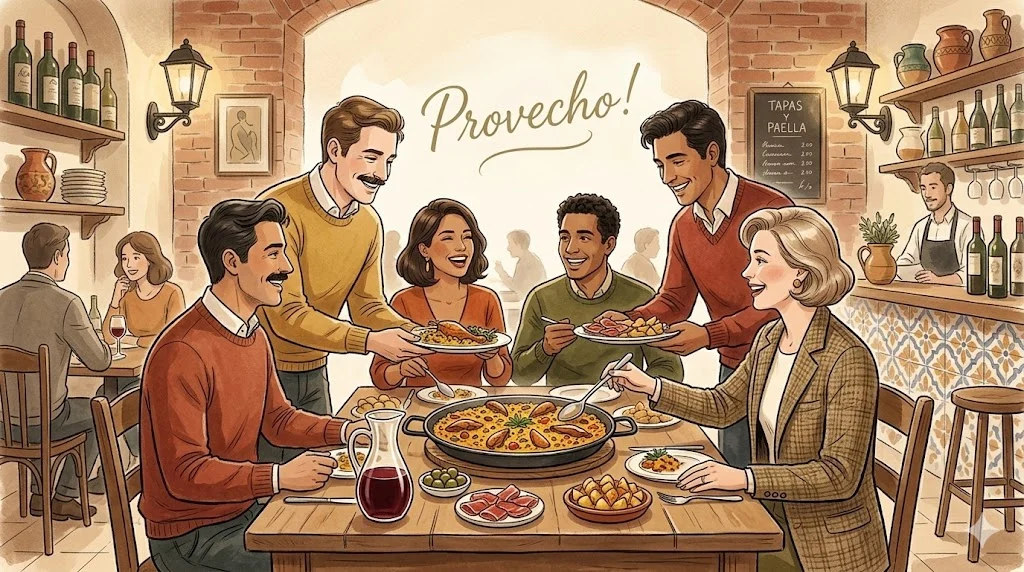
“Provecho” is a Spanish word commonly used before or during meals. In English, it roughly means “enjoy your meal” or “may it benefit you.” People say it to wish others a pleasant and satisfying eating experience.
If you’ve ever sat down to eat with Spanish speakers or watched a movie, a cooking video, or a family dinner scene in Spanish you’ve probably heard someone smile and say “¡Provecho!” right as food is served.
It’s short. It’s warm. And it carries far more meaning than a simple translation might suggest.
So, what does provecho mean in English? And why doesn’t English have a perfect equivalent?
This in-depth guide explains the true meaning of provecho, where it comes from, how it’s used in real life, what tone it carries, and how to respond naturally whether you’re learning Spanish, traveling, or just curious.
Why Provecho Is More Than “Enjoy Your Meal”
At first glance, provecho seems easy to translate. But culturally, it does more than wish someone enjoyment it wishes them well-being.
When someone says provecho, they’re not just being polite. They’re saying:
- “May this food do you good”
- “May it nourish you”
- “Enjoy and benefit from it”
It blends kindness, care, and hospitality into one small word.
Literal Meaning: What Does Provecho Translate To?
The word provecho comes from the Spanish verb aprovechar, which means:
- To benefit
- To make good use of
- To profit from
So literally, provecho means:
“Benefit” or “advantage”
In food-related contexts, it becomes a wish:
“May this food benefit you.”
The Origin of Provecho
Etymology
Provecho comes from the Latin word profectus, meaning:
- Progress
- Benefit
- Advancement
Historically, meals were closely linked to:
- Health
- Strength
- Survival
Wishing someone provecho was a way of saying:
“May this meal strengthen and sustain you.”
That meaning still quietly lives inside the word today.
How Popular Is Provecho in Spanish-Speaking Cultures?
Extremely popular—and widely understood.
You’ll hear provecho:
- In homes 🏠
- In restaurants 🍽️
- In workplaces during lunch
- Among strangers and friends alike
In many countries, it’s considered basic table etiquette.
When Do People Say Provecho?
1. Before Someone Starts Eating
Most common usage.
Example:
Aquí está tu comida. ¡Provecho!
(Here’s your food. Enjoy!)
2. When Passing By Someone Who Is Eating
This is very cultural and often surprises English speakers.
Example:
Buen provecho.
Said politely, even to strangers.
3. When Leaving While Others Are Eating
It’s a polite way to acknowledge their meal.
Example:
Ya me voy. Provecho.
Tone Matters: How Provecho Feels
Friendly Tone 😊
¡Provecho!
Warm, casual, kind.
Neutral / Polite Tone
Buen provecho.
Respectful and standard.
Playful Tone 😄
¡Provechito!
Diminutive form cute and affectionate.
Dismissive Tone (Rare)
Said flatly or sarcastically, tone not the word creates negativity.
Common English Translations of Provecho
There is no single perfect translation, but these are closest:
- Enjoy your meal
- Enjoy
- Bon appétit (used in English by borrowing French)
Each captures part of the meaning but not all of it.
Example Table: Provecho in Context
| Situation | Spanish Phrase | Natural English Meaning |
| Serving food | ¡Provecho! | Enjoy your meal |
| Formal setting | Buen provecho | Please enjoy |
| Casual/friendly | Provechito | Enjoy! (warm tone) |
| Passing diners | Buen provecho | Enjoy your meal |
Provecho vs Similar Spanish Expressions
Provecho vs Buen Provecho
| Phrase | Tone | Usage |
| Provecho | Casual | Friends, family |
| Buen provecho | Polite | Restaurants, formal |
Provecho vs Bon Appétit
- Bon appétit = French, often borrowed in English
- Provecho = Spanish, culturally deeper in daily life
Regional Variations Across Spanish-Speaking Countries
- Mexico: Buen provecho is very common—even with strangers
- Spain: Used, but less frequent than in Latin America
- Central America: Very common and polite
- Caribbean: Casual, often shortened
Despite regional differences, the meaning stays consistent.
Does Provecho Have Alternate Meanings?
Yes—outside food contexts.
General Meaning
Provecho can mean:
- Benefit
- Advantage
- Usefulness
Example:
No le sacó provecho a la oportunidad.
(He didn’t take advantage of the opportunity.)
But in food contexts, it almost always means enjoy your meal.
Polite or Professional Alternatives to Provecho
In more formal or written contexts, alternatives include:
- Que disfrute su comida (May you enjoy your meal)
- Espero que lo disfrute (I hope you enjoy it)
These are longer and more formal—but less common in daily speech.
How to Respond When Someone Says Provecho
The most common responses are:
- Gracias (Thank you)
- Igualmente (Likewise)
- A smile 😊
You don’t need a long reply—acknowledgment is enough.
Common Mistakes Learners Make
- Thinking provecho only applies to food ❌
- Translating it word-for-word as “benefit” in meals ❌
- Avoiding it because English doesn’t use it ❌
Using provecho correctly shows cultural fluency, not just language skill.
Usage Tips for Non-Native Speakers
- Say it naturally, not loudly
- Use buen provecho in formal settings
- Don’t overthink responses
- Smile tone matters more than perfection
FAQs
1. What does provecho mean in English?
It means “enjoy your meal” or “may it benefit you.”
2. Is provecho formal or informal?
Both provecho is casual, buen provecho is more formal.
3. When should I say provecho?
Before someone eats, when passing diners, or when leaving during a meal.
4. Is provecho used with strangers?
Yes, especially in Latin America.
5. What’s the best response to provecho?
“Gracias” or “igualmente.”
6. Does provecho literally mean enjoy?
No it literally means benefit, but culturally means enjoy your meal.
7. Is provecho used in Spain?
Yes, though less frequently than in Latin America.
8. Can provecho be used sarcastically?
Rarely and only through tone, not the word itself.
Conclusion
Provecho reminds us that language isn’t just about words it’s about values. In Spanish speaking cultures, meals are shared moments, and provecho is a small but meaningful way of saying, “I care that this moment is good for you.”
So the next time someone says provecho, smile, say gracias, and enjoy not just the food, but the connection.

Madison Lee is a skilled writer at ValneTix.com dedicated to making word meanings clear, relatable and actionable. She empowers readers to understand language deeply and use words with confidence in daily life.