
Last Updated on February 19, 2026
Quattro in Audi refers to the brand’s signature all-wheel-drive (AWD) system, designed to enhance traction, stability, and performance across various driving conditions.
Audi’s Quattro system has become synonymous with luxury, performance, and all weather reliability. If you’ve ever seen the “Quattro” badge on an Audi vehicle, you might have wondered what it actually means and why it’s so important. This guide dives deep into the meaning, origin, and real-world significance of Quattro, providing practical examples, comparisons, and FAQs for both car enthusiasts and casual drivers.
The Origin of Quattro
The term “Quattro” is Italian for “four”, reflecting the four-wheel-drive capability of Audi vehicles that carry this badge. Audi introduced the Quattro system in the early 1980s, and it revolutionized automotive engineering by combining performance with all-weather safety.
- Introduced: 1980
- First Model: Audi Quattro coupe
- Purpose: Provide superior traction and handling on road and off-road conditions
The Quattro system gained immediate fame in rally racing, dominating events like the World Rally Championship, which helped establish Audi as a performance and technology leader.
How Quattro Works in Audi Vehicles
Audi Quattro is an all-wheel-drive (AWD) system. Unlike front-wheel-drive or rear-wheel-drive vehicles, AWD systems distribute engine power to all four wheels, improving grip and stability.
Key Features:
- Torque Distribution: Quattro automatically adjusts power between front and rear wheels depending on traction.
- Improved Handling: Helps in sharp turns, slippery roads, and challenging terrain.
- Safety: Reduces the risk of skidding and loss of control.
| Feature | Description | Benefit |
| All-Wheel Drive (AWD) | Power to all wheels | Enhanced traction and control |
| Torsen or Haldex Systems | Advanced torque distribution | Smooth driving in variable conditions |
| Performance-Oriented | Sportier response in Quattro S and RS models | Faster acceleration and stability |
Example in Context:
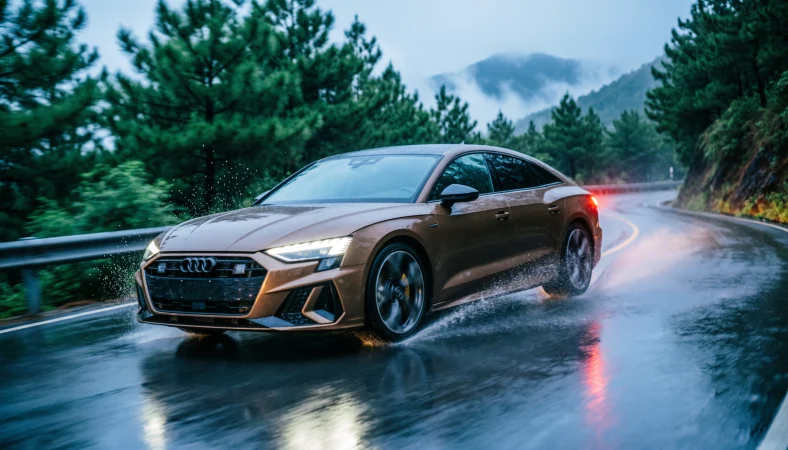
- Friendly Tone: Driving in rain? Quattro has your back, keeping your Audi glued to the road.
- Neutral Tone: Quattro distributes power intelligently, enhancing stability in various driving conditions.
- Dismissive/Negative Tone: For daily city commutes, some might find Quattro overkill and prefer lighter FWD models.
Types of Quattro Systems
Audi has several variations of Quattro, depending on the model and year.
- Torsen Quattro: Uses a mechanical center differential for continuous torque split. Common in sedans and older models.
- Haldex Quattro: Electronically controlled, mainly in transverse-engine models like the Audi A3. Engages AWD only when needed, improving fuel efficiency.
- Ultra Quattro: A modern, lightweight AWD system that disconnects the rear axle when not needed to save fuel.
Key Comparison:
| Type | Power Split | Ideal For | Fuel Efficiency |
| Torsen | Continuous | Performance & All-weather | Moderate |
| Haldex | On-demand | Compact/urban vehicles | High |
| Ultra | Adaptive | Modern sedans & SUVs | Very High |
Popularity of Quattro
Audi Quattro has become a hallmark of the brand. Here’s why:
- Rally Legacy: Domination in WRC boosted Quattro’s credibility.
- Luxury Appeal: AWD in luxury vehicles is synonymous with safety and performance.
- Global Adoption: Found across SUVs, sedans, coupes, and performance models.
Models Featuring Quattro:
- Audi A4 Quattro
- Audi A6 Quattro
- Audi Q5 Quattro
- Audi Q7 Quattro
- Audi RS models (RS4, RS7, etc.)
Advantages of Audi Quattro
Owning an Audi with Quattro comes with multiple benefits:
- Enhanced Traction: Ideal for snow, rain, and uneven surfaces.
- Better Handling: Reduces understeer and oversteer.
- Performance Edge: Provides sportier driving experience, especially in RS and S models.
- Resale Value: AWD models tend to hold value better in certain markets.
Practical Tip:
Quattro doesn’t mean your vehicle is invincible in extreme conditions. Snow tires and safe driving are still essential.
Quattro vs. Other Drivetrains
FWD (Front-Wheel Drive)
- Pros: Lighter, more fuel-efficient, cheaper to maintain.
- Cons: Less grip in slippery conditions.
RWD (Rear-Wheel Drive)
- Pros: Sporty handling, more dynamic driving.
- Cons: Poor performance in snow and rain.
AWD/4WD (Including Quattro)
- Pros: Superior traction, safe, adaptable.
- Cons: Heavier, potentially more expensive to maintain.
Example Table: Drivetrain Comparison
| Drivetrain | Traction | Fuel Efficiency | Handling |
| FWD | Moderate | High | Average |
| RWD | Low (wet) / High (dry) | High | Sporty |
| Quattro AWD | High | Moderate | Excellent |
Alternate Meanings of Quattro
While in automotive terms, Quattro is almost exclusively linked to Audi, it can occasionally appear in other contexts:
- Technology & Products: Some electronics brands use “Quattro” for naming (e.g., Dell Quattro laptop series).
- Music & Pop Culture: “Quattro” may refer to “four” in music groups or albums.
However, in most searches, especially related to cars, Audi Quattro is the primary association.
Real-World Usage Examples
- Friendly: “I love my Audi Q5 Quattro—it handles rain and snow like a dream! ❄️🚗”
- Neutral: “The Quattro system distributes torque to all four wheels, enhancing stability.”
- Negative/Dismissive: “If you mostly drive on highways, Quattro might be more than you need—adds weight and slightly reduces fuel efficiency.”
FAQs
- What does Quattro mean in Audi cars?
Quattro is Audi’s all-wheel-drive system, providing power to all four wheels for better traction and stability. - Is Quattro the same as 4WD?
Not exactly. Quattro is a type of AWD, automatically adjusting torque distribution, while traditional 4WD is often manually engaged. - Do all Audi models have Quattro?
No, only models with the Quattro badge or AWD option. - Is Quattro good for winter driving?
Yes, it significantly improves traction on snow and ice. - Does Quattro reduce fuel efficiency?
Slightly, especially in mechanical Torsen systems, but modern systems like Ultra Quattro minimize this effect. - What is the difference between Torsen and Haldex Quattro?
Torsen is mechanical with continuous torque split; Haldex is electronic and engages AWD only when needed. - Can Quattro vehicles go off-road?
Light off-road use is fine, but it’s not designed for extreme off-roading like dedicated 4WD trucks. - Do you need Quattro for city driving?
Not essential, but it adds peace of mind during adverse weather.
Conclusion
- Quattro is Audi’s signature AWD system, enhancing safety, handling, and performance.
- It originated in the 1980s and earned fame in rally racing.
- Variants like Torsen, Haldex, and Ultra cater to different driving needs.
- While excellent for all-weather driving, Quattro adds weight and slightly impacts fuel efficiency.
- Understanding Quattro helps buyers make informed choices, whether for daily commutes or spirited driving.
Practical Tip: Consider your driving conditions, model type, and fuel efficiency priorities when choosing an Audi Quattro vehicle.

Sophia Lane is a passionate wordsmith and lifestyle writer who covers everything from Spanish phrases to biblical terms. She believes that understanding language helps people connect better with the world around them