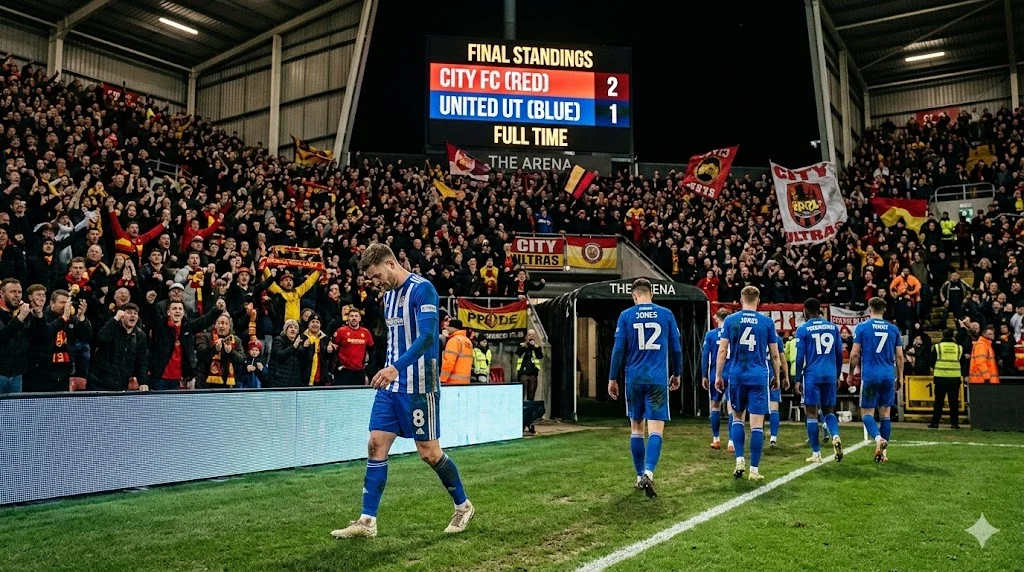
In soccer, relegation means a team is moved down to a lower division at the end of a season because of poor performance, usually finishing at the bottom of the league table.
Soccer is full of drama but few moments are as emotional, controversial, or season defining as relegation. One minute a club is facing giants like Manchester United or Barcelona; the next, it’s preparing for life in a lower division. Fans cry, managers get fired, budgets shrink, and history is rewritten.
So what does relegation mean in soccer, and why does it matter so much?
This comprehensive guide explains relegation in simple, human terms how it works, where it came from, why it exists, and how it affects clubs, players, and fans around the world.
Why Relegation Is One of Soccer’s Most Powerful Ideas
Unlike many sports leagues, soccer doesn’t protect teams from failure. There’s no safety net. If you don’t perform, you drop—no matter how famous or wealthy the club is.
That’s what makes relegation:
- Brutal 😬
- Fair ⚖️
- Intensely emotional ❤️
- Uniquely exciting ⚽
Every match matters—not just for championships, but for survival.
The Origin of Relegation in Soccer
Where Did Relegation Come From?
Relegation began in England in the late 19th century, alongside the rise of organized football leagues.
- 1888: The English Football League (EFL) was formed
- 1892: Promotion and relegation were officially introduced
The idea was simple:
Reward strong teams with promotion. Punish weak teams with relegation.
This system quickly spread across Europe and eventually the world.
Why Soccer Adopted Relegation
Relegation was designed to:
- Keep leagues competitive
- Prevent stagnation
- Reward merit, not reputation
- Give smaller clubs a chance to rise
It made soccer leagues dynamic, not closed systems.
How Relegation Works in Soccer
The Basic Structure
Most soccer leagues operate in a tiered pyramid system:
| Level | Example (England) |
| Top Division | Premier League |
| Second Division | Championship |
| Third Division | League One |
| Fourth Division | League Two |
End-of-Season Relegation
At the end of the season:
- Teams earn points (win = 3, draw = 1, loss = 0)
- The teams with the fewest points are relegated
In many leagues:
- Bottom 2 or 3 teams go down
Example: Premier League Relegation
| Position | Outcome |
| 18th | Relegated |
| 19th | Relegated |
| 20th | Relegated |
These teams move to the EFL Championship for the next season.
Relegation Example Table (Simple)
| Team | Final Position | Points | Result |
| Team A | 17th | 38 | Safe |
| Team B | 18th | 32 | Relegated |
| Team C | 19th | 29 | Relegated |
| Team D | 20th | 22 | Relegated |
Promotion vs Relegation (Key Comparison)
Relegation always works hand-in-hand with promotion.
| Feature | Promotion | Relegation |
| Movement | Up a division | Down a division |
| Reason | Strong performance | Poor performance |
| Impact | More money, prestige | Financial loss, pressure |
| Emotion | Celebration 🎉 | Heartbreak 💔 |
Why Relegation Is So Important in Soccer
1. Every Match Matters
Even mid-table or bottom-table games carry huge stakes.
A late-season match between two struggling teams?
That’s not boring—it’s survival football.
2. It Creates Real Consequences
Relegation affects:
- TV revenue
- Sponsorship deals
- Player contracts
- Club reputation
One bad season can change a club’s future.
3. It Keeps Leagues Fair
No club is “too big to fail.”
Historic teams like:
- Leeds United
- Juventus
- Schalke
- Nottingham Forest
have all been relegated at some point.
Real-World Examples of Relegation
Example 1: Famous Club Relegation (Neutral Tone)
“Juventus were relegated to Serie B after the 2006 Calciopoli scandal.”
Here, relegation was due to punishment, not performance.
Example 2: Dramatic Relegation Battle (Emotional Tone)
“They needed one point to survive… but a last-minute goal sent them down.” 😭
Example 3: Casual Fan Conversation (Friendly Tone)
“If we lose today, we’re basically relegated.”
Different Types of Relegation
1. Performance-Based Relegation
The most common type:
- Based purely on league position
2. Administrative Relegation
Clubs can be relegated for:
- Financial mismanagement
- Rule violations
- Corruption scandals
Example: Juventus (2006)
3. Playoff Relegation (Some Leagues)
In certain leagues:
- Teams near the bottom play relegation playoffs
- Lose the playoff → relegated
Common in:
- Germany
- France
- South America
Relegation Around the World
Europe
| Country | Relegation System |
| England | Bottom 3 go down |
| Spain | Bottom 3 go down |
| Germany | Bottom 2 + playoff |
| Italy | Bottom 3 go down |
South America
Relegation can be based on:
- Multiple seasons’ performance
- Average points over time
This protects clubs from one bad year—but also adds complexity.
North America (Key Difference)
Most leagues like:
- MLS
- NBA
- NFL
❌ Do not use relegation
They are closed leagues, meaning teams cannot drop divisions.
Why Some Fans Love Relegation
- It rewards merit
- Keeps games meaningful
- Gives small clubs hope
- Prevents complacency
Many fans argue:
“Relegation is what makes soccer real.”
Why Some Criticize Relegation
- Financial devastation for small clubs
- Can lead to layoffs
- Long recovery time
- Pressure on players’ mental health
That’s why some leagues offer:
- Parachute payments
- Financial support after relegation
Polite or Professional Alternatives to “Relegated”
In formal writing or broadcasting, you might see:
- “Demoted to a lower division”
- “Dropped down a tier”
- “Moved to the second division”
- “Failed to retain top-flight status”
Alternate Meanings of Relegation (Outside Soccer)
The word relegation also exists beyond sports.
| Context | Meaning |
| General English | Reduced in importance |
| Workplace | Moved to a lower role |
| Politics | Pushed aside |
⚽ In soccer, however, relegation is strictly about league movement.
Common Relegation Myths
❌ Big clubs can’t be relegated
✔ Anyone can be
❌ Relegation only hurts small teams
✔ Big teams lose millions too
❌ Relegated teams never recover
✔ Many bounce back stronger
How Clubs Try to Avoid Relegation
- Hiring new managers
- Buying players in January
- Defensive tactics
- Survival-focused strategies
“Relegation battles” often look very different from title races.
Relegation Survival Tips (For Fans)
If your club is fighting relegation:
- Focus on points, not performances
- Celebrate small wins
- Prepare emotionally
- Remember: promotion is always possible
FAQs
1. What does relegation mean in soccer?
It means a team moves down to a lower league due to poor performance.
2. How many teams get relegated each season?
Usually 2 or 3, depending on the league.
3. Can big clubs be relegated?
Yes history shows no club is immune.
4. Is relegation permanent?
No. Teams can earn promotion the following season.
5. Do all soccer leagues have relegation?
No. Many North American leagues do not.
6. What is a relegation battle?
A fight among bottom teams to avoid relegation late in the season.
7. What happens financially after relegation?
Clubs lose TV money, sponsors, and sometimes players.
8. What is administrative relegation?
Relegation due to rule-breaking or financial issues, not results.
Conclusion
Relegation is what separates soccer from many other sports. It’s unforgiving, emotional, and deeply fair. It ensures that every match matters, from the title race to the final whistle at the bottom of the table.
Understanding what relegation means in soccer helps you appreciate why fans care so deeply, why managers feel constant pressure, and why survival can feel as sweet as winning a trophy.
In soccer, nothing is guaranteed and that’s exactly the point.

Michael Jordan is a writer at ValneTix.com who explains word meanings in a clear and easy to understand style, helping readers expand their vocabulary and language skills.