
Last Updated on February 19, 2026
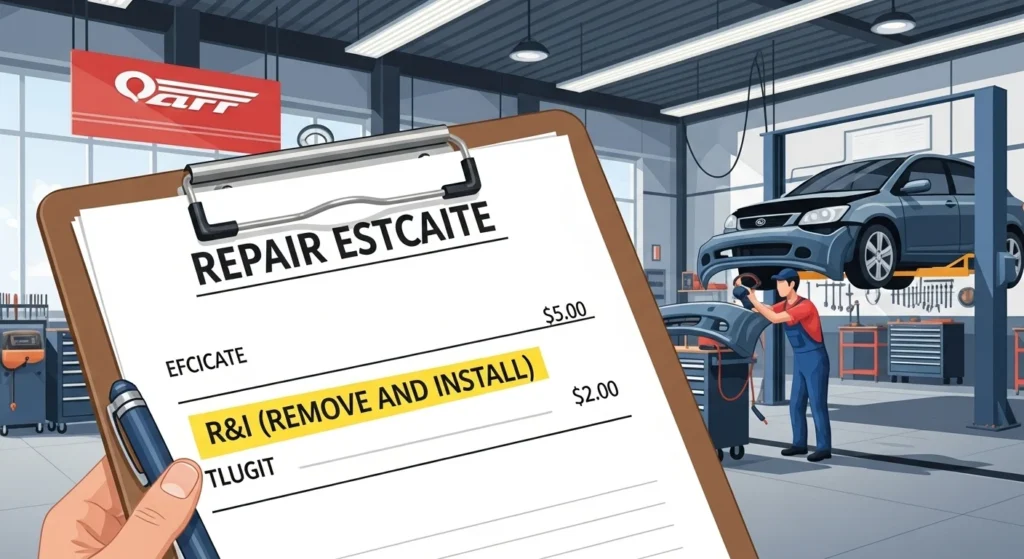
R&I in auto repair stands for “Remove and Install.”
It refers to the labor required to remove a vehicle part so another repair can be performed and then reinstall that same part afterward. R&I does not usually include repairing or replacing the part itself only the removal and reinstallation process.
If you’ve ever looked at an auto repair estimate and thought, “What on earth is R&I?” you’re not alone.
R&I is one of the most common (and most confusing) abbreviations used by body shops, insurance adjusters, and repair technicians. It shows up on collision repair estimates, insurance paperwork, and work orders all the time yet many car owners have no idea what it actually means or why it matters.
This guide breaks it all down in plain English, with real-world examples, tables, FAQs, and practical tips so you’ll never feel lost reading an auto repair estimate again.
Why Understanding R&I Matters
R&I charges directly affect:
- Repair costs
- Insurance claim approvals
- Repair timelines
- Disputes between shops and insurers
Knowing what R&I means helps you:
- Understand why your estimate costs what it does
- Ask smarter questions at the repair shop
- Avoid confusion or surprise charges
- Communicate clearly with insurance adjusters
Let’s dig deeper.
What Does R&I Mean in Auto Repair?
The Simple Explanation
In auto repair, R&I (Remove and Install) means:
A technician temporarily removes a component, performs necessary work behind or around it, and then reinstalls the original component.
This happens even if the part itself isn’t damaged.
A Real-Life Example
Imagine your car has front-end damage and needs frame straightening. To access the frame, the technician may need to:
- Remove the front bumper
- Perform the frame repair
- Reinstall the same bumper
That bumper wasn’t replaced — it was R&I’d.
Origin and Industry Use of R&I
Where Did the Term Come From?
R&I comes from standardized collision repair estimating systems used by the automotive industry, such as:
- CCC ONE
- Mitchell
- Audatex
These platforms use short, consistent abbreviations to keep estimates clear and uniform across shops and insurance companies.
Why Shops Use R&I Instead of Writing It Out
- Saves space on estimates
- Matches insurance industry terminology
- Aligns with labor time guides
- Avoids ambiguity during claims review
Over time, R&I became industry shorthand, especially in body shops and collision repair centers.
How R&I Is Used in Real-World Auto Repair
R&I is commonly listed when:
- A part blocks access to another damaged area
- A repair requires interior or exterior disassembly
- Diagnostic or structural work is needed
- Paint blending or refinishing is required
Common Situations Where R&I Appears
- Collision repairs
- Dent and frame repairs
- Engine or transmission work
- Electrical diagnostics
- Suspension repairs
Common Auto Parts That Require R&I
Here’s a practical table showing where R&I is most often applied:
🔧 Labeled Example Table: Common R&I Parts in Auto Repair
| Vehicle Area | Part Removed | Why R&I Is Needed |
| Front End | Bumper cover | Access frame, radiator, sensors |
| Engine Bay | Air intake | Reach engine components |
| Doors | Door panel | Repair window regulator or wiring |
| Interior | Dashboard | Access HVAC or wiring |
| Suspension | Wheel & liner | Repair struts or control arms |
| Rear End | Tail lights | Replace rear body panels |
R&I vs. R&R: What’s the Difference?
One of the most common points of confusion is R&I vs. R&R.
Side-by-Side Comparison
| Term | Full Meaning | What Happens |
| R&I | Remove and Install | Same part is removed and reinstalled |
| R&R | Remove and Replace | Old part removed, new part installed |
Quick Rule of Thumb
- R&I = same part goes back on
- R&R = brand-new or different part installed
R&I vs. R&R vs. Overhaul
Here’s how R&I compares to other related repair terms:
| Term | Description | Cost Impact |
| R&I | Temporary removal & reinstall | Labor only |
| R&R | Removal + new part | Labor + parts |
| Overhaul | Disassemble, repair, reassemble | Higher labor cost |
| Refinish | Sand, paint, clear coat | Paint labor & materials |
Does R&I Include Repair or Replacement?
No — and this is crucial.
R&I typically includes:
- Removing the part
- Reinstalling the same part
- Basic fasteners and alignment
R&I usually does not include:
- Fixing the part
- Repainting the part
- Replacing broken clips or brackets
- Addressing hidden damage
Those are often separate line items on your estimate.
How R&I Affects Repair Costs
Why R&I Adds to the Bill
Even though the part isn’t replaced, R&I:
- Takes skilled labor
- Requires time and tools
- Adds risk (clips, sensors, electronics)
- Often involves recalibration
Is R&I Legit or a “Hidden Charge”?
R&I is legitimate and standard, but disputes can arise if:
- The labor time seems excessive
- Insurance refuses to pay full R&I hours
- The estimate lacks explanation
Tip: Always ask what the R&I charge covers.
Insurance and R&I: What You Should Know
Insurance companies:
- Recognize R&I as a valid labor operation
- Use estimating databases to approve time
- May challenge or reduce R&I hours
Common Insurance Questions About R&I
- Is it necessary?
- Can access be gained another way?
- Is the time justified?
A reputable shop will document why R&I is required.
Examples of R&I in Different Tones
Friendly / Neutral Example 🙂
“We’ll need to R&I the bumper to inspect the frame damage behind it.”
Professional / Insurance Example
“R&I front bumper cover required for structural access per OEM repair procedures.”
Negative or Dismissive Tone 😒
“That R&I charge? It’s just standard — it’s on every estimate.”
(If a shop dismisses your questions, that’s your cue to ask for clarity.)
Alternate Meanings of R&I (Briefly)
While R&I almost always means Remove and Install in auto repair, it can mean other things in different industries:
- Research & Innovation (business/tech)
- Risk & Insurance (finance)
- Repair & Inspection (some maintenance contexts)
Context matters — on a car repair estimate, R&I = Remove and Install.
Polite or Professional Alternatives to Saying “R&I”
If you’re speaking with a customer or writing documentation, you might say:
- “Temporary removal and reinstallation”
- “Component removed for access and reinstalled”
- “Non-replacement removal and refit”
These are especially useful for:
- Customer explanations
- Legal documents
- Insurance appeals
Usage Tips for Car Owners
How to Talk About R&I Confidently
Use phrases like:
- “Can you explain why this R&I is required?”
- “Is this R&I based on OEM procedures?”
- “Does this R&I include recalibration?”
Red Flags to Watch For
- No explanation for multiple R&I charges
- Extremely high R&I labor hours
- Duplicate R&I entries for the same part
FAQs
1. What does R&I mean on a car repair estimate?
R&I means Remove and Install, indicating labor to remove and reinstall a part without replacing it.
2. Is R&I the same as replacement?
No. Replacement is R&R. R&I uses the same part again.
3. Does R&I include parts?
Usually no. It’s primarily a labor charge.
4. Why does insurance sometimes deny R&I?
Insurers may argue it’s included in another operation or not required.
5. Is R&I charged per hour?
Yes, it’s billed based on labor time guides.
6. Can I refuse R&I charges?
You can question them, but necessary R&I is often unavoidable.
7. Does R&I include sensor recalibration?
Usually not recalibration is often a separate line item.
8. Is R&I common in collision repair?
Extremely common, especially in modern vehicles with sensors and layered components.
Conclusion
- R&I means Remove and Install not repair or replace
- It’s a standard, legitimate auto repair term
- R&I affects labor costs, not parts costs
- Understanding it helps you read estimates confidently
- Always ask for clarification if something looks unclear
Bottom line: R&I isn’t a trick or filler charge it reflects the real labor needed to properly repair modern vehicles.

James Colton is a language researcher and content writer who loves exploring the deeper meanings behind everyday words. With a background in linguistics, he breaks down complex terms into simple, clear explanations that anyone can understand.