
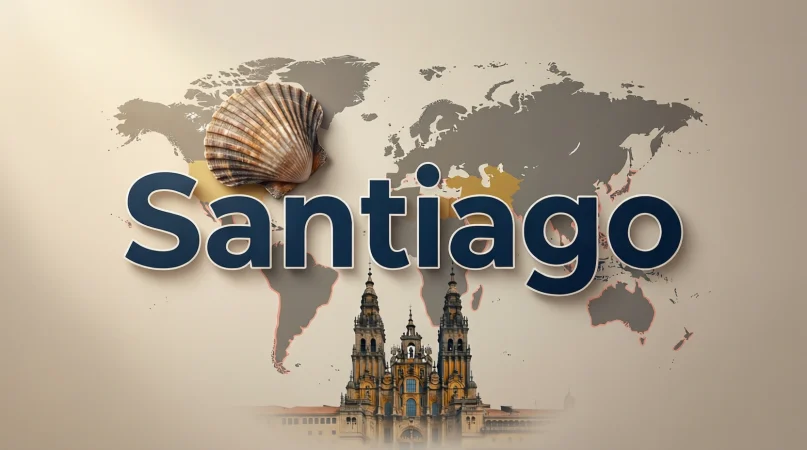
Santiago in English means “Saint James.”
It is a Spanish name that comes from Sant Iago, meaning Saint James the Apostle, one of the twelve disciples of Jesus.
In short:
Santiago = Saint James (in English)
Santiago is a name you’ve probably seen everywhere from famous cities to people’s names to religious history. But what does Santiago mean in English, and why is it so widely used across Spanish speaking countries and beyond?
Let’s break it down in a clear, friendly, and human way, with real examples, history, and modern usage no confusion, no fluff.
Why This Name Matters 🌍
The name Santiago isn’t just a personal name it’s deeply connected to religion, history, geography, and culture. You’ll find it as:
- A first name (Santiago Pérez)
- A city name (Santiago de Chile)
- A religious reference (Saint James the Greater)
- A surname in some cultures
Understanding its meaning gives you insight into Spanish language roots, Christian history, and Latin American naming traditions.
Origin of the Name Santiago
📜 Linguistic Roots
The word Santiago evolved over centuries:
| Stage | Form | Meaning |
|---|---|---|
| Hebrew | Ya‘aqov | Jacob |
| Greek | Iakobos | James |
| Latin | Iacobus | James |
| Old Spanish | Sant Iago | Saint James |
| Modern Spanish | Santiago | Saint James |
Over time, Sant Iago merged into one word—Santiago.
✝️ Religious Significance
Santiago refers specifically to Saint James the Greater, one of Jesus’s closest disciples.
- He is the patron saint of Spain
- Known in Spanish as Santiago Apóstol
- Famous pilgrimage route: Camino de Santiago
Because of this, the name gained huge religious and cultural importance in Spain and Latin America.
What Does Santiago Mean as a Name?
When used as a given name, Santiago carries strong symbolic meanings:
🔍 Name Meaning Breakdown
- Literal meaning: Saint James
- Symbolic meanings:
- Protector
- Warrior of faith
- Leader
- Pilgrim
- Devoted follower
This makes it a popular name for boys in Spain, Mexico, Colombia, Argentina, Chile, and increasingly in English-speaking countries.
Popularity of Santiago Around the World 📈
🌎 Global Usage
Santiago is widely used across:
- 🇪🇸 Spain
- 🇲🇽 Mexico
- 🇨🇱 Chile
- 🇦🇷 Argentina
- 🇵🇪 Peru
- 🇺🇸 United States (among Hispanic communities)
📊 Popularity Trends
- Consistently ranks in Top 50 boy names in many Spanish-speaking countries
- Rising popularity in the U.S. due to multicultural naming trends
- Often chosen for its strong cultural and religious roots
Santiago as a Place Name 🏙️
Many cities are named Santiago in honor of Saint James.
Famous Examples
| Place | Meaning in English |
|---|---|
| Santiago de Chile | Saint James (of Chile) |
| Santiago de Compostela | Saint James of the Field of Stars |
| Santiago del Estero | Saint James of the Marsh |
| Santiago, Dominican Republic | Saint James |
📌 Fun Fact:
Santiago de Compostela is believed to be the burial place of Saint James.
Real-World Usage Examples
👋 Friendly / Neutral Context
- “Santiago is a beautiful name with deep history.”
- “My cousin Santiago just moved to Madrid.”
🏙️ Geographic Context
- “Santiago is the capital of Chile.”
- “Millions walk the Camino de Santiago every year.”
📖 Religious or Formal Context
- “Santiago is honored as Spain’s patron saint.”
- “The festival of Santiago Apóstol is celebrated on July 25.”
👉 There’s no negative or dismissive tone attached to the name Santiago—it’s universally respected.
Emojis & Tone Use (Modern Context 😄)
In casual writing or social media, you might see:
- “Santiago vibes 🇨🇱✨”
- “Walking the Camino de Santiago 🥾⛪”
- “Baby name reveal: Santiago 💙”
The name works well in formal, neutral, and friendly tones.
Comparison With Related Names
🧾 Santiago vs Similar Names
| Name | Language | English Equivalent |
|---|---|---|
| Santiago | Spanish | Saint James |
| James | English | James |
| Jacques | French | James |
| Giacomo | Italian | James |
| Diego | Spanish | Related root (debated) |
| Iago | Spanish/Galician | James |
📌 Note:
There’s debate among linguists about whether Diego comes from Santiago, but they are historically linked.
Alternate Meanings
While Santiago primarily means Saint James, it can also imply:
- A place name
- A surname
- A symbol of pilgrimage
- A cultural or historical reference
There are no slang or offensive alternate meanings associated with Santiago.
Polite or Professional Alternatives
If you’re translating or adapting for English-speaking audiences:
- Use James instead of Santiago
- Use Saint James in religious or historical writing
- Keep Santiago for names, cities, and cultural references
💡 Tip:
Never translate a person’s name unless they prefer it.
Example Table: Santiago in Different Contexts
| Context | Example | English Meaning |
|---|---|---|
| Personal Name | Santiago López | James López |
| City | Santiago de Chile | Saint James (of Chile) |
| Religious | Santiago Apóstol | Saint James the Apostle |
| Route | Camino de Santiago | Way of Saint James |
❓FAQs
What does Santiago literally mean in English?
It literally means Saint James.
Is Santiago a biblical name?
Yes. It refers to Saint James the Greater, a biblical apostle.
Is Santiago a first name or last name?
Primarily a first name, but it can also be a surname.
What is the female version of Santiago?
There’s no direct feminine form. Similar options include Jacqueline or Jamesina.
Is Santiago a strong name?
Yes. It symbolizes faith, leadership, and protection.
Why are so many cities named Santiago?
They were named in honor of Saint James, Spain’s patron saint.
How do you pronounce Santiago in English?
san-tee-AH-go or san-tee-AH-goh
Is Santiago used in English-speaking countries?
Yes especially in the U.S., UK, and Canada within multicultural communities.
Conclusion
- Santiago means Saint James in English
- It has religious, historical, and cultural importance
- Common as a name and place
- Neutral to positive tone never offensive
- Best left untranslated when referring to people or cities
👉 If you’re writing, naming a child, or learning Spanish, Santiago is a timeless and meaningful choice.

Alex Ferguson is a word enthusiast at ValneTix.com who turns the meanings of everyday words into fascinating discoveries. His articles make learning language easy, enjoyable and practical for all readers.