
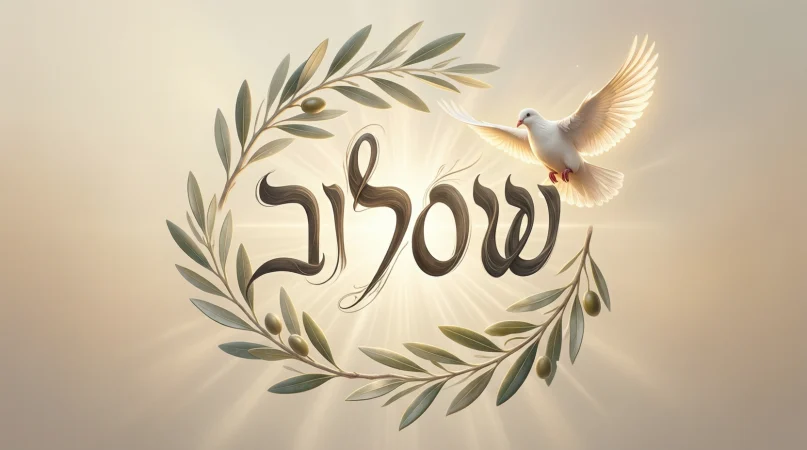
Shalom (שלום) is a Hebrew word that means peace, wholeness, harmony, well-being, and completeness. It is commonly used as both a greeting and a farewell, similar to “hello” and “goodbye,” while also expressing a deeper sense of inner peace and balance.
Shalom is one of the most recognizable Hebrew words in the world but its meaning goes far beyond a simple “hello” or “goodbye.” Whether you’ve heard it in religious contexts, Israeli culture, or everyday conversation, shalom carries layers of history, emotion, and philosophy that make it truly unique.
In this in-depth guide, we’ll explore what shalom means in Hebrew, where it comes from, how it’s used in real life, and why it’s much more powerful than a basic greeting.
Why “Shalom” Is More Than Just a Word
At first glance, shalom may seem simple. But in Hebrew thought, words often carry concepts, not just definitions. Shalom reflects an entire worldview one that values balance, restoration, and meaningful connection.
You’ll hear shalom:
- In daily Israeli conversations
- In Jewish prayers and scriptures
- In cultural, political, and philosophical discussions
- As a personal wish for peace and well-being
Let’s break it down step by step.
Origin of the Word “Shalom”
🔤 Hebrew Roots
The word shalom (שלום) comes from the Hebrew root ש–ל–ם (Sh-L-M), which means:
- To be whole
- To be complete
- To be fulfilled
- To restore or make whole
This same root appears in other Hebrew words such as:
- Shalem – complete
- Shillum – payment or compensation
- Mushlam – perfect or finished
👉 This tells us that shalom is not just the absence of conflict it’s the presence of completeness.
Literal and Deeper Meanings of Shalom
Primary Meanings
- Peace
- Harmony
- Safety
- Tranquility
- Well-being
Deeper Conceptual Meaning
In Jewish philosophy, shalom means:
- Inner peace (mental and emotional balance)
- Social peace (healthy relationships)
- Spiritual peace (alignment with purpose and faith)
- Physical peace (safety and security)
In short, shalom = everything being as it should be.
How Is Shalom Used in Real Life?
1. As a Greeting (Hello 👋)
In Israel and Hebrew-speaking communities, shalom is commonly used to say hello.
Example:
Shalom! Ma shlomcha?
(Hello! How are you?)
Tone: Friendly, warm, neutral
Context: Casual or polite conversation
2. As a Farewell (Goodbye 👋)
Shalom also works as a goodbye, similar to “take care” or “peace.”
Example:
Shalom, nitra’eh machar
(Goodbye, see you tomorrow)
Tone: Friendly and respectful
3. As a Wish for Peace 🤍
You’ll often hear phrases like:
- Shalom aleichem – Peace be upon you
- Oseh shalom – The one who makes peace
Used in:
- Prayers
- Formal speeches
- Religious ceremonies
4. In Religious and Spiritual Contexts ✡️
In Judaism, shalom is considered one of the names of God, emphasizing divine harmony and completeness.
In the Bible (Tanakh), shalom appears over 200 times, often referring to:
- National peace
- Personal well-being
- Covenant harmony
Tone Variations of “Shalom” With Examples
| Tone | Example | Meaning |
|---|---|---|
| Friendly | “Shalom! Long time no see 😊” | Warm greeting |
| Neutral | “Shalom, how can I help you?” | Polite and professional |
| Formal | “Shalom aleichem” | Respectful, traditional |
| Dismissive (rare) | “Shalom.” (flat tone) | Ending a conversation |
⚠️ Note: Tone depends heavily on voice and context, not the word itself.
Comparison With Similar Hebrew Terms
Shalom vs Other Hebrew Greetings
| Term | Meaning | Usage |
|---|---|---|
| Shalom | Peace / Hello / Goodbye | Universal |
| Salaam (Arabic) | Peace | Arabic equivalent |
| Shalom Aleichem | Peace be upon you | Formal/religious |
| Lehitraot | See you later | Casual farewell |
| Boker Tov | Good morning | Time-specific |
👉 Shalom is the most versatile and meaningful among them.
Shalom vs “Peace” in English
While shalom is often translated as “peace,” the English word doesn’t fully capture its depth.
English “Peace”:
- Mostly means no conflict or war
Hebrew “Shalom”:
- Inner peace
- Healthy relationships
- Moral and spiritual completeness
- Physical safety
That’s why translations often fall short.
Alternate Meanings of Shalom
Although rare, shalom can also imply:
- Safety (Are you okay?)
- Welfare (Someone’s condition or status)
- Prosperity (Community well-being)
Example:
Ha’kol b’shalom?
(Is everything okay?)
Polite and Professional Alternatives to Shalom
Depending on the situation, you may hear or use:
- Shalom Aleichem – Very polite, traditional
- Boker Tov – Good morning
- Erev Tov – Good evening
- Lehitraot – See you later
- Kol Tov – All the best
Each has a slightly different tone and formality level.
Examples of Shalom in Context
Casual Conversation
Shalom! Eifo ha’kafe ha’karov?
(Hi! Where’s the nearest café?)
Professional Setting
Shalom, ani rotzeh l’kavua פגישה
(Hello, I’d like to schedule a meeting)
Religious Greeting
Shalom aleichem
(Peace be upon you)
Why Is Shalom So Popular Worldwide?
🌍 Global Recognition
- Used by Jewish communities worldwide
- Common in interfaith and peace discussions
- Appears in music, films, and literature
🕊️ Universal Message
Peace, harmony, and well-being are universal values shalom expresses them in one word.
FAQs
1. What does shalom literally mean in Hebrew?
It literally means peace, but also implies wholeness and completeness.
2. Can shalom mean hello and goodbye?
Yes. It’s commonly used for both greeting and farewell.
3. Is shalom religious?
It has religious significance but is also used daily and casually.
4. Is shalom the same as salaam?
They are closely related linguistically and conceptually, both meaning peace.
5. Can non-Jewish people say shalom?
Absolutely. It’s widely accepted and appreciated when used respectfully.
6. Does shalom always mean peace?
Not always—context can make it mean well-being, safety, or harmony.
7. What is shalom aleichem?
It means “peace be upon you”, a traditional Jewish greeting.
8. Why is shalom important in Judaism?
Because it represents God’s ideal state of harmony, both spiritually and socially.
Conclusion
Shalom is much more than a simple word in Hebrew it represents peace, wholeness, harmony, and well-being. Used as both a greeting and a farewell, it reflects a deeper cultural and spiritual idea of balance and completeness. Whether spoken casually or in a meaningful religious context, shalom carries a universal message that goes beyond language: a wish for life to be whole, calm, and good.

Olivia Brooks is a skilled writer at ValneTix.com dedicated to making word meanings simple, practical and relatable. Her clear explanations empower readers to use language effectively and confidently.