
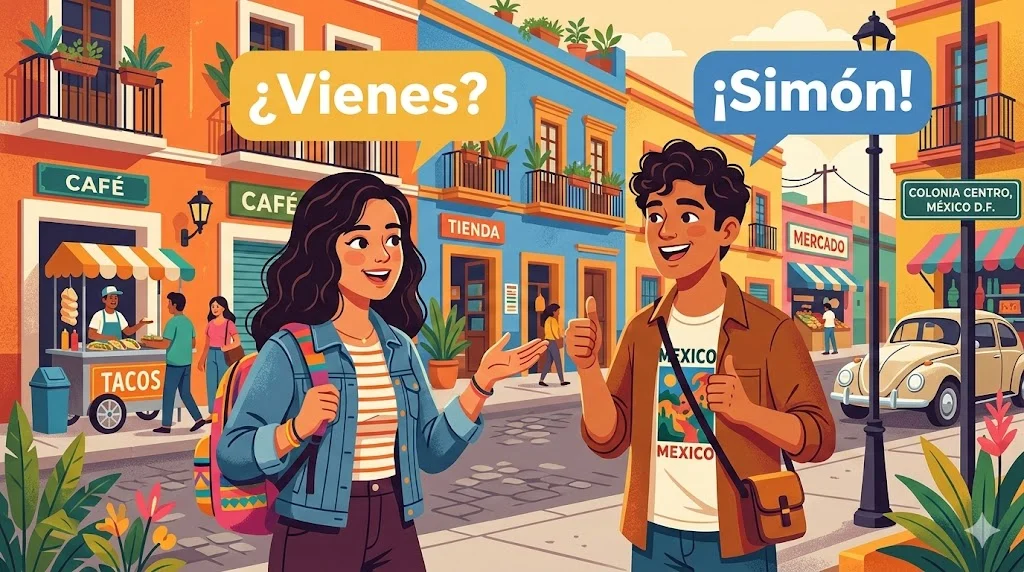
“Simón” in Spanish is an informal Mexican slang term that means “yes,” “yeah,” or “that’s right,” often used to show agreement, enthusiasm, or strong affirmation.
It can also refer to a male given name (Simon) in formal contexts, depending on capitalization and usage.
“Simón” is one of those Spanish words that can completely confuse learners—and even surprise native speakers from different countries. You might hear it in a Mexican movie, a viral TikTok, or a casual street conversation and wonder: Is it a name? A yes? An attitude?
The short answer: yes, it can be all of those depending on context.
Why “Simón” Confuses So Many Spanish Learners
Spanish is famous for regional variation, but simón is a perfect example of how culture shapes language.
- In textbooks, you learn sí = yes
- In Mexico, you might hear simón instead
- In Spain or Argentina, people may not use it at all
That’s why learners often Google:
“What does simon mean in Spanish slang?”
Let’s unpack it step by step.
Origin of “Simón” in Spanish
1. Literal Origin: The Name “Simón”
Traditionally, Simón is simply the Spanish version of the name Simon, derived from the Hebrew Shim’on, meaning “he has heard.”
Examples:
- Simón Bolívar (historical figure)
- San Simón (Saint Simon)
In this sense, it’s not slang at all.
2. Slang Origin: From “Sí” → “Simón”
In Mexican Spanish, simón evolved as a playful, emphatic extension of “sí” (yes).
Linguistically:
- Sí → Sí, mon → Simón
- “-ón” adds emphasis or strength
So instead of just saying yes, you’re saying:
- Yes, absolutely
- For sure
- You got it
Where Is “Simón” Commonly Used?
Primarily: Mexico 🇲🇽
It’s most common in:
- Central Mexico
- Urban slang
- Casual conversations
- Youth culture
- TV shows, memes, and music
It’s less common or unfamiliar in:
- Spain
- Argentina
- Chile
- Colombia (outside pop culture influence)
What Does “Simón” Mean in Real Conversations?
Core Meanings
Depending on tone and situation, simón can mean:
- ✅ Yes
- ✅ Yeah
- ✅ That’s right
- ✅ Absolutely
- ✅ For sure
Example Table: “Simón” in Context
| Spanish Sentence | English Meaning | Tone |
| ¿Vienes mañana? — Simón. | Are you coming tomorrow? — Yeah. | Friendly |
| Simón, eso es verdad. | That’s right, that’s true. | Neutral |
| Simón, como no… | Yeah, right… | Sarcastic |
| ¡Simón! Vamos. | Absolutely! Let’s go. | Enthusiastic |
| Simón, tú mandas. | Sure, you’re in charge. | Casual |
Tone Matters: How “Simón” Can Sound
Tone is everything with this word.
1. Friendly / Casual 😊
Used among friends or peers.
— ¿Te gustó la película?
— Simón, estuvo buenísima.
(Yeah, it was awesome.)
2. Enthusiastic / Affirming 🔥
Often emphasized or repeated.
¡Simón, simón!
(Yes, totally!)
3. Sarcastic / Dismissive 🙄
Tone changes meaning completely.
Simón… lo que tú digas.
(Yeah… whatever you say.)
Is “Simón” Polite or Professional?
Short answer: no.
- ❌ Not formal
- ❌ Not professional
- ❌ Not for work emails or interviews
Better Alternatives in Polite or Professional Spanish
| Situation | Use Instead of “Simón” |
| Formal agreement | Sí |
| Professional tone | Correcto |
| Respectful reply | De acuerdo |
| Academic context | Exactamente |
| Business setting | Así es |
Comparison: “Simón” vs Similar Spanish Words
Simón vs Sí
| Feature | Simón | Sí |
| Formality | Informal | Neutral |
| Region | Mexico | Universal |
| Tone | Casual / expressive | Straightforward |
| Slang | Yes | No |
Simón vs Claro
| Feature | Simón | Claro |
| Meaning | Yeah / for sure | Of course |
| Professional use | ❌ | ✅ |
| Regional | Mexican | Universal |
Simón vs Ándale
| Feature | Simón | Ándale |
| Function | Agreement | Encouragement / agreement |
| Tone | Calm to enthusiastic | Energetic |
| Usage | Response | Reaction |
Alternate Meanings of “Simón”
While slang is popular, simón can also mean:
1. A Proper Name
- Simón as a first name
- Capitalized
- Formal context
Example:
Simón vive en Madrid.
2. Cultural References
- Names of streets, schools, or churches
- Historical figures
- Religious contexts
These uses are not slang and rely on capitalization and grammar.
How “Simón” Is Used in Pop Culture
The word appears frequently in:
- Mexican movies 🎬
- Street interviews
- Memes
- TikTok & YouTube
- Regional music (rap, corridos)
It signals:
- Authenticity
- Casual confidence
- Street-level Spanish
Usage Tips for Spanish Learners
If you’re learning Spanish, here’s how to use simón safely:
Do Use It When:
- Talking with Mexican friends
- Watching or quoting pop culture
- Casual chats
- Practicing regional slang
Avoid It When:
- Speaking to elders
- In professional settings
- Writing formally
- Unsure of tone
Pro tip: If in doubt, stick with sí.
Common Mistakes Learners Make
- ❌ Using simón in Spain
- ❌ Using it in formal writing
- ❌ Confusing it with the name Simón
- ❌ Missing sarcastic tone
FAQs
1. What does “simón” mean in Mexican slang?
It means yes, yeah, or absolutely, used informally.
2. Is “simón” rude?
No, but it can sound too casual in formal settings.
3. Is “simón” the same as “sí”?
Meaning-wise yes, but tone and formality differ.
4. Do all Spanish speakers use “simón”?
No. It’s mostly Mexican Spanish.
5. Can “simón” be sarcastic?
Yes. Tone can make it sarcastic or dismissive.
6. Is “simón” a real Spanish word?
Yes—both as a name and as regional slang.
7. Can I use “simón” in writing?
Only in informal writing, like dialogue or texts.
8. What’s the safest alternative to “simón”?
Use sí, claro, or de acuerdo.
Conclusion
- “Simón” means “yes” in informal Mexican Spanish
- It expresses agreement, enthusiasm, or affirmation
- Tone can make it friendly or sarcastic
- It’s not suitable for formal or professional use
- It also exists as a proper name (Simón)
Practical tip:
If you’re chatting casually with Mexican Spanish speakers, simón can make you sound natural. If you’re unsure or in a serious setting stick with sí.
Language isn’t just words. It’s culture. And simón is pure Mexican flavor.

Olivia Brooks is a skilled writer at ValneTix.com dedicated to making word meanings simple, practical and relatable. Her clear explanations empower readers to use language effectively and confidently.