
Last Updated on March 13, 2026
SPF in sunscreen stands for Sun Protection Factor. It measures how well a sunscreen protects the skin from UVB rays the type of ultraviolet radiation that causes sunburn and contributes to skin cancer.
For example, SPF 30 allows you to stay in the sun about 30 times longer without burning than if you were unprotected, assuming proper application.
You’re standing in the sunscreen aisle, staring at bottles labeled SPF 15, SPF 30, SPF 50, SPF 100 and suddenly it feels like a math test you didn’t study for. Is higher always better? Does SPF mean hours of protection? And what does SPF actually mean in sunscreen?
If you’ve ever asked yourself what does SPF mean in sunscreen, you’re not alone. It’s one of the most searched skincare questions and also one of the most misunderstood.
This long-form guide breaks it all down in a clear, friendly, and practical way. We’ll cover what SPF really means, where the term comes from, how it’s used in real life, common myths, comparisons with related terms, and how to choose the right SPF for you.
Why SPF Matters More Than You Think
Sun exposure isn’t just about sunburns. Over time, ultraviolet (UV) radiation can cause:
- Premature aging (wrinkles, fine lines)
- Dark spots and uneven skin tone
- DNA damage
- Increased risk of skin cancer
SPF is your first line of defense but only if you understand what it can (and can’t) do.
🌞 What SPF Means in Simple Terms
Let’s strip it down to the basics.
SPF tells you:
- How well a sunscreen protects against UVB rays
- How much longer your skin can tolerate sun exposure without burning
It does not tell you:
- How long you can stay in the sun without reapplying
- How much protection you get from UVA rays (that’s a different label)
🧠 The Science Behind SPF
How SPF Is Measured
In lab testing:
- SPF compares protected skin vs. unprotected skin
- Researchers measure how long it takes for redness (erythema) to appear
Example:
- Without sunscreen, your skin burns in 10 minutes
- With SPF 30, it theoretically takes 300 minutes (10 × 30)
⚠️ Real life is messier:
- Sweat
- Water
- Friction
- Not applying enough sunscreen
That’s why reapplication matters more than the number alone.
🧪 Origin of SPF
Where Did SPF Come From?
The concept of SPF was introduced in the 1960s, as scientists began understanding UV radiation more clearly.
- Early sunscreens focused only on sunburn prevention
- SPF gave consumers a simple, standardized way to compare products
- Over time, SPF labeling became regulated in many countries
Today, SPF is one of the most recognized skincare terms worldwide.
🌍 Popularity and Real-World Usage of SPF
SPF has gone mainstream. You’ll see it in:
- Sunscreens
- Moisturizers
- Foundations
- Lip balms 💄
- Clothing labels (UPF—more on that later)
You’ll also hear it used casually:
“I’m wearing SPF 50 today—it’s that sunny 😎”
📊 SPF Levels Explained (With Real Numbers)
One of the biggest myths is that SPF works in a straight line. It doesn’t.
How Much UVB Protection Each SPF Offers
| SPF Level | UVB Protection |
| SPF 15 | ~93% |
| SPF 30 | ~97% |
| SPF 50 | ~98% |
| SPF 100 | ~99% |
👉 Notice the pattern?
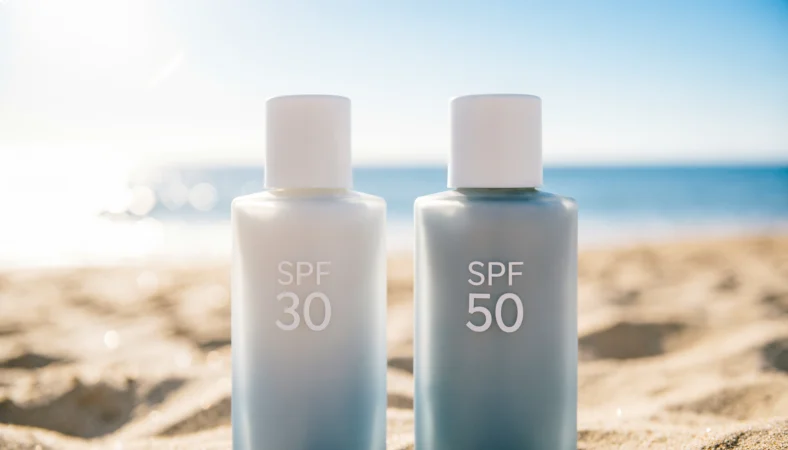
The jump from SPF 30 to SPF 50 is small, not dramatic.
🆚 SPF Compared With Related Sunscreen Terms
SPF vs. Broad-Spectrum
- SPF: Protects against UVB rays
- Broad-spectrum: Protects against both UVB and UVA rays
📌 Always look for “broad-spectrum SPF” on the label.
SPF vs. PA Rating (Common in Asian Sunscreens)
| Term | Protects Against |
| SPF | UVB rays |
| PA+ / PA++ / PA+++ | UVA rays |
Both matter for complete sun protection.
SPF vs. UPF (Clothing)
- SPF: Used for skincare products
- UPF (Ultraviolet Protection Factor): Used for clothing and fabrics
🧴 Examples of SPF in Context
Friendly / Casual
“I forgot sunscreen yesterday—never skipping SPF again ☀️😬”
Neutral / Informational
“This moisturizer contains SPF 30 for daily sun protection.”
Negative or Dismissive
“SPF is overrated—I never burn anyway.”
(Unfortunately, skin damage can still happen without burning.)
🔄 Alternate Meanings of SPF
Outside sunscreen, SPF can also mean:
- Sender Policy Framework (email security)
- Software Protection Factor (tech contexts)
But in skincare and health, SPF almost always means Sun Protection Factor.
🧑💼 Polite or Professional Alternatives to “SPF”
In professional writing, you may see:
- Sun protection factor
- UVB protection rating
- Photoprotection level
These are more formal but refer to the same concept.
⚠️ Common SPF Myths (And the Truth)
Myth 1: Higher SPF means all-day protection
❌ False. Reapplication is still required every 2 hours.
Myth 2: SPF 100 blocks 100% of UV rays
❌ No sunscreen blocks 100%.
Myth 3: Dark skin doesn’t need SPF
❌ Everyone needs sun protection.
Myth 4: SPF in makeup is enough
❌ Usually not applied in sufficient amounts.
🧠 How to Use SPF Correctly (Practical Tips)
- Apply 15–20 minutes before sun exposure
- Use about one ounce (shot glass) for full body
- Reapply every 2 hours
- Reapply after swimming or sweating
- Don’t forget ears, neck, lips, and hands
SPF only works if you use enough of it.
📋 Example Table: Choosing the Right SPF
| Situation | Recommended SPF |
| Daily errands | SPF 30 |
| Outdoor sports | SPF 30–50 |
| Beach or pool | SPF 50 |
| Sensitive skin | SPF 30+ (mineral) |
| High UV index | SPF 50 |
FAQs
1. What does SPF mean in sunscreen?
It means Sun Protection Factor a measure of UVB protection.
2. Is SPF 30 enough?
Yes, for most people and daily use.
3. Is SPF 50 much better than SPF 30?
Only slightly application matters more.
4. Does SPF protect against UVA rays?
Not by itself. Look for “broad-spectrum.”
5. How often should sunscreen be reapplied?
Every 2 hours, or after swimming or sweating.
6. Can SPF prevent skin cancer?
It significantly reduces risk when used properly.
7. Is SPF needed indoors?
Yes, especially near windows or screens.
8. Does sunscreen expire?
Yes. Expired SPF may not work effectively.
Conclusion
It’s a measure of how well a product protects your skin from UVB rays, helping prevent sunburn and long term damage. But SPF is not a magic shield it’s a tool. And like any tool, it works best when used correctly.
- SPF = Sun Protection Factor
- Higher isn’t always better consistency is
- Broad-spectrum protection is essential
- Reapplication matters more than the number
Sun protection isn’t about fear it’s about smart, everyday care.

Ryan Holloway is an experienced content strategist with a deep interest in etymology and word origins. He enjoys digging into the history behind words and presenting them in a straightforward, engaging way.