
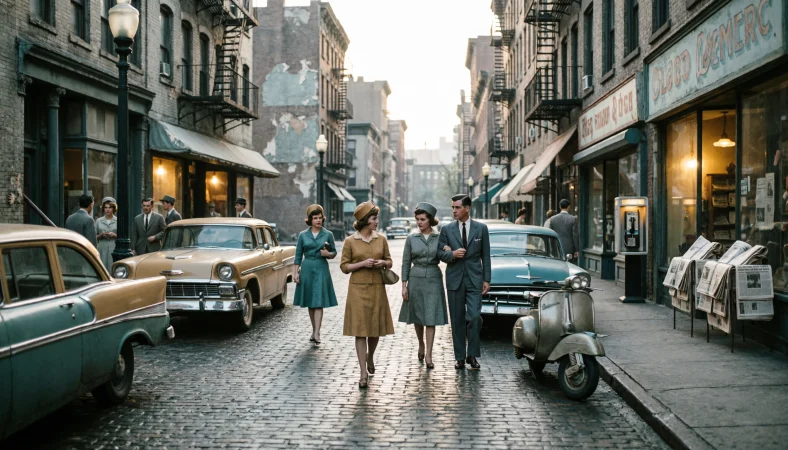
In the 1960s, “swag” commonly meant stolen goods, ill gotten gains, or a bulging sack of loot rather than confidence or style.
It could also describe something that hangs or droops and, in some cases, referred to dishonest persuasion or deceptive talk.
Today, the word “swag” instantly brings to mind confidence, fashion, and cool attitude. But if you rewind the clock to the 1960s, the meaning of swag was very different less about flexing style on Instagram and more about behavior, tone, and sometimes even deception.
So, what does swag mean in the 60s?
Did people actually say it the way we do now? Was it slang, or did it mean something else entirely?
In this comprehensive guide, we’ll explore the historical meaning of swag in the 1960s, its linguistic roots, how it was used in real life, and how it compares to the modern meaning. We’ll also look at examples, tone differences, alternate meanings, and why the word eventually transformed into the “cool” term we know today.
Understanding “Swag” in the 1960s (At a Glance)
To understand swag in the 60s, you have to forget its modern vibe-driven meaning. Back then, it was not a compliment and not associated with fashion or confidence.
In most contexts, swag in the 1960s meant:
- Stolen property
- Loot or illegal earnings
- Goods carried in a sack
- Something that sags or hangs
- Occasionally, persuasive but dishonest talk
It was a word you’d hear more in crime stories, working-class speech, or British English than in youth slang.
The Origin of the Word “Swag”
Early Linguistic Roots
The word swag dates back to 16th-century English, long before the 1960s.
It originally meant:
- To sway
- To hang heavily
- To bulge or sag
From there, it evolved into:
- A bag or bundle of goods
- Loot carried by thieves
- Stolen items after a robbery
By the time the 1960s arrived, these meanings were already well established.
How Popular Was “Swag” in the 1960s?
Not Youth Slang—But Still Common
In the 1960s:
- Swag was not trendy slang
- It wasn’t used by hippies or counterculture youth
- It appeared more in crime novels, newspapers, and British speech
You were more likely to hear swag in:
- Police dramas
- Heist stories
- Working-class conversations
- British films or books
In American pop culture, the term existed—but it wasn’t fashionable or aspirational.
Real-World Usage of “Swag” in the 60s
1. Swag as Stolen Goods (Most Common)
This was the dominant meaning in the 1960s.
Example:
“They made off with the swag before the cops arrived.”
Tone: Neutral to negative
Meaning: Stolen goods or loot
This usage was especially common in:
- Crime reporting
- Detective novels
- British English
2. Swag as a Bulging Sack or Bundle
Another common meaning referred to the physical bundle itself.
Example:
“He carried his swag over his shoulder.”
Tone: Neutral
Meaning: A sack or bundle, often filled with belongings or loot
This sense of swag ties directly back to its older meaning of something that sags or hangs.
3. Swag as Dishonest Persuasion or Talk
Less common, but still present.
Example:
“Don’t listen to his swag—he’s selling you lies.”
Tone: Negative, dismissive
Meaning: Smooth but dishonest talk
This meaning never became mainstream slang, but it existed in certain dialects.
Example Table: “Swag” in the 1960s Context
| Context | Sentence Example | Meaning | Tone |
| Crime story | “The thieves split the swag.” | Stolen goods | Neutral |
| Physical object | “His swag hung from his back.” | Bundle or sack | Neutral |
| Dismissive speech | “That’s just empty swag.” | Deceptive talk | Negative |
| Descriptive use | “The curtains swagged at the edges.” | Hung loosely | Neutral |
What “Swag” Did NOT Mean in the 60s
This is crucial for understanding the contrast.
In the 1960s, swag did not mean:
- Confidence
- Personal style
- Coolness
- Fashion sense
- Charisma
If you called someone “swaggy” in the 60s, it would likely sound confusing or insulting, not flattering.
Swag vs Similar Words in the 1960s
To understand it better, let’s compare swag with related terms from that era.
Comparison Table: Swag vs Related Terms (1960s)
| Word | Meaning in the 60s | Usage |
| Swag | Stolen goods or loot | Crime, informal |
| Loot | Stolen valuables | Crime, military |
| Booty | Spoils or stolen goods | Informal |
| Con | Trick or deceive | Slang |
| Hustle | Scheme or scam | Informal |
| Style | Fashion or appearance | Neutral |
Notice how style existed—but swag was not connected to it yet.
Swag in British vs American English (1960s)
British English
- Very common
- Strong association with theft
- Used casually in working-class speech
American English
- Known, but less frequent
- Mostly appeared in books, films, or crime contexts
- Not part of youth slang
This distinction matters because the modern meaning of swag developed later in American culture, not British.
Alternate Meanings of Swag (Beyond the 60s)
Although we’re focused on the 1960s, it helps to know other meanings that existed or emerged later.
Other Meanings:
- Decorative drapery (a “swag” of fabric)
- Promotional free items (much later)
- Confidence and style (modern slang)
In the 60s, only the older meanings applied.
How Did Swag Evolve After the 1960s?
Timeline Snapshot
- Pre-1900s: Swag = sack, stolen goods
- 1960s: Crime-related or descriptive term
- 1980s–1990s: Rare slang use in hip-hop culture
- 2000s–2010s: Swag = confidence, style, charisma
The modern meaning came from African American Vernacular English (AAVE) and hip-hop culture, where swag began to represent:
- Self-confidence
- Personal style
- Presence
This meaning was not present in the 1960s.
Tone Analysis: How “Swag” Sounded in the 60s
Understanding tone is key.
Neutral Tone
- “They divided the swag evenly.”
Negative Tone
- “That’s stolen swag.”
- “Don’t fall for his swag.”
No Positive Tone
There was no positive or complimentary usage in the 1960s.
Polite or Professional Alternatives (1960s Context)
If someone wanted to avoid sounding crude or criminal, they might use:
- “Stolen goods”
- “Illicit property”
- “Loot”
- “Belongings”
- “Bundle”
These were more acceptable in formal writing or conversation.
Common Misconceptions About “Swag” in the 60s
Let’s clear a few things up:
- ❌ It did NOT mean confidence
- ❌ It was NOT youth slang
- ❌ Hippies did NOT use it to describe style
- ❌ It was often linked to crime or dishonesty
Understanding this prevents anachronisms in writing, movies, or historical discussions.
FAQs
1. What did swag mean in the 1960s?
It usually meant stolen goods, loot, or a bundle of belongings.
2. Was swag slang in the 60s?
Yes, but not trendy slang more informal or criminal slang.
3. Did swag mean style in the 60s?
No. That meaning developed decades later.
4. Was swag a positive word in the 60s?
No. It was neutral or negative in tone.
5. Was swag used in American or British English?
Both, but it was more common in British English.
6. Could swag mean talking or persuasion?
In some contexts, yes usually dishonest or empty talk.
7. When did swag start meaning confidence?
Primarily in the late 20th and early 21st century.
8. Is swag still used with its old meaning today?
Rarely, but it can still mean loot or promotional items in certain contexts.
Conclusion
In the 1960s, swag had nothing to do with confidence, fashion, or coolness. It was a practical, often gritty word tied to stolen goods, bundles, and sometimes deception. The glamorous, swagger filled meaning we know today simply didn’t exist yet.
- Swag in the 60s = stolen goods or loot
- Often used in crime or working-class contexts
- Neutral to negative tone
- Modern meaning developed decades later
If you’re writing historical fiction, scripts, or cultural analysis, using swag in its modern sense for the 1960s would be historically inaccurate.

Alex Ferguson is a word enthusiast at ValneTix.com who turns the meanings of everyday words into fascinating discoveries. His articles make learning language easy, enjoyable and practical for all readers.