
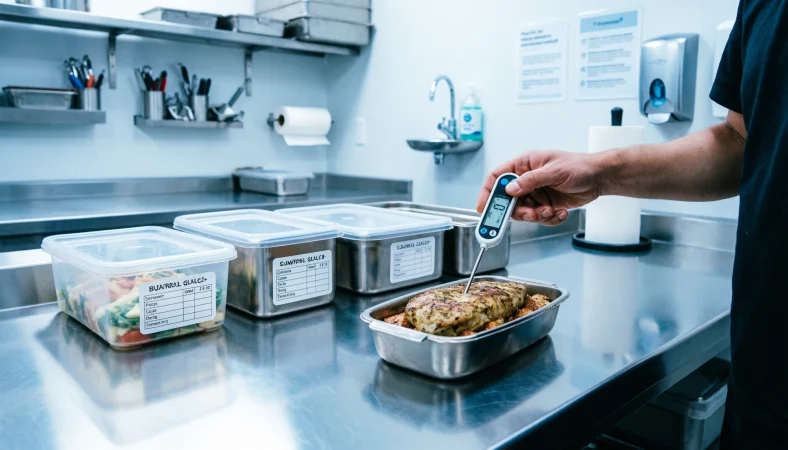
In food safety, TCS stands for “Time/Temperature Control for Safety.” It refers to foods that must be kept at specific temperatures and for limited times to prevent the growth of harmful bacteria.
Food safety language can sound confusing especially when you see short abbreviations like TCS on menus, food labels, training manuals, or health inspection reports. If you’ve ever wondered “what does TCS mean in food?”, you’re asking a very important question. Understanding this term isn’t just for chefs or inspectors it directly affects food safety, health, and hygiene.
In this comprehensive guide, we’ll break down the meaning of TCS in food, where the term comes from, why it’s so widely used, and how it applies in real kitchens, restaurants, and homes. We’ll also look at examples, common mistakes, comparisons with related terms, and practical tips to keep food safe.
Understanding TCS Foods in Simple Terms
TCS foods are foods that bacteria love.
If these foods are:
- Left at unsafe temperatures, or
- Held too long without proper control
they can quickly become dangerous to eat.
That’s why food safety guidelines require strict time and temperature control for TCS foods.
In short:
- Time + Temperature = Safety (or risk)
Origin of the Term “TCS” in Food Safety
Where Did TCS Come From?
The term TCS (Time/Temperature Control for Safety) comes from:
- The FDA Food Code
- Public health and sanitation standards
- Professional food safety training (ServSafe, HACCP, etc.)
Before “TCS” became common, these foods were often called “potentially hazardous foods (PHF)”. Over time, regulators adopted TCS because it:
- Better explains the why
- Emphasizes control, not just risk
- Is easier to teach and enforce
Why TCS Foods Are So Important
TCS foods are important because they support the rapid growth of pathogenic microorganisms, such as:
- Salmonella
- E. coli
- Listeria
- Clostridium perfringens
These bacteria can multiply within hours if food is not handled properly.
That’s why TCS rules are strict—and non-negotiable.
What Makes a Food a TCS Food?
A food is considered TCS if it meets certain conditions that allow bacteria to grow easily.
Key Factors:
- High moisture content
- Neutral or slightly acidic pH
- Rich in protein or carbohydrates
- Requires refrigeration or hot holding
If a food checks these boxes, it usually needs time and temperature control.
Common Examples of TCS Foods
Here’s where things get practical.
Examples of TCS Foods (Very Common)
- Meat (beef, chicken, pork)
- Fish and seafood
- Dairy products (milk, cheese, cream)
- Eggs and egg products
- Cooked rice and pasta
- Cooked vegetables
- Cut fruits and vegetables (like sliced melon)
- Tofu and soy products
- Soups, stews, and sauces
- Deli meats and prepared salads
These foods must not sit in the danger zone.
Example Table: TCS Foods vs Non-TCS Foods
| Food Item | TCS or Non-TCS | Why |
| Raw chicken | TCS | High protein, moisture |
| Cooked rice | TCS | Supports bacterial growth |
| Whole apples | Non-TCS | Low risk until cut |
| Dry pasta | Non-TCS | Low moisture |
| Milk | TCS | Requires refrigeration |
| Bread | Non-TCS | Low moisture |
The Temperature “Danger Zone” Explained
One of the most important concepts tied to TCS foods is the danger zone.
Temperature Danger Zone:
- 41°F to 135°F (5°C to 57°C)
When TCS foods stay in this range:
- Bacteria multiply rapidly
- Food becomes unsafe faster than you expect
Safe Temperature Rules:
- Cold holding: 41°F (5°C) or below
- Hot holding: 135°F (57°C) or above
Time Control: The Other Half of TCS
Temperature alone isn’t enough—time matters too.
Even at unsafe temperatures:
- Food can only be held for a limited time
- Usually 4 hours max (depending on regulations)
After that:
- Food must be used or discarded
- No reheating loopholes
Real-World Usage of TCS in Food Settings
1. Restaurants & Commercial Kitchens
You’ll see TCS used in:
- Health inspection reports
- Kitchen training manuals
- Food prep labels
Example (Neutral, Professional):
“All TCS foods must be labeled and dated.”
2. Food Safety Training (ServSafe, HACCP)
In training environments:
- TCS is a core concept
- Often tested in exams
Example:
“Cooked pasta is a TCS food and must be cooled properly.”
3. Home Cooking (Indirect Usage)
At home, people may not say “TCS,” but they follow the rules:
- Refrigerating leftovers
- Avoiding food left out overnight
Tone & Context: How “TCS” Is Used
Neutral / Professional Tone
- “TCS foods require temperature monitoring.”
Instructional Tone
- “Do not leave TCS foods at room temperature.”
Warning / Negative Tone ⚠️
- “Improper handling of TCS foods can cause foodborne illness.”
Unlike slang, TCS is always serious and technical.
TCS vs PHF: What’s the Difference?
This is a very common question.
Comparison Table: TCS vs PHF
| Term | Meaning | Status |
| TCS | Time/Temperature Control for Safety | Current, preferred |
| PHF | Potentially Hazardous Food | Older term |
Bottom line:
TCS replaced PHF in most modern food safety standards.
TCS vs Non-TCS Foods
Understanding this difference helps prevent mistakes.
TCS Foods:
- Require refrigeration or hot holding
- Limited holding time
- Higher risk
Non-TCS Foods:
- Shelf-stable
- Low moisture or acidity
- Lower bacterial risk
Examples of non-TCS foods:
- Dry cereals
- Crackers
- Uncut fruits
- Vinegar
- Sugar
Alternate Meanings of “TCS”
Outside of food safety, TCS can mean other things, such as:
- Tata Consultancy Services
- Traction Control System (vehicles)
- Total Control System (tech)
⚠️ Important: In food contexts, TCS always refers to Time/Temperature Control for Safety.
Polite or Professional Alternatives to “TCS”
In consumer-facing communication, professionals may say:
- “Perishable foods”
- “Foods requiring refrigeration”
- “Temperature-sensitive foods”
These are easier for the public to understand.
Common Mistakes With TCS Foods 🚩
Let’s clear up frequent errors:
- ❌ Leaving cooked food out too long
- ❌ Improper cooling of hot foods
- ❌ Reheating without reaching safe temps
- ❌ Assuming vegetarian foods are non-TCS
Many plant-based foods (like cooked rice) are still TCS.
How to Safely Handle TCS Foods (Practical Tips)
Best Practices:
- Use a food thermometer
- Label and date prepared foods
- Cool foods quickly (ice baths, shallow containers)
- Reheat to proper temperatures
- When in doubt—throw it out
Food safety is about prevention, not guesswork.
Example Table: Safe Handling of TCS Foods
| Step | Safe Practice |
| Storage | 41°F or below |
| Cooking | Reach required internal temp |
| Cooling | Cool within required time |
| Holding | Keep hot or cold |
| Reheating | Reheat thoroughly |
Why TCS Is So Widely Used Today
TCS has become popular because:
- Foodborne illnesses are preventable
- Standardized training saves lives
- Clear guidelines reduce ambiguity
- Restaurants are legally accountable
It’s a simple abbreviation with serious importance.
FAQs
1. What does TCS mean in food?
It means Time/Temperature Control for Safety.
2. Are all perishable foods TCS foods?
Most are, but not all. Acidity and moisture matter.
3. Is cooked rice a TCS food?
Yes. Cooked rice is a high-risk TCS food.
4. What temperature must TCS foods be kept at?
41°F or below (cold) or 135°F or above (hot).
5. What happens if TCS foods are left out?
Bacteria can grow quickly, making food unsafe.
6. Is TCS the same as PHF?
Yes, but TCS is the modern term.
7. Are vegetarian foods TCS?
Many are especially cooked grains, tofu, and cut produce.
8. Why is TCS important in restaurants?
It prevents foodborne illness and ensures legal compliance.
Conclusion
TCS isn’t just a technical term it’s a food safety lifeline. Understanding what TCS means in food helps protect customers, families, and communities from preventable illness.
- TCS = Time/Temperature Control for Safety
- Applies to high-risk foods
- Requires strict temperature and time limits
- Essential in restaurants and home kitchens
When dealing with TCS foods, precision beats assumption always check time and temperature.

Madison Lee is a skilled writer at ValneTix.com dedicated to making word meanings clear, relatable and actionable. She empowers readers to understand language deeply and use words with confidence in daily life.