Last Updated on March 6, 2026
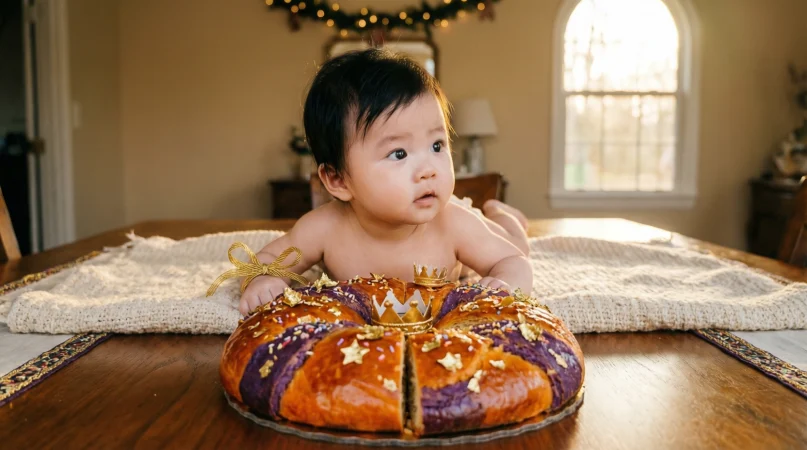
The baby in a King Cake symbolizes good luck, prosperity, and responsibility. Traditionally hidden inside the cake, the small plastic baby represents the Christ Child. Whoever finds it is believed to receive good fortune but they’re also expected to host the next King Cake party or bring the next cake.
If you’ve ever sliced into a colorful King Cake during Mardi Gras season and heard everyone shout, “Who got the baby?!”—you’re not alone. This tiny figurine carries centuries of history, playful traditions, and a surprising amount of cultural meaning packed into a single bite of cake.
In this guide, we’ll unpack what the baby means in a King Cake, where the tradition comes from, why it’s still popular today and how people celebrate it in real life especially in New Orleans and other Mardi Gras-loving regions.
What Is a King Cake?
Before diving into the baby itself, let’s set the scene.
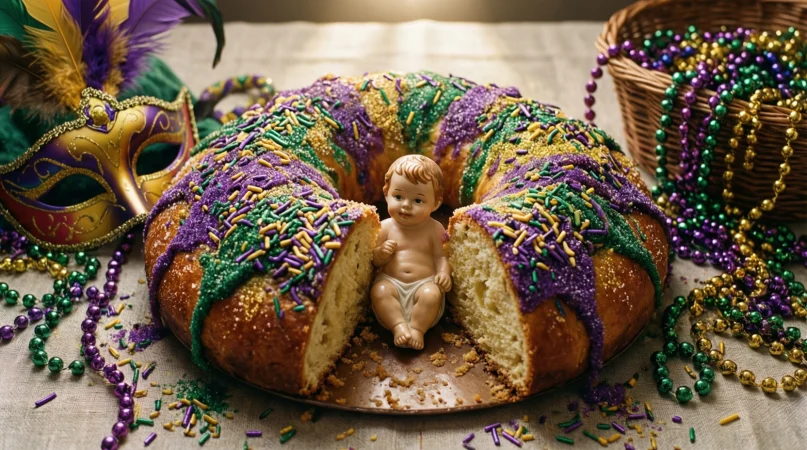
A King Cake is a ring-shaped pastry associated with Mardi Gras and the Epiphany (also known as Three Kings’ Day). It’s typically decorated with purple, green, and gold sugar—each color symbolizing something special:
- Purple – Justice
- Green – Faith
- Gold – Power
Inside the cake is where the magic (and mystery) happens: a small baby figurine.
What Does the Baby Mean in a King Cake?
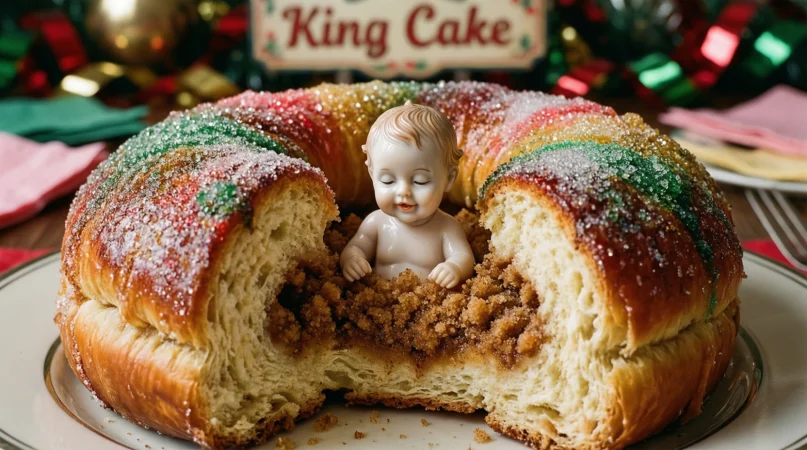
At its core, the baby in a King Cake represents the baby Jesus (the Christ Child). This symbolism ties the cake directly to Epiphany, which commemorates the visit of the Three Wise Men to baby Jesus.
But over time, the meaning has expanded beyond religion into social and cultural traditions.
Key Meanings of the Baby in a King Cake
- 👶 The Christ Child – Religious symbolism tied to Epiphany
- 🍀 Good luck and blessings – The finder is believed to receive fortune
- 🎉 Celebration and community – A shared tradition during Carnival season
- 🧁 Responsibility – The finder often must buy the next King Cake or host the next party
So yes—you “win” when you find the baby… but you also inherit a fun obligation.
The Origin of the King Cake Baby Tradition
Roots in Europe
The King Cake tradition traces back to medieval Europe, particularly France and Spain. Early versions of the cake were baked with a bean or coin hidden inside rather than a baby.
- In France, this was known as La Galette des Rois
- The hidden object symbolized luck and royalty
- The person who found it was crowned “king” or “queen” for the day
Arrival in Louisiana
French settlers brought this tradition to Louisiana in the 18th century. Over time:
- The bean evolved into a baby figurine
- Religious symbolism became more pronounced
- Mardi Gras culture embraced it as a festive ritual
By the late 1800s and early 1900s, the plastic baby became the standard.
Why Is the Baby Hidden Inside the Cake?
The hidden placement adds an element of surprise and excitement. It turns dessert into a game—one that brings people together.
Symbolic Reasons
- 🔍 Seeking Christ – A metaphor for searching and discovery
- 🎁 Unexpected blessings – Fortune comes when you least expect it
- 👑 Shared joy – Everyone anticipates who will find the baby
In modern celebrations, the baby is sometimes placed after baking to avoid choking hazards—but the symbolism remains unchanged.
Real-World Usage: What Happens When You Find the Baby?
Finding the baby isn’t just symbolic—it comes with real social expectations, especially in places like New Orleans.
Common Traditions
- 🧁 You buy or bring the next King Cake
- 🎭 You host the next Mardi Gras gathering
- 👑 You may be crowned “King” or “Queen” of the party
- 🍀 You’re said to receive good luck for the year
Friendly vs. Playful Pressure
In casual settings, it’s all in good fun. In offices or schools, it’s often a rotating tradition that keeps the celebration going throughout the season.
Example Scenarios and Tones
Here’s how the baby-in-the-cake tradition plays out in different contexts:
Friendly Tone 😊
“Looks like you got the baby—guess you’re bringing the next King Cake!”
Neutral Tone 🙂
“Traditionally, whoever finds the baby is responsible for the next cake.”
Playful/Dismissive Tone 😄
“Uh-oh, you found the baby. Hope your wallet’s ready!”
Labeled Example Table: Baby in a King Cake Traditions
| Scenario | Meaning | Expectation |
|---|---|---|
| Family Gathering | Good luck & blessing | Host next dinner |
| Office Party | Fun tradition | Buy next King Cake |
| Religious Celebration | Christ Child symbolism | Spiritual reflection |
| Mardi Gras Parade Event | Community bonding | Continue festivities |
Popularity of the King Cake Baby Today
The tradition has only grown more popular thanks to:
- 🎭 Mardi Gras tourism
- 📸 Social media sharing
- 🧁 Gourmet and modern King Cake variations
- 🌎 Cultural pride in Louisiana and beyond
Today, you’ll find King Cakes shipped nationwide, complete with a baby figurine tucked inside—or taped to the box for safety.
Comparison With Related Traditions
Although the King Cake baby is unique, similar customs exist worldwide.
King Cake Baby vs. Other Hidden Objects
| Tradition | Hidden Item | Meaning |
|---|---|---|
| King Cake (USA) | Baby figurine | Christ Child, luck |
| Galette des Rois (France) | Porcelain fève | Royalty, fortune |
| Rosca de Reyes (Mexico) | Baby Jesus | Blessings, hosting duty |
| Christmas Pudding (UK) | Coin | Wealth and luck |
Alternate Meanings of the Baby in a King Cake
While the primary meaning is religious and cultural, some modern interpretations include:
- 🎉 Party leadership – You’re “in charge” next time
- 🍀 Symbol of abundance – A sweet year ahead
- 🤝 Community role – Keeping the tradition alive
These meanings vary by region and family custom.
Polite or Professional Alternatives
If you’re explaining the tradition in a professional or educational setting, here are polished ways to describe it:
- “The baby symbolizes Epiphany and community tradition.”
- “Finding the baby is a customary sign of good fortune.”
- “The figurine represents the Christ Child in Christian symbolism.”
FAQs
1. What does the baby symbolize in a King Cake?
The baby symbolizes the baby Jesus and represents good luck, blessings, and responsibility.
2. Is it bad luck to get the baby in a King Cake?
No traditionally, it’s considered good luck, though you may need to buy the next cake.
3. Why is there a baby in King Cake for Mardi Gras?
It connects Mardi Gras celebrations to Epiphany and Christian tradition.
4. What happens if you find the baby?
You’re usually expected to host the next party or bring the next King Cake.
5. Is the baby baked into the cake?
Sometimes yes, but often it’s inserted after baking for safety.
6. Do all King Cakes have a baby?
Most traditional ones do, but some modern versions may not.
7. Can you eat the baby in a King Cake?
No the baby is plastic and should be removed before eating.
8. What if no one finds the baby?
It’s usually discovered eventually or revealed at the end for fun.
Conclusion
So, what does the baby mean in a King Cake? It’s far more than a tiny plastic figurine. It’s a symbol of faith, luck, celebration, and shared responsibility one that has traveled centuries and continents to become a beloved Mardi Gras tradition.
Whether you’re enjoying a slice at home, in the office, or on the streets of New Orleans, the baby reminds us that food isn’t just about taste it’s about stories, culture and connection.
Discover More Related Articles:-
- What Does MK Mean in Texts? Definition, Usage & Examples (2026)
- What Does Crescendo Mean in Music? Definition & Examples (2026)

Ryan Holloway is an experienced content strategist with a deep interest in etymology and word origins. He enjoys digging into the history behind words and presenting them in a straightforward, engaging way.