
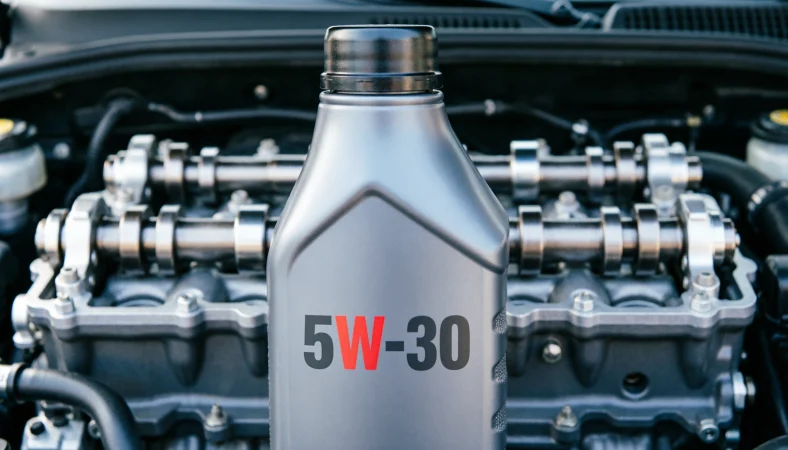
Last Updated on February 19, 2026
In motor oil, the “W” stands for “Winter,” and it indicates how well the oil flows at cold temperatures.
The number before the W shows the oil’s cold-temperature viscosity (thickness), while the number after the W shows how it performs at normal engine operating temperatures.
If you’ve ever stood in an auto parts store staring at bottles labeled 5W-30, 10W-40, or 0W-20, you’ve probably asked yourself the same question millions of drivers do every year:
What does the “W” actually mean in oil?
It looks technical, maybe even mysterious but the truth is, the “W” plays a huge role in how your engine starts, runs, and stays protected, especially in different temperatures.
This comprehensive guide explains everything in simple, human language. You’ll learn the definition, origin, real-world usage, examples, comparisons, alternatives, FAQs, and practical tips so you’ll never feel confused in the oil aisle again.
Why the “W” in Oil Matters More Than You Think
That single letter affects:
- Cold starts 🧊
- Engine wear
- Fuel efficiency
- Long-term engine health
Choosing the wrong oil viscosity can make your engine work harder—or even shorten its lifespan.
What Does the W Mean in Oil?
The Simple Explanation
The “W” in oil stands for “Winter.” It tells you how easily the oil flows when the engine is cold.
For example:
- 5W-30
- 5W = cold-weather performance
- 30 = performance at operating temperature
- 5W = cold-weather performance
Lower numbers before the W mean:
👉 Thinner oil in cold weather
👉 Easier engine starts
👉 Better cold protection
Breaking Down Oil Grades
Let’s decode a common oil grade.
Example: 10W-30
| Part | Meaning |
| 10W | Cold-temperature viscosity |
| W | Winter |
| 30 | Hot-temperature viscosity |
This system helps ensure your engine gets lubrication both when cold and when fully warmed up.
Origin of the “W” in Motor Oil
Where Did It Come From?
The “W” was introduced as part of the SAE (Society of Automotive Engineers) viscosity grading system.
Before multi-grade oils:
- Drivers had to switch oils seasonally
- Thick oil for summer
- Thin oil for winter
Multi-grade oils—with the W rating—eliminated that hassle.
Why the W System Became Popular
The “W” system caught on because it:
- Simplified oil selection
- Improved engine protection year-round
- Reduced cold-start wear
- Fit modern driving habits
Today, almost all passenger vehicles use multi-grade oil with a W rating.
Real-World Usage of the W in Oil
Everyday Driving Scenarios
- Cold mornings ❄️ → W rating matters a lot
- Hot climates ☀️ → Second number matters more
- Mixed climates → Balanced grades like 5W-30 work best
Labeled Example Table: Common Oil Grades Explained
| Oil Grade | Cold Start Performance | Hot Engine Protection | Typical Use |
| 0W-20 | Excellent | Light | Modern fuel-efficient cars |
| 5W-30 | Very good | Medium | Most passenger vehicles |
| 10W-30 | Good | Medium | Older engines |
| 10W-40 | Moderate | High | High-mileage or performance engines |
| 20W-50 | Poor | Very high | Classic or hot-climate engines |
Examples of W Usage
Friendly Explanation 😊
“The W just means winter—it tells you how the oil flows when it’s cold.”
Neutral / Technical
“The W rating indicates cold-temperature viscosity.”
Slightly Dismissive 😅
“Ignore the W and you’ll regret it on a cold start.”
W vs Non-W Oils (Single-Grade Oils)
Single-Grade Oil Example: SAE 30
- No W
- Performs well only at one temperature range
- Rare in modern vehicles
Multi-Grade Oil Example: 5W-30
- Works in cold and hot conditions
- Better engine protection
- Industry standard today
Comparison: W Ratings Explained Side by Side
| W Rating | Cold Flow Ability | Best Climate |
| 0W | Excellent | Extreme cold |
| 5W | Very good | Cold to moderate |
| 10W | Good | Mild climates |
| 15W+ | Limited | Warm climates only |
What the W Does Not Mean
Let’s clear up common myths:
- ❌ W does not mean weight
- ❌ W does not mean quality
- ❌ Lower W does not mean weaker oil
It’s all about temperature performance, not strength.
Alternate Meanings of “W”
Outside motor oil, “W” can mean:
- Watt (electricity)
- Win (gaming)
- Width (measurements)
But in motor oil, W always means Winter.
Professional or Clear Alternatives to Saying “W”
When explaining oil grades professionally, you might say:
- “Cold-temperature viscosity”
- “Winter rating”
- “Low-temperature flow rating”
Example:
“This oil has excellent cold-temperature flow characteristics.”
How to Choose the Right W Rating for Your Car
Follow These Steps
- Check your owner’s manual
- Consider your climate
- Think about driving habits
- Stick to manufacturer recommendations
⚠️ Using the wrong viscosity can:
- Reduce fuel economy
- Increase engine wear
- Void warranties
Why Modern Cars Use Lower W Numbers
Newer engines:
- Have tighter tolerances
- Need faster oil flow
- Aim for fuel efficiency
That’s why 0W-20 and 5W-30 are so common today.
FAQs
1. What does the W mean in oil?
It stands for Winter, indicating cold-temperature viscosity.
2. Is 5W better than 10W?
In cold weather, yes—5W flows better.
3. Does lower W mean thinner oil?
Only at cold temperatures, not when hot.
4. Can I use a different W rating?
Only if approved by your vehicle manufacturer.
5. Is W related to oil weight?
No, it’s related to viscosity and temperature.
6. Why do some oils start with 0W?
For extreme cold-start performance.
7. Does W affect fuel economy?
Yes lower W oils can improve efficiency.
8. Is synthetic oil better for low W ratings?
Yes, synthetic oils perform better in cold conditions.
Conclusion
So, what does the W mean in oil?
It stands for Winter, and it tells you how well oil flows when your engine is cold.
- W = Winter
- Lower W = better cold starts
- The second number handles hot temperatures
- Choosing the right W protects your engine year-round
Practical Tip:
If you’re unsure, stick to the oil grade recommended by your manufacturer it’s engineered for your engine, climate, and driving style.

James Colton is a language researcher and content writer who loves exploring the deeper meanings behind everyday words. With a background in linguistics, he breaks down complex terms into simple, clear explanations that anyone can understand.