
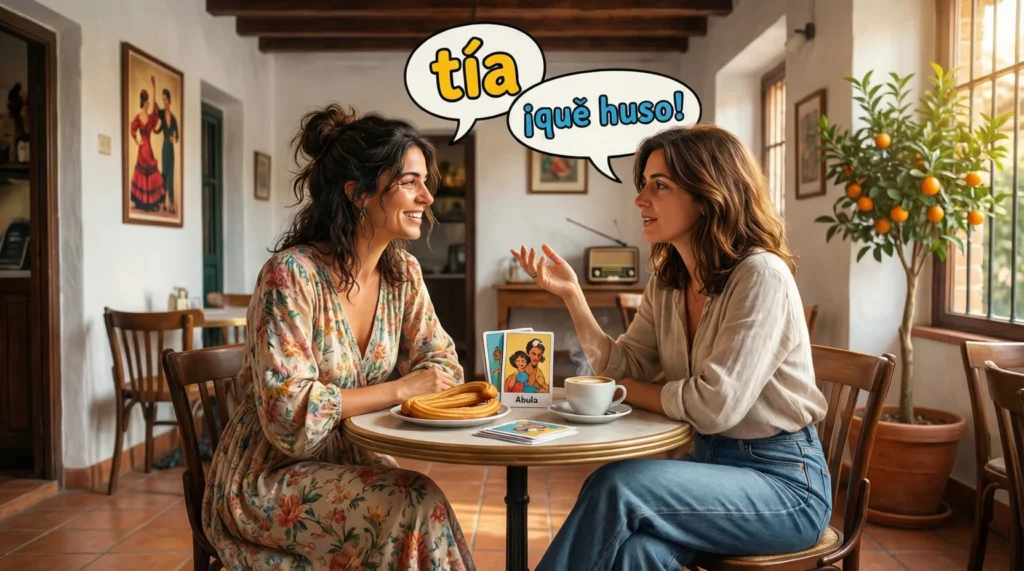
“Tía” in Spanish means “aunt.” It refers to the sister of your mother or father, or the wife of your uncle. Beyond family, tía is also commonly used informally in some Spanish speaking regions (especially Spain) to mean “woman,” “girl” or “lady” depending on context and tone.
Understanding what “tía” means in Spanish goes far beyond a simple dictionary definition. This small word carries family warmth, cultural nuance, informal slang, and regional flavor all packed into just four letters.
Whether you’re learning Spanish, watching Spanish movies, chatting with native speakers, or just curious about Spanish slang, this guide will explain exactly what “tía” means, how it’s used, when it’s appropriate, and what alternatives you should know.
What Does “Tía” Mean in Spanish?
At its core, tía is a noun that means:
Tía (noun): Aunt — the sister of one’s mother or father, or the wife of one’s uncle.
But Spanish is a living language, and like many family terms, tía has expanded meanings depending on region, tone, and situation.
Basic Meanings of “Tía”
- Literal / Family Meaning
- Aunt (by blood or marriage)
- Informal / Slang Meaning (regional)
- Woman
- Girl
- Lady
- Sometimes equivalent to “chick” or “gal” (very informal)
Origin and Linguistic Background of “Tía”
The word tía comes from Latin, specifically:
- Latin: thīa (aunt)
- Greek influence: theía (θεία), meaning “aunt”
Spanish inherited this term during the evolution from Vulgar Latin to modern Romance languages. Its masculine counterpart is tío (uncle), which has followed a similar path and also developed slang meanings.
How Popular Is the Word “Tía” in Spanish?
“Tía” is extremely common in everyday Spanish.
- Used universally across Spanish-speaking countries for family
- Frequently used in Spain as casual slang
- Less commonly used as slang in Latin America (though tío is sometimes understood)
Popularity by context:
| Context | Popularity |
|---|---|
| Family conversations | ⭐⭐⭐⭐⭐ |
| Daily spoken Spanish | ⭐⭐⭐⭐ |
| Spanish slang (Spain) | ⭐⭐⭐⭐ |
| Formal writing | ⭐⭐ |
Literal Usage: “Tía” as Aunt
This is the standard, universally accepted meaning.
Examples (Family Context)
- Mi tía vive en Madrid.
(My aunt lives in Madrid.) - Voy a visitar a mi tía este fin de semana.
(I’m going to visit my aunt this weekend.) - Esa es la tía de Juan.
(That’s Juan’s aunt.)
This usage is:
- Neutral
- Polite
- Appropriate in all Spanish-speaking countries
- Safe for formal and informal contexts
Informal & Slang Meaning of “Tía”
In Spain, tía is commonly used as informal slang to refer to a woman or girl similar to saying:
- “That girl”
- “That woman”
- “This lady”
- “Chick” (very casual)
Important Note on Tone ⚠️
The meaning of slang tía depends heavily on:
- Tone of voice
- Context
- Relationship between speakers
It can sound:
- Friendly 😊
- Neutral 😐
- Dismissive or rude 😒 (if misused)
Examples of “Tía” in Informal Spanish
Friendly / Casual Tone
- Esa tía es muy simpática. 😊
(That girl is really nice.) - La tía sabe muchísimo de música.
(She knows a lot about music.) - Oye, tía, ¿qué tal estás?
(Hey girl, how are you?)
✔ Common among friends
✔ Mostly used in Spain
✔ Casual, not formal
Neutral Descriptive Tone
- Había una tía esperando en la puerta.
(There was a woman waiting at the door.)
Neutral but still informal. Not suitable for professional situations.
Negative or Dismissive Tone
- Esa tía me cae fatal. 😒
(I really can’t stand that woman.)
Here, tía can sound dismissive, similar to “that woman” or “that chick” in English.
Is “Tía” Used the Same Way in Latin America?
Not exactly.
Regional Differences
| Region | Slang Usage |
|---|---|
| Spain | Very common |
| Mexico | Rare |
| Argentina | Rare |
| Colombia | Rare |
| Chile | Rare |
In Latin America, people usually prefer:
- Mujer (woman)
- Chica (girl)
- Señora (lady)
- Muchacha (young woman)
Using tía as slang outside Spain may sound:
- Strange
- Old-fashioned
- Confusing
Comparison: “Tía” vs Related Spanish Terms
Tía vs Mujer vs Chica
| Term | Meaning | Tone | Formality |
|---|---|---|---|
| Tía | Aunt / Woman (slang) | Casual | Informal |
| Mujer | Woman | Neutral | Formal/Neutral |
| Chica | Girl | Friendly | Informal |
| Señora | Lady | Polite | Formal |
| Muchacha | Young woman | Neutral | Informal |
Masculine Form: “Tío”
The masculine equivalent of tía is tío.
- Literal: Uncle
- Slang (Spain): Guy, dude, man
Example
- Ese tío es muy gracioso.
(That guy is really funny.)
Both tío and tía function similarly in slang, but again, mainly in Spain.
Polite and Professional Alternatives to “Tía”
When speaking formally or professionally, avoid slang tía and use these instead:
Better Alternatives
- Señora – Mrs./Madam (polite)
- Señorita – Miss (polite, but less common today)
- Mujer – Woman (neutral)
- Persona – Person (very neutral and inclusive)
Example Table: “Tía” in Different Contexts
| Context | Sentence | Meaning |
|---|---|---|
| Family | Mi tía cocina muy bien. | My aunt cooks very well |
| Friendly slang | Esa tía es increíble. | That girl is amazing |
| Neutral | Vi a una tía en la calle. | I saw a woman on the street |
| Negative | Esa tía es insoportable. | That woman is unbearable |
Common Mistakes Learners Make with “Tía”
- ❌ Using slang tía in formal settings
- ❌ Assuming it works the same in Latin America
- ❌ Using it with strangers (can sound rude)
- ❌ Confusing tía with tío gender-wise
Conclusion
At its heart, it means aunt, but culturally, it’s much more than that. In Spain, it’s a casual, everyday slang word used to talk about women in relaxed conversations. Used correctly, it can sound natural and friendly. Used incorrectly, it can feel awkward or disrespectful.
If you’re learning Spanish, understanding words like tía gives you insight not just into vocabulary but into culture, tone, and real-world communication. Learn the rules, listen carefully to native speakers, and you’ll know exactly when (and when not) to use it.
FAQs
What does “tía” literally mean in Spanish?
It literally means aunt, referring to a parent’s sister or uncle’s wife.
Is “tía” slang in Spanish?
Yes, in Spain, it’s slang for “woman” or “girl.” This usage is informal.
Is it rude to say “tía”?
It depends on tone and context. With friends, it’s normal. With strangers or professionally, it may sound rude.
Do people use “tía” in Latin America?
Mostly only for family meaning. Slang usage is uncommon.
What’s the difference between “tía” and “señora”?
- Tía: informal, casual
- Señora: polite and respectful
Can “tía” be affectionate?
Yes, especially among friends or family in Spain.
What is the masculine version of “tía”?
Tío, meaning “uncle” or slang for “guy/dude.”
Should Spanish learners use “tía” as slang?
Beginners should be cautious. Use it only when familiar with regional context and tone.
Discover More Related Articles:-
- What Does Standard Form Mean in Math? Definition, Examples and Uses For 2026
- What Does “We” Mean in French? Nous vs On Explained Clearly For 2026

Alex Ferguson is a word enthusiast at ValneTix.com who turns the meanings of everyday words into fascinating discoveries. His articles make learning language easy, enjoyable and practical for all readers.