
Last Updated on March 6, 2026
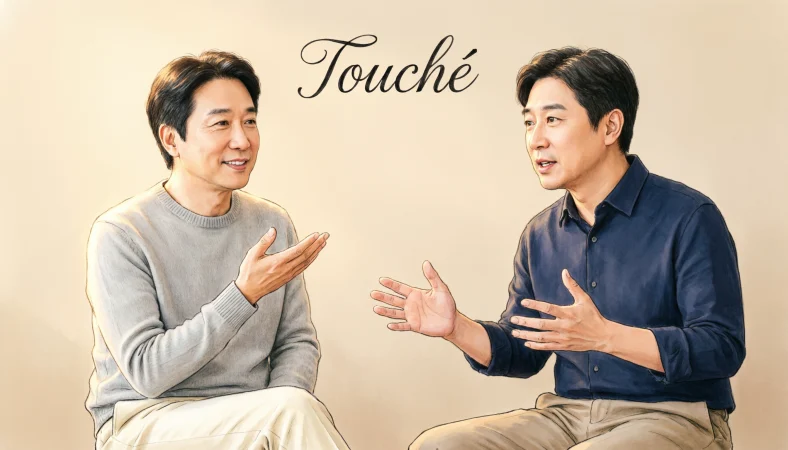
Touché is a French word that literally means “touched” and is commonly used in conversation to acknowledge a clever point, valid criticism, or well-made argument, often in a light, witty, or respectful way.
You’ve probably heard touché in movies, debates, or casual conversations—usually right after someone makes a sharp or clever remark. It sounds classy, a little dramatic, and unmistakably French. But what does touché actually mean in French, and how did it become such a popular expression in English and around the world?
The interesting part is that touché didn’t start as a conversational phrase at all. Its roots are in fencing, one of France’s most refined and traditional sports. Over time, the word evolved into a widely used expression that signals agreement, acknowledgment, or respectful defeat sometimes sincere, sometimes playful.
Let’s break it down fully: meaning, origin, tone, real-world usage, examples, and how to use touché correctly without sounding awkward or out of place.
What Does Touché Literally Mean in French?
In French, touché is the past participle of the verb toucher, which means:
- To touch
- To hit
- To make contact
So literally, touché translates to:
“Touched” or “Hit”
Original Context: Fencing
In traditional French fencing, when a fencer successfully lands a hit on their opponent, they say:
Touché!
It’s an acknowledgment that a valid strike has been made.
This idea of being “hit” metaphorically carried over into language—when someone makes a point that lands well, touché signals that it struck home.
Modern Meaning of Touché in Conversation
Today, touché is commonly used in English and other languages to mean:
- “Good point”
- “You got me there”
- “That’s fair”
- “I can’t argue with that”
- “Point taken”
It’s usually said after someone makes a clever, accurate, or slightly uncomfortable observation.
Simple Example
Person A: You always say you’re too busy, but you’re scrolling on your phone.
Person B: Touché.
In this case, touché means:
“That’s true, and I admit it.”
Tone and Emotional Nuance of Touché
One of the reasons touché is so popular is its flexible tone. Depending on delivery and context, it can feel:
- Friendly
- Playful
- Respectful
- Lightly sarcastic
- Self-aware
Common Tones Explained
- Friendly / Playful: Used among friends during banter
- Neutral / Respectful: Used in debates or discussions
- Lightly Sarcastic: Used when conceding a point you don’t love but can’t deny
It’s rarely aggressive and almost never rude.
How to Use Touché Correctly
When Touché Works Best
Use touché when:
- Someone makes a clever counter-argument
- You’re acknowledging a valid criticism
- You want to concede a point gracefully
- You want to keep the tone light and classy
When Touché Might Sound Wrong
Avoid using touché when:
- The situation is very emotional or serious
- You’re apologizing sincerely
- The other person is upset or hurt
- You want to fully agree or praise someone deeply
In serious moments, touché may feel dismissive.
Real-World Examples of Touché in Context
Friendly Tone
“You’re judging my coffee addiction, but you’ve had four cups today.”
“Touché 😄”
Neutral / Intellectual Tone
“You argue for flexibility, but your rules are very strict.”
“Touché. That’s something I need to rethink.”
Lightly Sarcastic Tone
“You hate drama, yet you watch reality TV every night.”
“Touché.”
Example Usage Table
| Situation | Example Sentence | Tone |
| Friendly banter | “You say you’re late because of traffic, but you left late.” – Touché! | Playful |
| Debate | “Your solution is good, but it’s expensive.” – Touché. | Neutral |
| Humor | “You tease me for typos, but you misspell too.” – Touché 😅 | Light sarcasm |
| Self-reflection | “You want honesty, but avoid it yourself.” – Touché. | Thoughtful |
Why Is Touché So Popular in English?
Several reasons explain its popularity:
- French is associated with elegance and intelligence
- Touché is short, memorable, and expressive
- It sounds more polished than “okay, fine”
- It conveys agreement without over-explaining
- It’s widely used in movies, books, and debates
Many English speakers use touché without speaking French at all.
Is Touché Still French When Used in English?
Yes—and no.
- In French, touché is grammatically specific and tied to context.
- In English, it’s a loanword, used more loosely and conversationally.
In French conversation, you’re more likely to hear alternatives like:
- C’est vrai (That’s true)
- Bien vu (Well spotted)
But touché still exists and is understood in modern French.
Similar Words and Comparisons
Touché vs “Good Point”
| Touché | Good Point |
| Classy, playful | Direct, neutral |
| Slight concession | Clear agreement |
| Often witty | Straightforward |
Touché vs “Fair Enough”
- Fair enough feels casual and modern
- Touché feels elegant and slightly intellectual
Touché vs “You Got Me”
- You got me is informal
- Touché is polished and subtle
Alternate Meanings of Touché
While rare outside fencing and conversation, touché can also mean:
- Acknowledgment of a literal hit (sports or fencing)
- Recognition that something emotionally “hit home”
- Acceptance of defeat in a verbal exchange
These meanings all trace back to the same idea: being struck by something valid.
Polite or Professional Alternatives to Touché
In formal or workplace settings, you may want softer alternatives:
- “That’s a valid point”
- “I see what you mean”
- “You’re right about that”
- “I hadn’t considered that”
- “That’s a fair observation”
These sound more professional and less playful.
Common Mispronunciation Warning
The correct pronunciation is:
too-SHAY
Not:
- too-chee
- touch-ee
- toosh
Mispronouncing it can break the effect, so confidence matters.
FAQs
1. What does touché mean literally in French?
It literally means “touched” or “hit.”
2. Is touché positive or negative?
Usually neutral to positive, depending on tone.
3. Can touché be sarcastic?
Yes, lightly—but it’s rarely harsh.
4. Is touché formal or informal?
It’s semi-formal and works best in conversational settings.
5. Do French people still say touché?
Yes, but less casually than English speakers.
6. Can touché be used in arguments?
Yes, especially to concede a point gracefully.
7. Is touché rude?
No—it’s generally respectful when used correctly.
8. What’s a professional alternative to touché?
“That’s a valid point” or “I see your perspective.”
Conclusion
- Touché means acknowledging a clever or valid point
- It comes from French fencing terminology
- It works best in light debates or friendly conversations
- Tone matters more than the word itself
- Avoid using it in emotionally sensitive moments
- Pronounce it correctly for maximum effect
Used well, touché adds intelligence, humor and elegance to everyday conversation.
Discover More Related Articles:-
- What Does the Money Sign Mean in Excel? Absolute Reference & Currency Explained For 2026
- What Does DMD Mean in Dentistry? DMD vs DDS Explained Clearly For 2026

James Colton is a language researcher and content writer who loves exploring the deeper meanings behind everyday words. With a background in linguistics, he breaks down complex terms into simple, clear explanations that anyone can understand.