
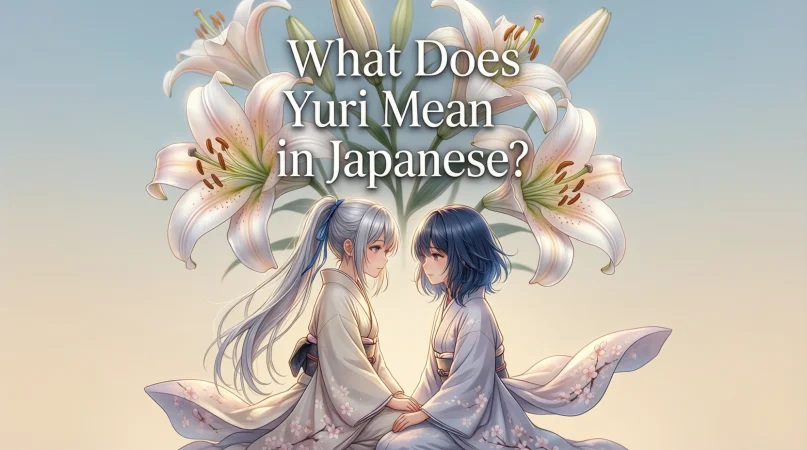
Yuri (百合) in Japanese literally means “lily flower.”
In modern usage especially in anime, manga, and pop culture it refers to stories, themes, or relationships centered on emotional or romantic bonds between women.
Yuri is one of those Japanese words that seems simple at first but once you dig deeper, it opens up a whole cultural, linguistic, and pop culture universe. 🌸
If you’ve seen yuri mentioned in anime, manga, or online discussions and wondered “What does yuri mean in Japanese, really?” you’re in the right place.
In this complete guide, we’ll break it all down in a clear, friendly, and human way from literal meanings and historical roots to modern usage, tone, examples, comparisons and FAQs.
📌 Quick Overview (At a Glance)
| Aspect | Meaning |
|---|---|
| Literal meaning | Lily flower |
| Cultural meaning | Female–female emotional or romantic relationships |
| Common fields | Anime, manga, light novels, fandom |
| Tone | Neutral to positive |
| English equivalent | Girls’ Love (GL) |
Origin of the Word “Yuri” in Japanese
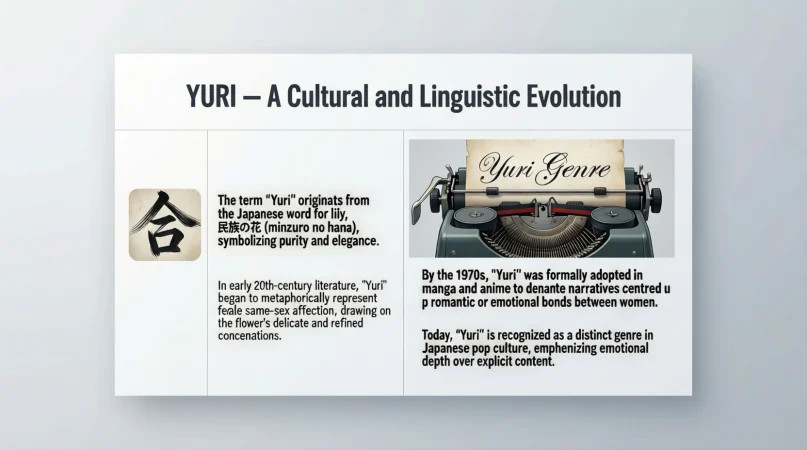
🌸 Literal Meaning: Lily Flower
The Japanese word yuri (百合) originally refers to the lily, a flower symbolizing:
- Purity
- Elegance
- Beauty
- Femininity
In traditional Japanese poetry and symbolism, lilies often represented grace and quiet strength.
📚 Cultural & Literary Roots
The transition of yuri from flower to cultural term happened in the early 20th century, especially through:
- Girls’ magazines (shōjo magazines)
- All-girls schools
- Literature focusing on intense emotional bonds between young women
These relationships were often portrayed as pure, emotional, and romantic, even if not explicitly sexual.
How Yuri Became a Genre

🎌 Post-War Japan & Media Growth
By the 1970s–1980s, Japanese manga and anime started exploring diverse relationship themes. Yuri gradually evolved into a recognized genre, focusing on:
- Emotional intimacy between women
- Romantic tension
- Identity and self-discovery
Unlike Western labels, yuri doesn’t always mean sexuality—it often emphasizes feelings and connection.
Modern Meaning of Yuri
Today, yuri is widely used to describe:
- Anime series
- Manga
- Light novels
- Games
- Fan fiction
✅ What Yuri Usually Includes
- Female protagonists
- Emotional closeness
- Romantic subtext or explicit romance
- Gentle or dramatic storytelling
❌ What Yuri Does NOT Always Mean
- It is not always sexual
- It does not automatically mean explicit content
- It is not a derogatory term
Real-World Usage of “Yuri”
🗣️ In Japanese Language
In everyday Japanese conversation:
- Yuri still most commonly means lily flower
- Context is everything
Example:
この花は百合です
Kono hana wa yuri desu
“This flower is a lily.”
💬 In Media & Online Communities
In anime or manga discussions:
このアニメは百合要素が強い
Kono anime wa yuri yōso ga tsuyoi
“This anime has strong yuri elements.”
Here, yuri clearly means female–female relationship themes.
Examples of Yuri in Different Tones
😊 Friendly / Neutral Tone
この作品は百合でとても優しい物語です
“This work is yuri and tells a very gentle story.”
Used in reviews, recommendations, or fandom chats.
😐 Informational / Academic Tone
百合は女性同士の関係を描くジャンルです
“Yuri is a genre depicting relationships between women.”
Common in articles, blogs, or academic discussions.
😬 Negative or Dismissive Usage (Rare)
Sometimes, people may say:
百合っぽすぎる
“Too yuri-like.”
This can sound dismissive depending on tone, but the word itself is not offensive.
Labeled Example Table: Yuri in Context
| Context | Example Sentence | Meaning |
|---|---|---|
| Literal | 百合の花がきれいです | The lily flower is beautiful |
| Anime review | 百合要素が多い | Many yuri elements |
| Recommendation | 百合好きにおすすめ | Recommended for yuri fans |
| Neutral info | 百合ジャンル | Yuri genre |
Yuri vs Related Terms
🆚 Yuri vs Yaoi
| Feature | Yuri | Yaoi |
|---|---|---|
| Focus | Female–female | Male–male |
| Target audience | Broad | Traditionally female |
| Emotional tone | Gentle, emotional | Often dramatic |
| English term | Girls’ Love (GL) | Boys’ Love (BL) |
🆚 Yuri vs Shōjo-ai
- Shōjo-ai: Often used outside Japan
- In Japan, the term is rarely used
- Yuri is the preferred and respectful term
Alternate Meanings of Yuri
Yes—yuri can have multiple meanings depending on context:
- Lily flower (most traditional meaning)
- A female given name
- Example: ゆり (Yuri)
- Pop culture genre (Girls’ Love)
Is “Yuri” Polite or Appropriate?
✔️ Yes, When Used Correctly
- Safe in anime/manga discussions
- Acceptable in blogs and articles
- Neutral in Japanese culture
⚠️ Tips for Polite Usage
- Use it descriptively, not mockingly
- Avoid stereotyping
- Respect the genre and its audience
Professional or Polite Alternatives
If you want a more formal or neutral phrase:
- 女性同士の恋愛作品
“Works depicting romance between women” - ガールズラブ(GL)
“Girls’ Love”
These are often used in professional writing.
Why Is Yuri So Popular Worldwide?
🌍 Global Appeal Factors
- Emotional storytelling
- Strong female characters
- Inclusive themes
- Artistic freedom
- Relatable human emotions
Many fans appreciate yuri not just for romance but for character depth and emotional realism.
FAQs
1. What does yuri literally mean in Japanese?
It literally means lily flower (百合).
2. Is yuri a Japanese slang word?
No. It’s a standard Japanese word with cultural extensions.
3. Does yuri always mean lesbian?
Not always. It often focuses on emotional bonds, not just sexuality.
4. Is yuri appropriate to say in Japan?
Yes when used respectfully and in context.
5. What is the English equivalent of yuri?
Girls’ Love (GL).
6. Is yuri used only in anime?
No. It also appears in manga, novels, games, and literature.
7. Can yuri be non-romantic?
Yes. Some stories emphasize emotional intimacy only.
8. Is yuri a positive or negative term?
Generally neutral to positive.
Conclusion
At its heart, yuri is about beauty, connection, and emotional depth whether as a flower blooming quietly or as a genre telling meaningful stories between women.
Understanding yuri isn’t just about translation it’s about appreciating how language, culture, and storytelling come together in Japanese society. 🌸

Michael Jordan is a writer at ValneTix.com who explains word meanings in a clear and easy to understand style, helping readers expand their vocabulary and language skills.