
Last Updated on May 25, 2026
Quick Answer
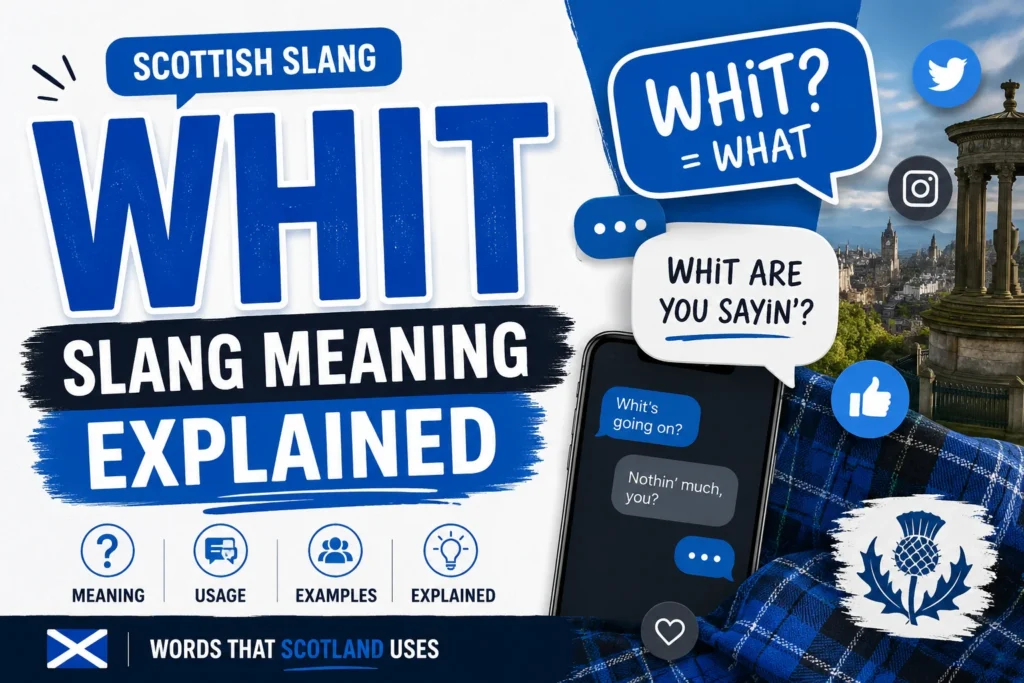
“Whit” is a slang or dialect word that can mean “anything at all,” “a small amount,” or serve as a casual variation of “what,” depending on the region and context. It’s commonly associated with Scottish and Northern English speech, internet slang, texting culture, and informal conversations.
In modern online use, people may say phrases like “I don’t know whit you mean” or “not a whit” to sound casual, regional, humorous, or expressive.
Definition
The slang meaning of “whit” depends on context. In Scottish and Northern English dialects, “whit” commonly means “what.” In older English expressions like “not a whit,” it means “not even a tiny amount.” Online, the term is often used casually, humorously, or stylistically in texting and social media conversations.
Key Takeaways
- “Whit” is primarily a dialect variation of “what.”
- It is strongly connected to Scottish English and regional slang.
- The phrase “not a whit” means “not at all” or “not even slightly.”
- The word appears in texting, memes, online chats, and informal speech.
- Context matters because “whit” can carry different meanings depending on tone and location.
- It is not considered standard formal English.
What Does “Whit” Mean in Slang?
The slang meaning of “whit” changes depending on how it’s used. Most commonly, it falls into one of these categories:
| Usage | Meaning | Example |
|---|---|---|
| Scottish dialect | “What” | “Whit are you doing?” |
| Old English phrase | A tiny amount | “I don’t care a whit.” |
| Internet slang/style | Casual or humorous speech | “Whit even is this?” |
| Regional expression | Informal conversational filler | “Whit now?” |
In everyday internet conversations, many users encounter “whit” through memes, TikTok captions, gaming chats, Scottish creators, or regional humor pages.
The Most Common Meaning of “Whit”
In modern slang and casual communication, “whit” most often means:
“What”
This pronunciation-based spelling reflects how many Scottish speakers naturally say the word “what.”
Examples
- “Whit happened here?”
- “Whit do you mean?”
- “Whit time are we leaving?”
- “Whit’s going on?”
This usage is especially common in:
- Scotland
- Northern England
- Online gaming communities
- Meme culture
- Informal texting
Origin and History of the Word “Whit”
Understanding the history of “whit” helps explain why the word still appears today.
Historical English Origins
The word “whit” originally existed in Old English as a noun meaning:
“The smallest possible amount or particle.”
That’s where the classic phrase:
“Not a whit”
comes from.
It literally means:
- not even a little
- not at all
- zero concern or interest
Example
- “She didn’t care a whit about the criticism.”
This expression dates back centuries and appears in classic English literature.
Scottish Dialect Evolution
Separately, Scottish English developed “whit” as a spoken form of “what.”
Because language naturally evolves around pronunciation, written dialect forms became popular in:
- Scottish literature
- Comedy
- Online regional identity
- Social media captions
Today, this version is far more common in slang culture than the older “tiny amount” definition.
Why “Whit” Became Popular Online
Internet culture loves words that feel:
- authentic
- regional
- funny
- expressive
- conversational
“Whit” checks all those boxes.
Social Media Influence
Scottish TikTok creators, YouTubers, streamers, and meme pages helped popularize the term globally.
People now intentionally use “whit” online to:
- imitate Scottish accents
- sound playful
- create comedic tone
- add personality to messages
Example Meme Style
- “Whit is this chaos?”
- “Whit are ye daein?”
- “Whit did I just watch?”
The spelling itself creates a humorous, informal vibe.
“Whit” in Texting and Online Chat
In texting, “whit” is usually casual and harmless.
Common Text Examples
| Phrase | Meaning |
|---|---|
| “Whit?” | “What?” |
| “Whit happened?” | “What happened?” |
| “Whit are you on about?” | “What are you talking about?” |
| “Not a whit” | “Not at all” |
Tone Matters
Depending on tone, “whit” can sound:
- funny
- confused
- sarcastic
- regional
- friendly
It rarely sounds aggressive unless combined with insulting language.look at another post
Is “Whit” Proper English?
Technically, “whit” is not standard formal English when used instead of “what.”
However, it is absolutely valid in:
- regional dialects
- spoken language
- cultural expression
- creative writing
- internet slang
Language experts generally recognize dialect forms as legitimate parts of linguistic identity rather than “incorrect English.”
Did You Know?
The phrase “not a whit” appears in famous historical writings, including older English literature and religious texts. While younger internet users often know “whit” as slang for “what,” the original word actually existed long before social media.
Cultural Importance of “Whit”
Dialect words often carry cultural identity.
For Scottish speakers, “whit” is not merely slang — it reflects:
- regional pride
- local pronunciation
- humor
- authenticity
- social connection
Why This Matters
Internet culture increasingly values authenticity over perfectly formal language.
That’s why regional expressions like:
- “aye”
- “nae”
- “wee”
- “whit”
have become globally recognizable online.
Common Phrases Using “Whit”
1. “Whit’s happening?”
Meaning:
What’s going on?
2. “Whit now?”
Meaning:
What happened now?
Usually sarcastic or exhausted.
3. “Not a whit”
Meaning:
Not at all.
4. “Whit are ye daein?”
A famous Scottish phrase meaning:
“What are you doing?”
Comparison: “Whit” vs Similar Slang Terms
| Word | Meaning | Region | Tone |
|---|---|---|---|
| Whit | What | Scotland/Northern UK | Casual |
| Wut | What | Internet slang | Humorous |
| Wat | What | Text slang | Lazy/casual |
| Whatcha | What are you | American informal | Friendly |
| Huh | Confusion | Global | Informal |
When Should You Use “Whit”?
Good Situations
- Casual texting
- Social media captions
- Humor
- Meme content
- Dialect writing
- Friendly conversations
Situations to Avoid
- Academic writing
- Professional emails
- Job applications
- Business reports
- Formal presentations
Pro Tip
If you use “whit” online, make sure the audience understands the joke or dialect. Overusing regional slang with international audiences can sometimes create confusion.
Common Misconceptions About “Whit”
Misconception 1: It’s a typo
Not always.
While some people accidentally type “whit,” many intentionally use it as dialect slang.
Misconception 2: It’s only internet slang
False.
The word has historical roots going back centuries.
Misconception 3: It’s grammatically wrong
Not exactly.
It’s nonstandard English in formal contexts but perfectly normal in dialect speech.
Real-World Usage Examples
Example 1: Gaming Chat
“Whit just happened to our team?”
Used casually during gameplay.
Example 2: Scottish Conversation
“Whit are ye talking about?”
Natural spoken dialect.
Example 3: Meme Caption
“Whit is this cursed image?”
Used for humor and exaggeration.
How Context Changes the Meaning
One reason people search for “whit slang meaning” is because context completely changes interpretation.
Context 1: Dialect
“Whit” = what
Context 2: Old phrase
“Whit” = tiny amount
Context 3: Humor
“Whit” = exaggerated informal speech
This flexibility is why the term survives across generations.
Why Regional Slang Is Growing Online
Platforms like TikTok, Twitch, Reddit, and YouTube have increased exposure to regional language.
Instead of hiding accents or dialects, creators now embrace them.
This trend has helped words like “whit” gain international recognition.
Popular Factors Behind Its Growth
- Viral videos
- Gaming communities
- Streaming culture
- Meme pages
- Scottish influencers
- Authentic storytelling
Best Practices When Using Slang Like “Whit”
Keep It Natural
Forced slang sounds awkward quickly.
Know Your Audience
Friends may understand it instantly, but professional readers may not.
Avoid Overuse
Using “whit” in every sentence can feel artificial.
Use It for Personality
Regional slang works best when it reflects authentic tone.
Common Mistakes People Make
| Mistake | Why It’s Wrong |
|---|---|
| Using “whit” in professional writing | Too informal |
| Assuming it’s always a typo | It often isn’t |
| Confusing it with “wit” | Different meanings |
| Using it without context | Can confuse readers |
“Whit” vs “Wit”: Important Difference
People often confuse these two words.
| Word | Meaning |
|---|---|
| Whit | What / tiny amount |
| Wit | Intelligence or humor |
Example
- “Whit are you doing?” = slang
- “She has great wit.” = clever humor
This distinction matters in both writing and search intent.
Is “Whit” Offensive?
No, “whit” itself is not offensive.
It is generally:
- harmless
- conversational
- regional
- humorous
However, tone and surrounding words can change how it feels.
Expert Insight: Why Slang Evolves
Language experts note that internet communication speeds up slang evolution dramatically.
Words spread globally through:
- memes
- viral clips
- gaming
- social apps
- creator communities
Regional speech patterns that once stayed local can now become mainstream worldwide within months.
“Whit” is a strong example of this linguistic shift.
Future of the Word “Whit”
The future looks strong for regional internet slang.
As audiences increasingly value authentic voices online, dialect expressions will likely continue growing in visibility.
Possible future trends include:
- more dialect representation in media
- increased meme usage
- AI voice imitation influence
- regional humor communities expanding globally
Frequently Asked Questions About “Whit” Slang Meaning
What does “whit” mean in texting?
In texting, “whit” usually means “what.” It’s commonly used in Scottish slang, memes, and casual online conversations.
Is “whit” a real word?
Yes. “Whit” is both a historical English word and a dialect variation of “what” used in Scottish English.
What does “not a whit” mean?
“Not a whit” means “not at all” or “not even a tiny amount.”
Is “whit” Scottish slang?
Most commonly, yes. It is strongly associated with Scottish speech and dialect writing.
Why do people type “whit” instead of “what”?
People use “whit” to reflect pronunciation, add humor, show regional identity, or create a casual tone online.
Is “whit” grammatically correct?
In formal English, no. In dialect speech and informal communication, it is widely accepted.
What’s the difference between “whit” and “wut”?
Both can mean “what,” but “whit” often reflects Scottish dialect while “wut” is broader internet slang.
Can “whit” mean a small amount?
Yes. Historically, “whit” referred to the smallest possible amount.
Is “whit” used outside Scotland?
Yes. Internet culture has spread the term internationally through memes, gaming, and social media.
Is “whit” rude?
No. The word itself is not rude or offensive.
How do you pronounce “whit”?
It is usually pronounced similarly to “wit” or “hwit,” depending on accent.
Why is “whit” trending online?
Regional authenticity, meme culture, and social media creators have made dialect words more visible and popular.
Conclusion
The meaning of “whit” depends heavily on context, culture, and tone. In most modern slang conversations, it simply means “what,” especially in Scottish dialect and internet culture. But the word also carries historical depth through older expressions like “not a whit.”
What makes “whit” interesting is how it bridges centuries of language evolution with modern digital communication. A term once rooted in historical English now thrives in memes, texting, TikTok videos, gaming chats, and regional identity online.
For casual communication, “whit” adds personality, humor, and authenticity. Just remember that while it works naturally in informal spaces, standard “what” remains the better choice for professional and formal writing.

Ryan Holloway is an experienced content strategist with a deep interest in etymology and word origins. He enjoys digging into the history behind words and presenting them in a straightforward, engaging way.