
Last Updated on April 26, 2026
Have you ever wondered what it truly means to be in a state of grace in Catholicism? This concept, deeply rooted in Catholic theology, is central to understanding salvation, communion, and the ongoing relationship between a person and God. The state of grace refers to a spiritual condition where a person is free from mortal sin and aligned with divine will, allowing them to fully participate in the sacraments, especially the Eucharist. In this article, we will explore the meaning of the state of grace, its significance in Catholic faith, and how to recognize if you’re in this sacred state.
What is Grace in Catholicism?
In Catholic theology, grace is a free gift from God that helps individuals live a holy life and grow closer to Him. Grace is not something that can be earned but is given out of God’s love and mercy. There are two primary types of grace: sanctifying grace and actual grace.
Sanctifying Grace
Sanctifying Grace is the grace that makes a person holy and is received during baptism. It remains in the soul, transforming it, and is essential for salvation.
Actual Grace
Actual Grace is temporary and helps individuals make good choices, resist temptation, and perform good actions. It strengthens a person’s will to do God’s will.
Grace is the foundation of the Catholic faith as it empowers individuals to live virtuously, follow the commandments, and ultimately attain eternal salvation.
Historical Context of Grace in Catholicism
The concept of grace has evolved over centuries in the Catholic Church. Initially, the early Church Fathers, such as St. Augustine, emphasized grace as necessary for salvation, especially in overcoming sin. Over time, the Church has clarified the role of grace through the sacraments and teaching of the Magisterium. The Council of Trent (1545-1563) specifically dealt with the relationship between grace and salvation, affirming that grace is essential and cannot be obtained without God’s intervention.
Understanding grace within the Church’s historical context highlights its importance, not just as a theological concept but as a means by which Catholics can experience God’s mercy and live a life of holiness.
What Does “State of Grace” Mean?
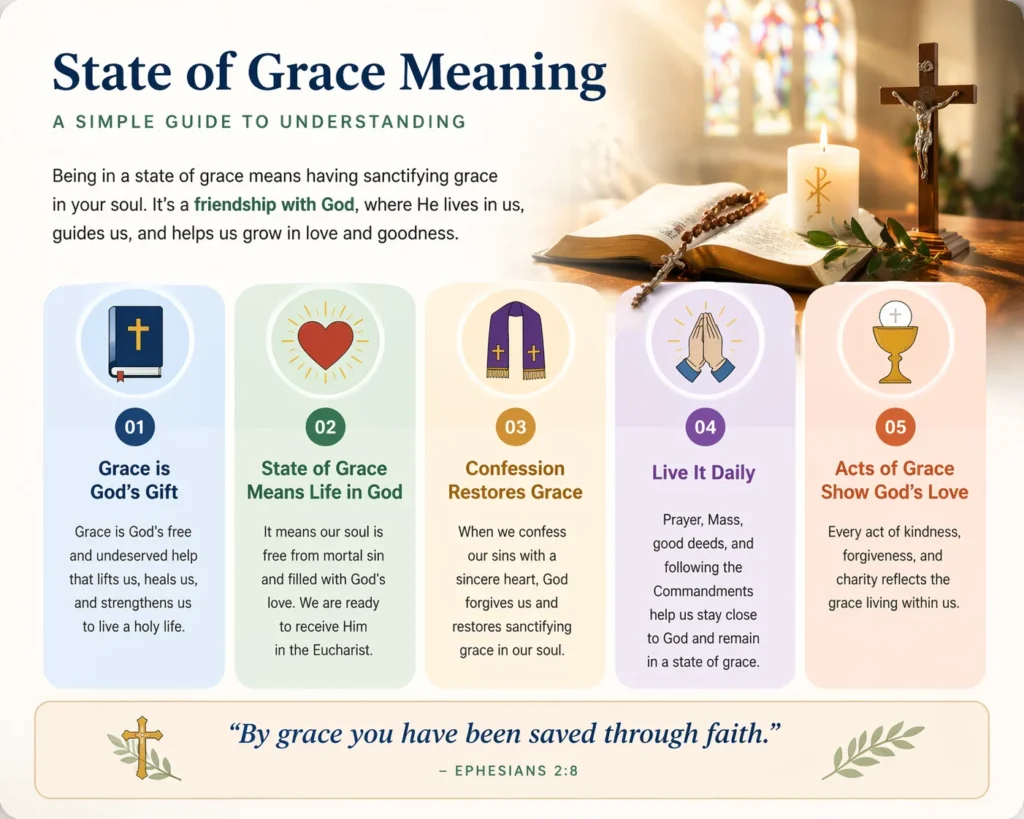
The “state of grace” refers to a spiritual condition where a person is living in accordance with God’s will, free from mortal sin. It means that the person is in right relationship with God, possessing sanctifying grace. This is the condition necessary for a person to receive the Eucharist, which is central to Catholic worship.
When someone is in a state of grace, they have the peace of knowing that their sins have been forgiven, and they are living in alignment with God’s teachings. This state is vital for Catholics as it enables them to participate in the sacraments and grow in holiness.
Why is the State of Grace Important in Catholic Faith?
The state of grace is crucial for personal salvation and for participating in the most sacred rites of the Catholic Church, especially communion. Without being in a state of grace, a Catholic is not able to receive the Eucharist, which is considered the “source and summit” of the Christian life. By living in a state of grace, Catholics maintain their relationship with God and continue to receive the strength to live according to His will.
The theological significance of the state of grace lies in its role in salvation. It allows individuals to remain open to God’s divine favor, which is essential for living a life that leads to eternal life with God.
How to Recognize the State of Grace
Recognizing whether one is in the state of grace can be challenging. However, there are several spiritual markers that may indicate this state.
Signs You Are in a State of Grace
- Inner Peace: A person in a state of grace will often experience a deep sense of peace, knowing that they are living in harmony with God’s will.
- Good Works and Virtues: They will exhibit virtues such as charity, kindness, patience, and humility.
- Spiritual Fulfillment: There is often a desire to engage in prayer, attend Mass, and seek spiritual growth.
Confession and Its Role in Achieving the State of Grace
Confession plays a critical role in entering and maintaining the state of grace. Catholics believe that confession cleanses the soul of mortal sins, restoring sanctifying grace. Even after committing a mortal sin, Catholics can return to a state of grace through the sacrament of reconciliation.
Spiritual Practices to Stay in the State of Grace
To maintain the state of grace, Catholics engage in several spiritual practices, such as:
- Regular Prayer: Daily communication with God through prayer strengthens one’s connection with Him.
- Attending Mass: The Eucharist is the source of grace, and participating in the Mass helps Catholics stay spiritually nourished.
- Following the Commandments: Living a moral life according to God’s commandments is vital for remaining in the state of grace.
The Act of Grace
What is the Act of Grace?
The act of grace refers to the actions one takes that reflect God’s grace in their life. It’s about extending grace to others through acts of kindness, forgiveness, and mercy. Examples of acts of grace include:
- Forgiving others when they wrong you.
- Charity: Giving to those in need.
- Showing patience and understanding in difficult situations.
These acts mirror the grace that God has shown to us, reflecting the interior state of grace.
How Acts of Grace Relate to the State of Grace
Acts of grace are outward signs of a person’s inner state of grace. When a person is living in a state of grace, their actions align with God’s will, manifesting in good deeds and charitable behavior.
The Theology of Grace
Overview of Grace in Catholic Theology
Grace is a foundational concept in Catholic theology, as it is through grace that individuals can experience God’s love and redemption. Grace is essential for salvation, as humans cannot attain eternal life with God without God’s help.
Actual Grace vs. Sanctifying Grace
- Actual Grace: This is temporary grace that helps a person perform specific good actions, like resisting temptation or helping others.
- Sanctifying Grace: This is the permanent grace that dwells in the soul, making the individual holy and pleasing to God.
Both types of grace are necessary for living a righteous life, but sanctifying grace is what allows a person to remain in a state of grace over time.
Impact of Grace on Daily Life
Grace impacts the daily decisions and actions of a Catholic. It influences how one responds to challenges, interacts with others, and makes choices. Through grace, Catholics are empowered to live virtuous lives and serve others, becoming channels of God’s love in the world.
Conclusion
In conclusion, the state of grace is a vital concept in Catholicism, representing a soul in alignment with God’s will and free from mortal sin. It is essential for participating in the sacraments and is necessary for personal salvation. By recognizing the signs of grace, practicing confession, and engaging in spiritual practices, Catholics can maintain the state of grace. Reflecting on our own state of grace can help deepen our relationship with God and guide us towards eternal life.
Reflect on your own spiritual state and consider confession or spiritual practices to remain in the state of grace, continually striving to live a life in harmony with God’s will.

James Colton is a language researcher and content writer who loves exploring the deeper meanings behind everyday words. With a background in linguistics, he breaks down complex terms into simple, clear explanations that anyone can understand.