Last Updated on May 11, 2026
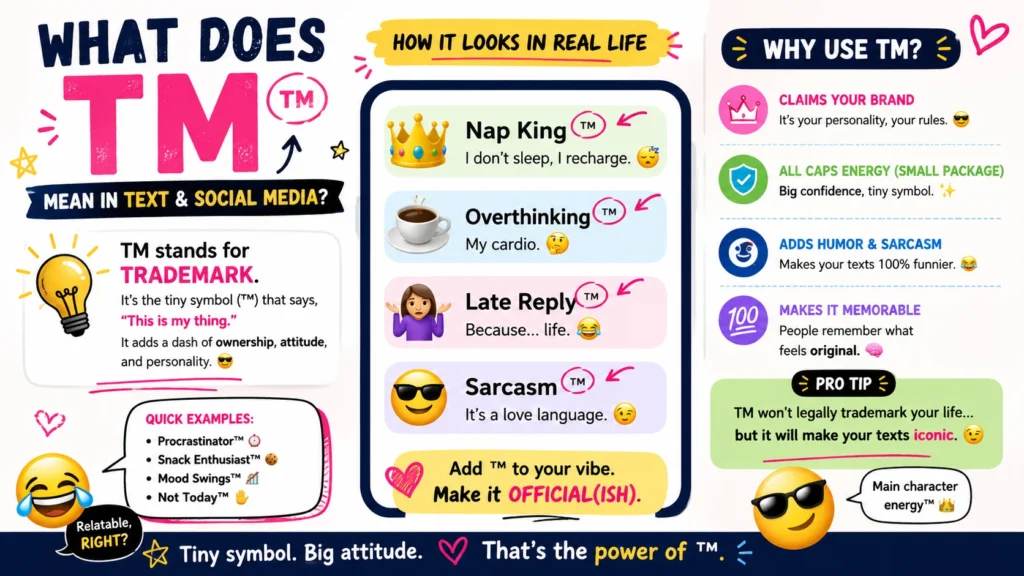
TM in text stands for “trademark.” It is used to indicate that a word, phrase, logo, or symbol is being claimed as a trademark, even if it is not officially registered. In casual texting, social media, or online chats, TM is often used playfully to suggest ownership, originality, or emphasis.
Have you ever been scrolling through a chat, Instagram caption, or Twitter thread and noticed someone writing TM after a word or phrase? 🤔 Maybe it was something quirky like “Best Pizza Ever™” or a funny nickname. You might have paused and thought: “Wait, what does TM mean in text?”
You’re not alone. The TM symbol has migrated from the world of legal trademarks into everyday texting, memes, and social media captions. But understanding TM’s meaning, usage, and nuances can help you communicate clearly—and even add a dash of humor or emphasis when appropriate.
This guide will break down everything you need to know about TM in text, including its origin, how it’s used, related abbreviations, alternative meanings, and professional alternatives. Plus, we’ll provide examples, tips, and a handy FAQ for quick reference.
What TM Means in Text
| Term | Meaning | Usage Context | Tone |
| TM | Trademark | Texting, social media captions, memes, online branding | Playful, humorous, emphasis |
| ™ | Trademark symbol | Official/legal use | Neutral, formal |
In everyday texting, TM is often added to words, phrases, or even nicknames to convey a sense of uniqueness or originality. For example:
- “The ultimate coffee mug™ ☕” – playful, claiming “ownership” over the concept.
- “Lazy Mondays™” – humorous, as if the feeling of being lazy is trademarked.
Key takeaway: In casual conversation, TM isn’t legally binding—it’s a stylistic, often humorous choice.
Origin of TM
The TM abbreviation originates from the legal world of intellectual property. Here’s a brief timeline:
- Late 19th Century: Trademark laws began developing globally.
- 20th Century: The ™ symbol was widely adopted to indicate a claimed but unregistered trademark.
- Modern Era: Social media and texting have repurposed TM as a fun, ironic, or emphatic addition to phrases.
Originally, TM signified:
- A legal claim to a word, logo, or brand.
- Protection against unauthorized use.
Today, while still a legal symbol, it has cultural and humorous significance online.
Why TM Became Popular in Texting
The rise of TM in texting and social media can be attributed to:
- Humor and sarcasm – People use TM to mock “official” claims humorously.
- Branding and originality – Creators and influencers use TM to give a phrase or nickname a branded feel.
- Visual emphasis – TM draws attention to a word or phrase in casual posts.
- Internet culture – Memes, TikTok captions, and Instagram posts often use TM to exaggerate or highlight a trend.
For example:
“Procrastination™”
“Weekend vibes™”
“Mom energy™”
These are not official trademarks—they’re playful, relatable exaggerations.
How TM is Used in Text Messages
Here’s how you can spot or use TM in everyday texting:
Friendly/Playful Tone
- Example: “Cat naps™ are the best naps 😸”
- Interpretation: Playful, relatable, humorous.
Neutral/Emphasis Tone
- Example: “Our brand’s new smoothie™ is finally here!”
- Interpretation: Professional emphasis or branding style.
Negative/Dismissive Tone
- Example: “Excuses™”
- Interpretation: Sarcastic or dismissive, mocking the “excuses.”
TM vs. Related Terms
| Abbreviation | Meaning | Context |
| TM | Trademark | Text, social media, legal |
| ® | Registered Trademark | Official/legal registered trademark |
| SM | Service Mark | Services instead of products |
| Cop™ | Copyright (playful) | Informal, humorous online use |
Comparison:
- TM = playful or claimed trademark.
- ® = legal, registered trademark.
- SM = legal for services, less common in texting.
- Cop™ = humorous copyright mimic in text.
Understanding these differences is helpful if you want to mix professional clarity with playful texting.
Alternate Meanings of TM
Although TM most commonly stands for trademark, it can have other meanings depending on context:
- Texting abbreviations: “Too much,” “Team Member”
- Gaming: “Team Match,” “Teleport Module”
- Technology: “Task Manager,” “Transcendental Meditation”
Tip: Always interpret TM based on context—the surrounding words and platform usually reveal the intended meaning.
Polite or Professional Alternatives
If you’re in a professional or formal context, consider:
- (TM) after brand names (use sparingly and correctly).
- Brand name in italics or quotes – e.g., Morning Coffee.
- Service mark (SM) if referring to a service.
- Avoid using TM humorously in emails, client pitches, or legal documents.
Examples of TM in Text
| Phrase | Tone | Explanation |
| “Nap King™” | Playful | Claiming the ultimate nap prowess humorously. |
| “Work From Home™” | Humorous | Highlighting a relatable lifestyle trend. |
| “Gamer Energy™” | Friendly | Expressing enthusiasm in online communities. |
| “Excuses™” | Sarcastic | Mocking someone’s excuse with irony. |
Notice how TM can change the tone from playful to sarcastic depending on usage.
Tips for Using TM Correctly in Text
- Use sparingly – Overusing TM can make your text look cluttered.
- Match the tone – TM works best in humor, sarcasm, or informal branding.
- Avoid in legal contexts – Only use TM legally if you’re claiming a real trademark.
- Combine with emojis – Enhance playfulness, e.g., “Lazy Sundays™ 😴.”
- Be mindful of readability – TM should feel like a natural addition, not a distraction.
TM in Social Media and Marketing
Marketers and influencers often use TM creatively:
- TikTok captions: “Pet parent energy™ 🐾”
- Instagram posts: “Self care Sundays™ 💆♀️”
- Memes: Adding ™ to emphasize sarcasm or exaggeration.
This trend blurs the line between casual text and branding, making content feel both personal and “official.”
Common Mistakes
- Using TM when it’s actually a registered trademark (use ® instead).
- Overusing TM in professional messages.
- Misinterpreting TM as legally binding in casual texts.
FAQs
1. What does TM mean in texting?
TM means “trademark” and is often used playfully to indicate ownership or emphasis.
2. Is TM legally binding in texts?
No, in casual texting or social media, TM is humorous or stylistic, not legally enforceable.
3. Can I use TM for my brand?
Yes, but only if you’re claiming a trademark. For legal protection, consider registering it (®).
4. What’s the difference between TM and ®?
TM = unregistered trademark (casual or claimed).
® = officially registered trademark.
5. Can TM be sarcastic?
Absolutely! Example: “Excuses™” implies mockery or irony.
6. Are there other meanings of TM?
Yes, it can mean “Too Much,” “Team Member,” “Task Manager,” depending on context.
7. How do I use TM in social media captions?
Place it after a word or phrase to emphasize or add humor, often paired with emojis.
8. Should I use TM in emails?
Use TM sparingly in professional emails. Prefer quotes, italics, or registered symbols if needed.
Conclusions
- TM in text = trademark, often playful or humorous.
- Originates from legal intellectual property law but adapted for social media.
- Tone can be playful, sarcastic, or emphatic.
- Context is key—interpret based on surrounding words and platform.
- Professional alternatives exist for formal use.

Sophia Lane is a passionate wordsmith and lifestyle writer who covers everything from Spanish phrases to biblical terms. She believes that understanding language helps people connect better with the world around them