
Last Updated on May 11, 2026
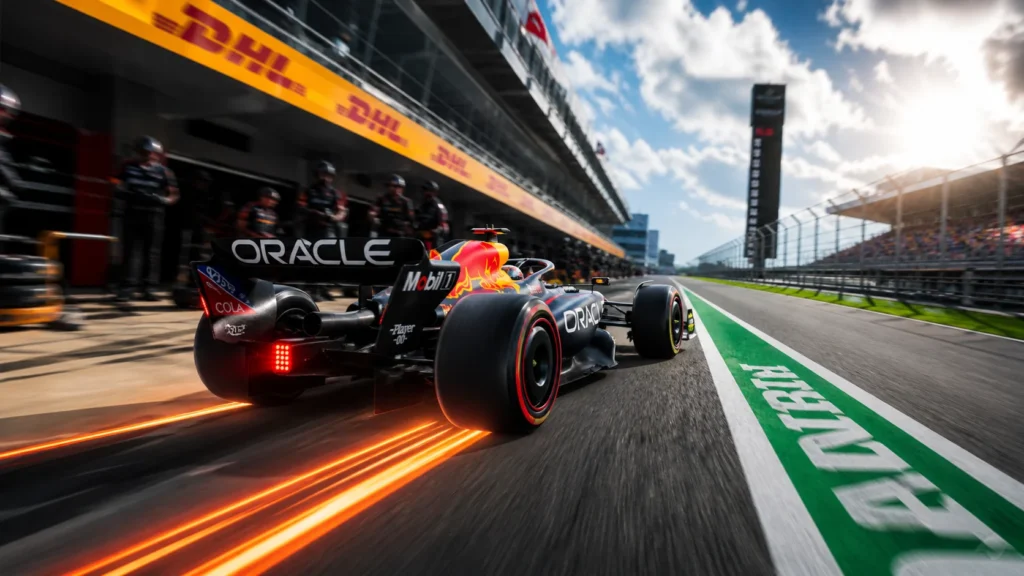
Out Lap in F1: An out lap is the first lap a Formula 1 driver completes after leaving the pit lane, typically used to warm up tires, brakes, and engines before attempting a fast timed lap.
Formula 1 is a sport full of specialized jargon, and for newcomers, terms like out lap can feel confusing. By the end of this guide, you’ll know exactly what an out lap is, why it matters, and how it fits into the high speed world of F1 racing.
Understanding the terminology is crucial for appreciating the strategy and skill in Formula 1. Key lap types include:
- Out Lap: The lap immediately after leaving the pit lane.
- In Lap: The lap a driver completes before entering the pits.
- Flying Lap / Hot Lap / Fast Lap: The lap when a driver pushes for maximum speed.
- Formation Lap / Parade Lap: A lap before the race starts to prepare the car and driver.
Each lap serves a strategic purpose, and the out lap plays a surprisingly significant role.
What Is an Out Lap?
An out lap is the lap a Formula 1 driver takes immediately after exiting the pit lane. The main goal is not speed, but preparation. Drivers use this lap to:
- Warm up the tires to optimal temperature.
- Bring brakes to operating range.
- Check engine and hybrid systems.
- Avoid traffic while setting up for a flying lap.
Think of it as the car’s warm up session, ensuring everything is perfect before the real performance begins.
Key Characteristics of an Out Lap
| Characteristic | Description |
| Purpose | Preparation for a fast lap or race stint |
| Speed | Moderate, not maximum |
| Tire Condition | Gradually brought to ideal temperature |
| Driver Focus | Observing track conditions, avoiding errors |
| Pit Lane Exit | Lap begins immediately after leaving pits |
The Purpose of an Out Lap
Out laps might seem boring compared to the thrill of a flying lap, but their strategic importance is immense. They:
- Warm Up Tires: Formula 1 tires need a specific temperature range for optimal grip. Cold tires are slippery and slow.
- Brake Prep: Drivers pump brakes and gradually heat brake discs to prevent locking or overheating.
- Engine Monitoring: Ensures the power unit is functioning properly under normal conditions before pushing hard.
- Track Awareness: Drivers scan for debris, wet spots, or traffic on the circuit.
- Energy Management: On hybrid cars, managing ERS (Energy Recovery System) and fuel flow is essential.
Without a well executed out lap, a flying lap can be compromised, leading to slower times or mistakes.
How Out Laps Work in Practice
Pit Stop Scenarios
Out laps are most common during qualifying sessions and race pit stops.
Qualifying Example:
- A driver leaves the pits for their first timed lap. The out lap is slow and controlled.
- The second lap, after the out lap, is the flying lap where the driver aims for the best time.
Race Example:
- During a pit stop, a driver may exit on fresh tires and complete an out lap before fully attacking the track.
Driver Techniques on Out Laps
- Gradual acceleration to avoid tire slip.
- Controlled braking to warm up brake discs.
- Smooth steering inputs to prepare tires.
- Avoiding traffic to prevent being held up.
Many times, teams instruct drivers to push lightly on certain sections to optimize tire temperature without losing too much time.
Out Lap vs. In Lap vs. Flying Lap
Understanding the difference is crucial:
| Lap Type | Purpose | Speed | Timing/Use Case |
| Out Lap | Warm up car and tires before fast lap | Moderate | After pit exit |
| In Lap | Return to pits after stint or qualifying attempt | Moderate | Before entering pit lane |
| Flying Lap | Maximize speed for qualifying or competitive time | Maximum | After out lap (qualifying) or race |
Importance of Out Laps in Strategy
Out laps may seem minor, but teams treat them as strategic tools.
- Tire Strategy: Choosing how aggressively to warm up tires can affect overall race pace.
- Track Position: A slow out lap can prevent traffic or allow drivers to exit in a better position.
- Fuel Management: Controlled pace helps save fuel for critical race phases.
- Data Collection: Teams gather telemetry on tire temperatures, brake performance, and engine behavior.
Some teams even design specific out lap protocols, instructing drivers on which sections to push lightly and which to stay conservative.
Common Mistakes Drivers Make on Out Laps
Even though the out lap is slower, mistakes can be costly:
- Cold Tires & Oversteer: Exiting pits too aggressively can cause spinning.
- Braking Too Late: Can damage tires or overheat brakes.
- Traffic Interference: Being stuck behind another car reduces the effectiveness of the lap.
- Underheating Tires: Leads to poor grip on the flying lap.
Teams use sensors and telemetry to minimize these risks.
Real World Examples
2023 Monaco Grand Prix
- Drivers often struggled to warm up tires on tight street circuits.
- Max Verstappen executed a precise out lap to set the fastest qualifying time.
2022 British GP
- Lewis Hamilton’s out lap on wet conditions allowed him to assess grip before attempting a flying lap.
- A poorly executed out lap could have cost him pole position.
Alternate Meanings of Out Lap
While predominantly used in F1:
- Motorsports in General: Out lap refers to the first lap after leaving pits in any racing series.
- Cycling/Running Tracks: Rarely, it can mean a warm up lap before timed effort.
In professional contexts, F1 usage dominates, and alternate meanings are minor.
FAQs
1. What does out lap mean in F1?
An out lap is the lap after leaving the pit lane, used to warm up tires and brakes before a flying lap.
2. Is the out lap faster than the flying lap?
No, out laps are controlled and slower; flying laps aim for maximum speed.
3. Why is the out lap important in qualifying?
It prepares tires and brakes for a perfect flying lap, affecting overall qualifying performance.
4. Can a driver overtake during an out lap?
Technically yes, but overtaking is rare and risky during this preparation lap.
5. How long does an out lap usually take?
It varies by circuit but is generally slower than a regular lap by 5–15 seconds.
6. Do all F1 laps count for points?
Only race laps count; out laps are part of preparation, not scoring.
7. Is an out lap the same as a warm up lap?
Functionally similar, but warm up laps can occur outside qualifying or pit stops.
8. How do teams monitor out lap performance?
Through telemetry: tire temperature, brake temp, engine health, and driver inputs.
Conclusion
Out laps are more than just slow laps—they’re a critical part of an F1 driver’s strategy. By warming up tires, brakes, and the engine, drivers set themselves up for success in flying laps or during race stints. Understanding out laps enhances your appreciation of F1 tactics, showing that every second on the track counts.

Ethan Ware is a digital writer and internet culture enthusiast who stays on top of the latest slang, trends and viral phrases. He specializes in making modern language easy to understand for readers of all ages.