
Last Updated on May 11, 2026
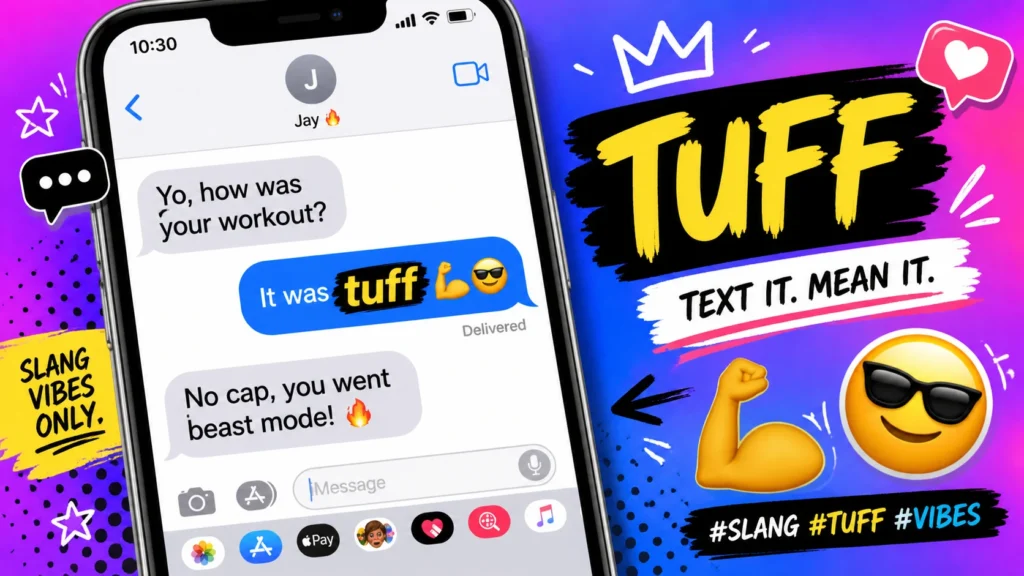
“Tuff” in text is a slang term used to describe something or someone as strong, impressive, or resilient. It can also convey admiration for someone’s toughness or depending on context, sarcastically imply stubbornness or difficulty.”
Texting and online messaging have transformed language in fascinating ways, and “tuff” is one of those informal terms that has gained popularity across social media, texting apps, and even casual conversations. If you’ve come across someone saying, “That’s tuff” or “You’re tuff!” and wondered what it really means, you’re in the right place. This guide explores the meaning, origins, uses, examples, and related terms of tuff, making it easy to understand and use confidently in your own texts.
What Does “Tuff” Mean?
In text or online messaging, “tuff” is typically used as:
- An adjective for strength or resilience: “That workout was tuff!”
- A term of admiration or respect: “You’re tuff for finishing that project alone!”
- A casual way to acknowledge difficulty or challenge: “Life’s been tuff lately.”
Essentially, it’s a playful or informal version of “tough”, with a spelling that’s popular in casual digital communication.
The Origin of “Tuff”
The word “tuff” is derived from the standard English word “tough”, meaning strong or resilient. However, the alternate spelling emerged primarily in internet slang, texting, and social media, where users favor phonetic spellings for speed and style.
- Timeline of usage:
- 1990s–2000s: Early internet chatrooms and text messaging begin experimenting with alternative spellings.
- 2010s: Social media platforms like Twitter, Instagram, and Snapchat accelerate the use of phonetic slang.
- Today: Commonly used in texts, memes, and casual posts among younger audiences.
- 1990s–2000s: Early internet chatrooms and text messaging begin experimenting with alternative spellings.
This evolution shows how digital communication reshapes language for brevity and personality.
Popularity and Spread in Texts
“Tuff” has gained traction for several reasons:
- Short and simple: Easier to type in a text message than “tough.”
- Stylish and playful: Alternative spellings signal casualness and personality.
- Versatile meaning: Can express strength, admiration, or struggle depending on context.
Social media hashtags (#tuff, #tufflife) and meme culture have further solidified its place in online language.
How to Use “Tuff” in Texts
Here are some practical ways to use tuff in texting:
- Expressing admiration:
- “You handled that presentation like a pro. Tuff 💪!”
- “You handled that presentation like a pro. Tuff 💪!”
- Acknowledging difficulty:
- “Been a long week tuff times 😅”
- “Been a long week tuff times 😅”
- Playful teasing:
- “You’re being tuff today, huh? 😏”
- “You’re being tuff today, huh? 😏”
- Motivation or encouragement:
- “Stay tuff, you got this!”
- “Stay tuff, you got this!”
Remember, the tone is highly context-dependent, so read the conversation vibe before using it.
Tone Variations: Friendly, Neutral, or Negative
| Tone | Example Text | Meaning & Usage |
| Friendly | “You’re tuff! That was awesome 😎” | Shows admiration or respect. |
| Neutral | “Life’s been tuff lately.” | Simply acknowledging difficulty or challenge. |
| Negative | “Ugh, this homework is so tuff 🙄” | Can imply frustration or mild complaint. |
The context, emoji use, and surrounding conversation cues help determine whether tuff feels positive, neutral, or slightly dismissive.
Comparison with Similar Terms
| Term | Meaning | Difference from “Tuff” |
| Tough | Strong, resilient, difficult | Standard spelling; formal and widely understood. |
| Hard | Challenging, demanding | Less personal; focuses on difficulty rather than admiration. |
| Strong | Powerful, resilient | More literal; less slangy or casual. |
| Badass | Cool, impressive, fearless | Informal and edgy; stronger than “tuff.” |
| Resilient | Able to recover from difficulty | Formal; lacks casual, playful vibe of “tuff.” |
Using tuff conveys casual, playful energy, whereas these alternatives may suit formal writing or professional contexts.
Alternate Meanings of “Tuff”
While “tuff” usually relates to strength or difficulty, there are rare alternative uses:
- Geology: “Tuff” refers to a type of rock formed from volcanic ash.
- Nicknames or usernames: Some people adopt “Tuff” as a playful or strong-sounding handle online.
For texting purposes, the slang meaning is almost always intended.
Professional and Polite Alternatives
In professional or polite settings, instead of texting tuff, consider:
- Challenging: “This project is challenging, but we can handle it.”
- Resilient: “Your approach shows resilience and determination.”
- Impressive: “Your results are impressive and well-executed.”
These alternatives convey respect without relying on slang, suitable for workplace or formal communication.
Examples of “Tuff” in Text Conversations
| Context | Text Example | Tone | Explanation |
| Compliment | “You’re tuff! Finished that 10K run? 😲” | Friendly | Admiration for endurance. |
| Life struggles | “Work’s been tuff today” | Neutral | Acknowledges difficulty in a casual way. |
| Playful teasing | “Stop being tuff, give me a break 😏” | Light teasing | Jokingly calling someone stubborn or challenging. |
| Motivation | “Keep tuff, you got this 💪” | Encouraging | Boosting morale or confidence. |
| Sarcastic/dismissive | “Yeah, that was tuff for you 🙄” | Negative | Mocking or dismissive tone, depending on context. |
These examples illustrate how versatile tuff can be, depending on tone and emojis.
FAQs
1. Is “tuff” the same as “tough”?
Yes, it’s an informal or phonetic spelling of “tough,” mainly used in texting and online conversations.
2. Is “tuff” considered slang?
Yes, it’s casual and informal, often used among friends or on social media.
3. Can “tuff” be negative?
Sometimes, especially with sarcasm or frustration, e.g., “This homework is so tuff 🙄.”
4. How do you pronounce “tuff”?
It’s pronounced exactly like “tough” (tʌf).
5. Can “tuff” be used professionally?
It’s generally too casual for professional contexts; alternatives like “challenging” or “impressive” are recommended.
6. What’s the origin of “tuff” spelling?
Derived from phonetic spelling in texting and internet slang, popularized in the 2010s.
7. Are there emojis commonly paired with “tuff”?
Yes: 💪, 😎, 😏, 😅, and 🙄 depending on tone.
8. Does “tuff” have other meanings?
Outside texting, “tuff” can refer to volcanic rock in geology or be used as a nickname.
Conclusion
- “Tuff” = casual “tough”: a playful, informal way to express strength, resilience, or admiration.
- Tone matters: Can be friendly, neutral, or sarcastic depending on context.
- Use in texts, not formal writing: Ideal for casual chats, social media, or memes.
- Alternatives exist: Use “impressive,” “resilient,” or “challenging” in professional contexts.
- Emoji pairing enhances meaning: 💪, 😎, 😏, 😅, 🙄 can clarify tone.
By understanding the meaning and usage of tuff, you can text confidently while keeping your language fun, clear, and relatable.

Ethan Ware is a digital writer and internet culture enthusiast who stays on top of the latest slang, trends and viral phrases. He specializes in making modern language easy to understand for readers of all ages.