
Last Updated on May 11, 2026
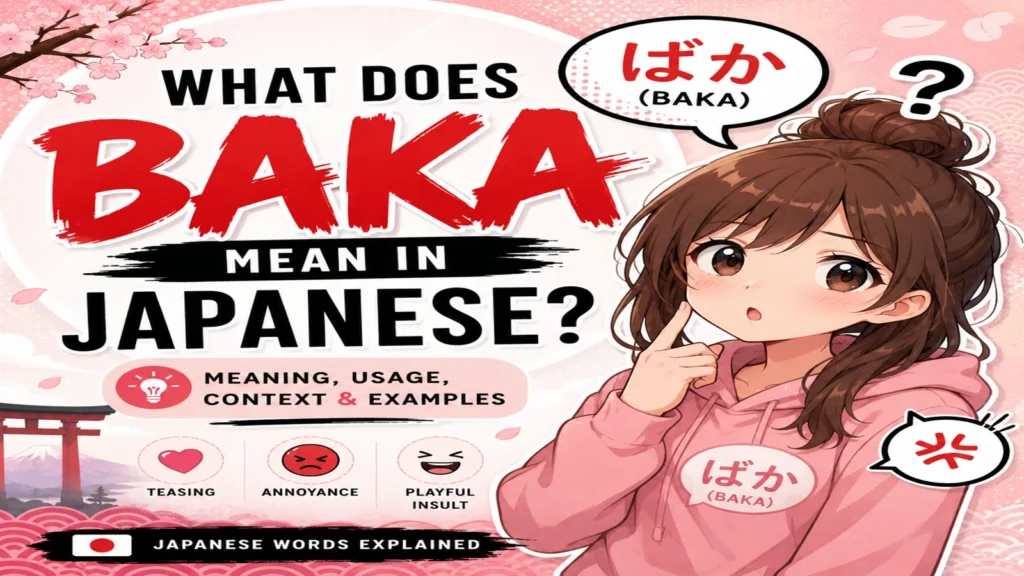
The meaning of baka in Japanese goes far beyond a simple translation like “idiot” or “fool.” Depending on tone, relationship, region, and context, it can sound playful, insulting, affectionate, sarcastic, or even surprisingly mild.
Understanding how Japanese people truly use “baka” helps avoid awkward misunderstandings and gives deeper insight into Japanese language, anime culture, and social etiquette.
Quick Answer (Featured Snippet Ready)
“Baka” (馬鹿 or ばか) is a Japanese word commonly meaning “fool,” “idiot,” or “stupid person.” Its severity depends heavily on tone and context. In casual settings, it can be playful or teasing, while in formal or confrontational situations, it may sound rude or offensive.
Key Takeaways
- “Baka” generally means fool, idiot, or stupid
- The word can be playful, affectionate, or insulting depending on context
- Anime often exaggerates how the term is used
- In real-life Japan, using “baka” with strangers is considered rude
- Kansai and Kanto regions may perceive the word differently
- There are softer and more polite alternatives in Japanese conversation
- The term has become globally popular through anime and internet culture
What Does “Baka” Mean in Japanese?
The Japanese word baka (ばか / 馬鹿) is most commonly translated as:
- Fool
- Idiot
- Silly person
- Stupid
- Dummy
However, direct English translations don’t fully capture its nuance.
In Japanese communication, emotional tone matters just as much as vocabulary. A smiling friend saying “baka!” jokingly feels very different from someone saying it aggressively during an argument.
Example Uses
| Japanese Phrase | English Meaning | Tone |
|---|---|---|
| Baka da ne | You’re silly | Playful |
| Baka yarou | You idiot! | Harsh/angry |
| Baka mitai | Looks ridiculous | Casual criticism |
| Baka na shitsumon | Silly question | Mild insult |
How Is “Baka” Written in Japanese?
“Baka” can appear in several writing systems:
| Writing Style | Characters | Usage |
|---|---|---|
| Hiragana | ばか | Casual/common |
| Katakana | バカ | Emphasis or stylistic use |
| Kanji | 馬鹿 | Traditional form |
Interestingly, the kanji literally combine:
- 馬 = horse
- 鹿 = deer
But the literal meaning is not “horse deer.” The combined characters function as a phonetic and historical expression rather than a logical compound word.
The Origin and History of the Word “Baka”
The exact origin of “baka” is debated among language historians.
One popular theory connects it to an ancient Chinese story involving a corrupt official who presented a deer while calling it a horse to test loyalty and obedience. Over time, the idea became associated with foolishness and irrationality.
Another theory suggests the term evolved from older Sanskrit or regional Japanese dialect influences.
What matters most today is that “baka” became deeply embedded in Japanese daily speech over centuries and evolved into a flexible conversational expression.
Is “Baka” a Bad Word?
This is one of the most searched questions online — and the answer is nuanced.
Short Answer
“Baka” is not a swear word in the same category as extreme profanity in English, but it can still be offensive.
Severity Depends on Context
Mild Usage
Used jokingly among friends:
- “You forgot your phone again? Baka!”
Moderate Usage
Used during frustration:
- “Why would you do that? Baka!”
Strongly Offensive Usage
Used aggressively toward strangers or authority figures:
- Can sound disrespectful or immature
In Japanese culture, maintaining harmony and politeness matters greatly. Even relatively mild insults can feel stronger than they would in English-speaking cultures.
How Anime Changed the Global Meaning of “Baka”
Anime played a huge role in popularizing the word worldwide.
Why Anime Uses “Baka” So Often
Anime dialogue tends to exaggerate emotions for entertainment:
- Tsundere characters yell “baka!” dramatically
- Rival characters insult each other playfully
- Romantic tension scenes often include the term
Because of this exposure, many non-Japanese fans assume “baka” is:
- Extremely rude
- Constantly used in Japan
- Equivalent to strong English insults
In reality, everyday Japanese conversation is often much more restrained.
Famous Anime Examples
You’ll hear “baka” frequently in:
- Naruto
- One Piece
- Attack on Titan
- Toradora!
- Neon Genesis Evangelion
These shows helped transform “baka” into one of the most internationally recognized Japanese expressions.
Different Meanings of “Baka” Depending on Tone
Japanese relies heavily on emotional delivery.
The same word can completely change meaning based on:
- Voice tone
- Facial expression
- Social hierarchy
- Relationship closeness
- Situation
Playful “Baka”
Example:
“You stayed up gaming all night? Baka!”
Meaning:
- Teasing
- Friendly
- Lighthearted
Romantic/Flirty “Baka”
Common in anime romance scenes.
Example:
“Baka… it’s not like I did this for you!”
Meaning:
- Embarrassed affection
- Emotional defensiveness
- Cute teasing
This usage became iconic in anime fandom culture.
Angry “Baka”
Example:
“Baka yarou!”
Meaning:
- Genuine anger
- Frustration
- Insult
This version sounds much harsher.
Regional Differences in Japan
One fascinating cultural detail is that different parts of Japan perceive insults differently.
Kanto Region (Tokyo Area)
In eastern Japan:
- “Baka” is relatively common
- Often casual or mild
Kansai Region (Osaka Area)
In western Japan:
- “Aho” may be used more commonly than “baka”
- “Baka” can sound harsher there
This regional distinction surprises many Japanese learners.
“Baka” vs “Aho”: What’s the Difference?
Comparison Table
| Term | Meaning | Region | Tone |
|---|---|---|---|
| Baka | Fool/idiot | Kanto | Can sound harsh |
| Aho | Fool/silly | Kansai | Often softer |
| Manuke | Idiot/clownish | Nationwide | More comedic |
| Oroka | Foolish | Formal/literary | Intellectual |
Which One Is More Offensive?
There’s no universal answer.
In some regions:
- “Baka” feels stronger
- “Aho” feels friendlier
In others:
- The opposite may be true
Japanese language is highly context-driven.
Common Japanese Phrases Using “Baka”
Everyday Expressions
Baka da ne
“You’re silly.”
Baka mitai
“That’s ridiculous.”
Baka yarou
“You idiot!”
Baka baka shii
“Absurd” or “nonsensical.”
Oyabaka
A parent overly proud of their child.
Bakagē
A deliberately ridiculous or absurd game.
Can Foreigners Use the Word “Baka”?
Technically yes — but carefully.
Best Practice
Use it only:
- Among close friends
- In joking contexts
- When you fully understand the tone
Avoid using it:
- With strangers
- In professional settings
- Toward elders
- During serious discussions
Common Mistake
Many anime fans assume saying “baka” casually is harmless everywhere.
In reality, randomly calling someone “baka” in Japan may:
- Sound immature
- Create awkwardness
- Come across as disrespectful
Cultural Importance of Indirect Communication in Japan
To understand “baka,” you must understand Japanese communication culture.
Japan often values:
- Indirectness
- Emotional restraint
- Social harmony
- Respectful speech
Because of this:
- Open insults are less common
- Tone matters enormously
- Even mild criticism can feel strong
This is why anime exaggeration sometimes creates unrealistic expectations for learners.
Is “Baka” Used Online and in Gaming?
Absolutely.
The word became deeply integrated into:
- Anime fandoms
- Gaming culture
- Meme communities
- TikTok trends
- Discord chats
- Streaming culture
Many people use it jokingly online without speaking Japanese fluently.
Popular Internet Uses
“Baka baka baka!”
Overdramatic joking frustration.
“Sussy baka”
A viral meme combining:
- “Sus” from Among Us
- “Baka” from anime culture
This phrase exploded on TikTok and YouTube around 2021–2022.
Common Misconceptions About “Baka”
Misconception #1: It Means Only “Stupid”
Not exactly.
It can also imply:
- Silly
- Foolish
- Reckless
- Ridiculous
- Goofy
Misconception #2: It’s a Serious Curse Word
Usually not.
Compared to English profanity, “baka” is relatively mild in many contexts.
Misconception #3: Japanese People Constantly Say It
Anime exaggerates usage heavily.
Real-life Japanese conversation is typically more polite and subtle.
Polite Alternatives to “Baka”
If you’re learning Japanese, safer alternatives often work better.
Softer Expressions
| Phrase | Meaning | Tone |
|---|---|---|
| Chotto hen | A little strange | Gentle |
| Ukkari shita | Careless mistake | Neutral |
| Omoshiroi | Funny/interesting | Positive |
| Fushigi | Mysterious | Indirect |
These sound more natural in polite situations.
How Japanese Learners Should Approach Slang
Pro Tip 💡
Learn:
- Meaning
- Tone
- Context
- Social appropriateness
—not just dictionary translations.
Many learners memorize anime phrases without understanding:
- politeness levels
- social hierarchy
- emotional nuance
That often leads to awkward interactions.
Real-Life Scenarios: When “Baka” Works — and When It Doesn’t
Scenario 1: Close Friends
Friend:
“I forgot my wallet again.”
Response:
“Baka!”
✅ Usually harmless.
Scenario 2: Workplace
Coworker makes a mistake.
You say:
“Baka.”
❌ Sounds rude and unprofessional.
Scenario 3: Romantic Anime-Style Teasing
Partner:
“You worried about me?”
Response:
“Baka…”
✅ Can sound affectionate or shy.
Why “Baka” Became So Popular Globally
Several trends contributed to its global spread:
Anime Streaming Boom
Platforms made anime mainstream worldwide.
Meme Culture
Short, repeatable Japanese phrases spread quickly online.
Gaming Communities
Anime gaming fandoms normalized terms like:
- baka
- kawaii
- senpai
- tsundere
TikTok and YouTube Shorts
Clips featuring exaggerated anime voice acting amplified recognition further.
Linguistic Insights: Why “Baka” Is Fascinating
Language experts often point to “baka” as an example of:
- context-dependent meaning
- pragmatic communication
- emotional language flexibility
Unlike rigid dictionary definitions, Japanese conversational meaning shifts dynamically.
That’s one reason direct translations often fail to capture authentic nuance.
Benefits of Understanding Japanese Slang Properly
Understanding terms like “baka” helps:
- Improve anime comprehension
- Avoid cultural misunderstandings
- Build stronger language skills
- Appreciate Japanese communication styles
- Engage more authentically with Japanese media
Did You Know? 🤔
The phrase “baka” appears in:
- anime subtitles
- Japanese comedy
- internet memes
- song lyrics
- gaming communities
- Japanese literature
Yet native speakers often use it far more subtly than anime characters do.
Best Practices for Using “Baka”
Do:
✅ Understand context
✅ Use it sparingly
✅ Pay attention to tone
✅ Learn cultural etiquette
Don’t:
❌ Use it with strangers
❌ Assume anime equals real life
❌ Overuse Japanese slang awkwardly
❌ Use it professionally
Frequently Asked Questions (FAQ)
What does baka literally mean in Japanese?
“Baka” literally means fool, idiot, or silly person, though tone and context heavily affect how offensive it sounds.
Is baka a swear word?
Not exactly. It’s generally milder than strong English profanity but can still sound rude depending on delivery and situation.
Why do anime characters say baka so much?
Anime exaggerates emotional reactions for entertainment, making “baka” appear more common and dramatic than in real-life Japanese conversation.
Is it rude to call someone baka?
Yes, it can be rude, especially if said seriously, aggressively, or toward strangers and authority figures.
What’s the difference between baka and aho?
Both mean fool or idiot, but regional preferences differ. “Baka” is more common in eastern Japan, while “aho” is often used in Kansai.
Can baka be affectionate?
Yes. Among close friends or romantic partners, it can sound teasing, playful, or emotionally shy.
Do Japanese people use baka daily?
Some do casually with friends or family, but it’s generally less exaggerated than anime portrays.
What does baka yarou mean?
“Baka yarou” roughly means “you idiot” and sounds much harsher and angrier than plain “baka.”
Why is baka popular online?
Anime, gaming culture, TikTok, memes, and streaming communities helped make it internationally recognizable.
Should Japanese learners use baka?
Only carefully and with understanding of social context. Beginners should avoid overusing slang without cultural awareness.
Is baka offensive in schools or workplaces?
Usually yes. In formal or professional environments, it can sound immature or disrespectful.
What are polite alternatives to baka?
Softer phrases include:
- “chotto hen”
- “ukkari”
- “fushigi”
- indirect criticism expressions
Conclusion
The meaning of baka in Japanese is much deeper than a simple translation like “idiot.” It’s a culturally nuanced word shaped by tone, relationships, regional differences, and social context.
Anime introduced “baka” to millions of people worldwide, but real-life Japanese communication is often far more subtle and socially aware than fictional portrayals suggest.
Whether you’re learning Japanese, watching anime, exploring internet culture, or simply curious about language, understanding how “baka” truly works gives valuable insight into Japanese expression and communication.
Used correctly, it can sound playful and harmless. Used carelessly, it can feel rude or awkward. Like many Japanese expressions, context is everything.

Ryan Holloway is an experienced content strategist with a deep interest in etymology and word origins. He enjoys digging into the history behind words and presenting them in a straightforward, engaging way.