
Last Updated on May 7, 2026
Understanding Kumon: An Overview
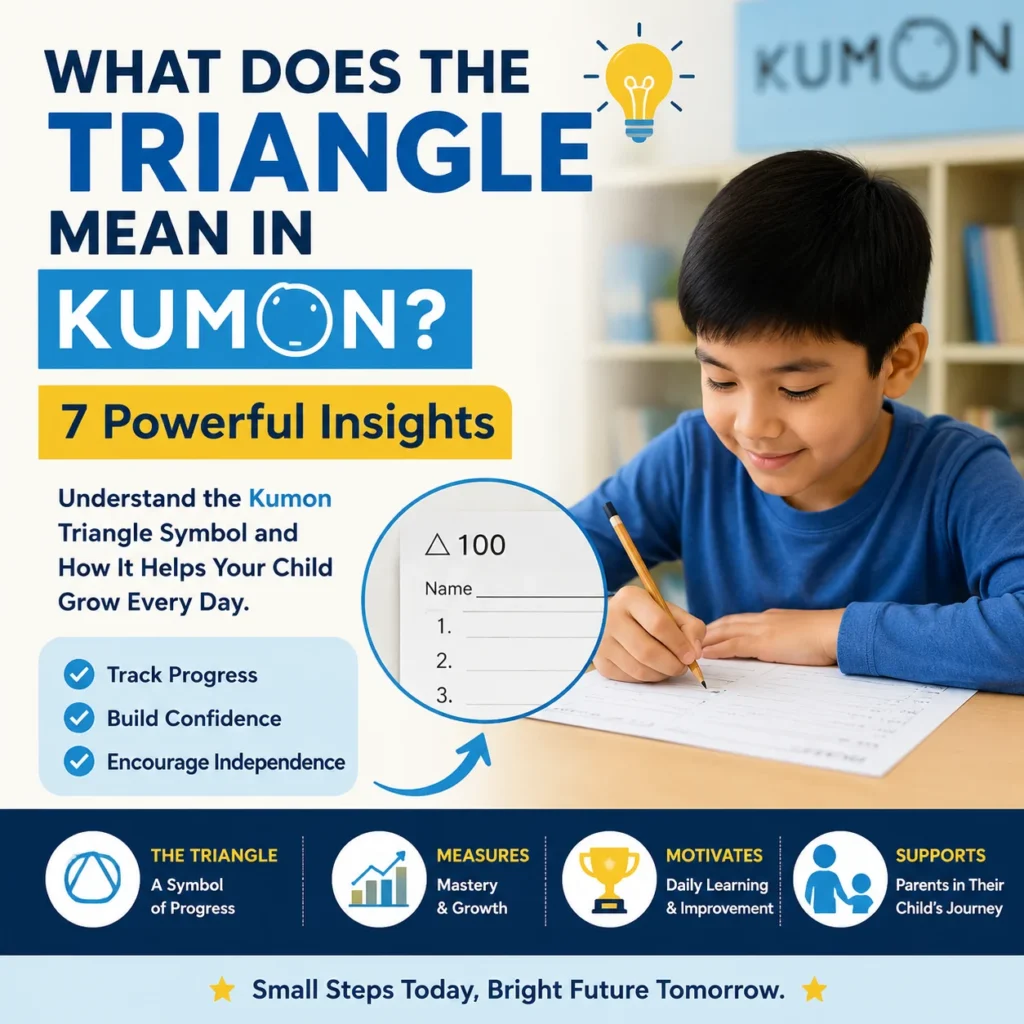
The triangle in Kumon represents Self-Learning, Mastery of Skills, and Confidence, guiding students toward academic and personal growth through a structured, incremental approach.
Kumon is a globally recognized educational method, founded by Toru Kumon in Japan in 1958. At its core, the method emphasizes self-learning, incremental skill mastery, and fostering confidence. But what makes Kumon unique isn’t just the worksheets or the structured schedule it’s the triangle symbol, a visual representation of the program’s philosophy.
The triangle is everywhere in Kumon materials: on worksheets, in promotional imagery, and as part of the method’s pedagogical messaging. But why a triangle? To understand this, we need to explore what each point represents and how it drives the learning process.
The Origin of the Triangle Symbol
The triangle was chosen deliberately by Toru Kumon. Each vertex represents one key principle of the method, forming a triple support system for student development. The triangle is more than a decorative mark it’s a roadmap for learning.
By observing the triangle, students are subtly reminded of three things:
- Self-learning
- Mastery of skills
- Confidence building
This simple geometric shape carries a multi-layered philosophy, reinforcing the educational objectives in a highly visual and memorable way.
The Three Points Explained
Self-Learning
The first point of the triangle emphasizes independence. Kumon encourages students to attempt problems without immediately seeking help. This approach nurtures problem-solving skills and develops resilience. By learning to navigate challenges on their own, students build a foundation for lifelong learning.
Mastery of Skills
The second point represents gradual progression and mastery. Worksheets are carefully structured to start with simple problems and gradually increase in difficulty. Students are encouraged to perfect each step before moving on, ensuring a deep and lasting understanding of concepts.
Confidence Building
The third point of the triangle symbolizes confidence and self-esteem. As students see themselves completing worksheets and mastering challenging problems, their sense of achievement grows. This psychological boost is as crucial as academic skill, empowering learners to tackle more complex tasks with enthusiasm.
How the Triangle Guides Daily Practice
Structuring Homework
Every Kumon worksheet is designed with the triangle philosophy in mind. Exercises are incremental, ensuring that students can independently solve problems while reinforcing skills they already know. The triangle reminds them to focus on process, mastery, and self-reliance, not just the end result.
Monitoring Progress
The triangle also serves as a self-assessment tool. Students can reflect on their daily practice by asking:
- Did I complete this independently? ✅
- Did I fully master these problems? ✅
- Do I feel more confident than before? ✅
This reflection cultivates self-awareness and accountability.
Triangle and Academic Success
Math Achievement
Kumon is especially well-known for improving math skills. By following the triangle, students gradually move from basic arithmetic to more complex calculations. The focus on self-learning and mastery ensures they are not just memorizing formulas but understanding underlying principles.
Reading Improvement
For reading, the triangle guides students in comprehension, fluency, and vocabulary. Incremental exercises and independent study encourage learners to read critically and develop long-term literacy skills.
The Triangle and Character Development
The triangle also fosters holistic growth, shaping traits that extend beyond academics.
Responsibility
Students take ownership of their progress, learning to manage their time and tasks effectively.
Discipline
The structured, step-by-step approach of Kumon instills a habit of consistent effort, promoting long-term success.
Implementing Triangle Principles at Home
Encouraging Independent Study
Parents can adopt triangle principles by allowing children to attempt tasks without constant intervention. The key is balance—providing guidance while letting the student navigate challenges.
Creating a Structured Routine
A daily routine that mirrors Kumon’s approach—short, focused study sessions with incremental challenges—reinforces independence, mastery, and confidence.
Common Misconceptions About the Triangle
- It’s just a logo – Actually, it’s a pedagogical guide.
- It only applies to math – The triangle applies to reading, writing, and character development too.
- It’s rigid – The principles are adaptable and can be implemented at home.
FAQs on Kumon Triangle
Q1: Does the triangle represent only academic skills?
A1: No, it also represents confidence, independence, and character development.
Q2: Can parents use the triangle concept at home?
A2: Absolutely. Parents can structure study routines and encourage independent problem-solving.
Q3: Is the triangle philosophy applicable to older students?
A3: Yes, self-learning, mastery, and confidence are universal principles at any age.
Q4: How does the triangle improve learning speed?
A4: By focusing on mastery before moving on, students retain knowledge better and progress efficiently.
Q5: Are there visual cues in worksheets to remind students of the triangle?
A5: Yes, many worksheets subtly integrate the triangle to guide reflection and self-assessment.
Q6: Can the triangle principles help with non-Kumon studies?
A6: Definitely. These principles are universal strategies for effective learning.

Sophia Lane is a passionate wordsmith and lifestyle writer who covers everything from Spanish phrases to biblical terms. She believes that understanding language helps people connect better with the world around them